
In this section ▾
Green walls and façade greening
Climbers need something to hold, soil to grow in and water to drink. We design the structure, the planters, the irrigation and the planting together, then install it and help it grow.
PicturesWhat it can look like
Choose a typeWhat do you need?
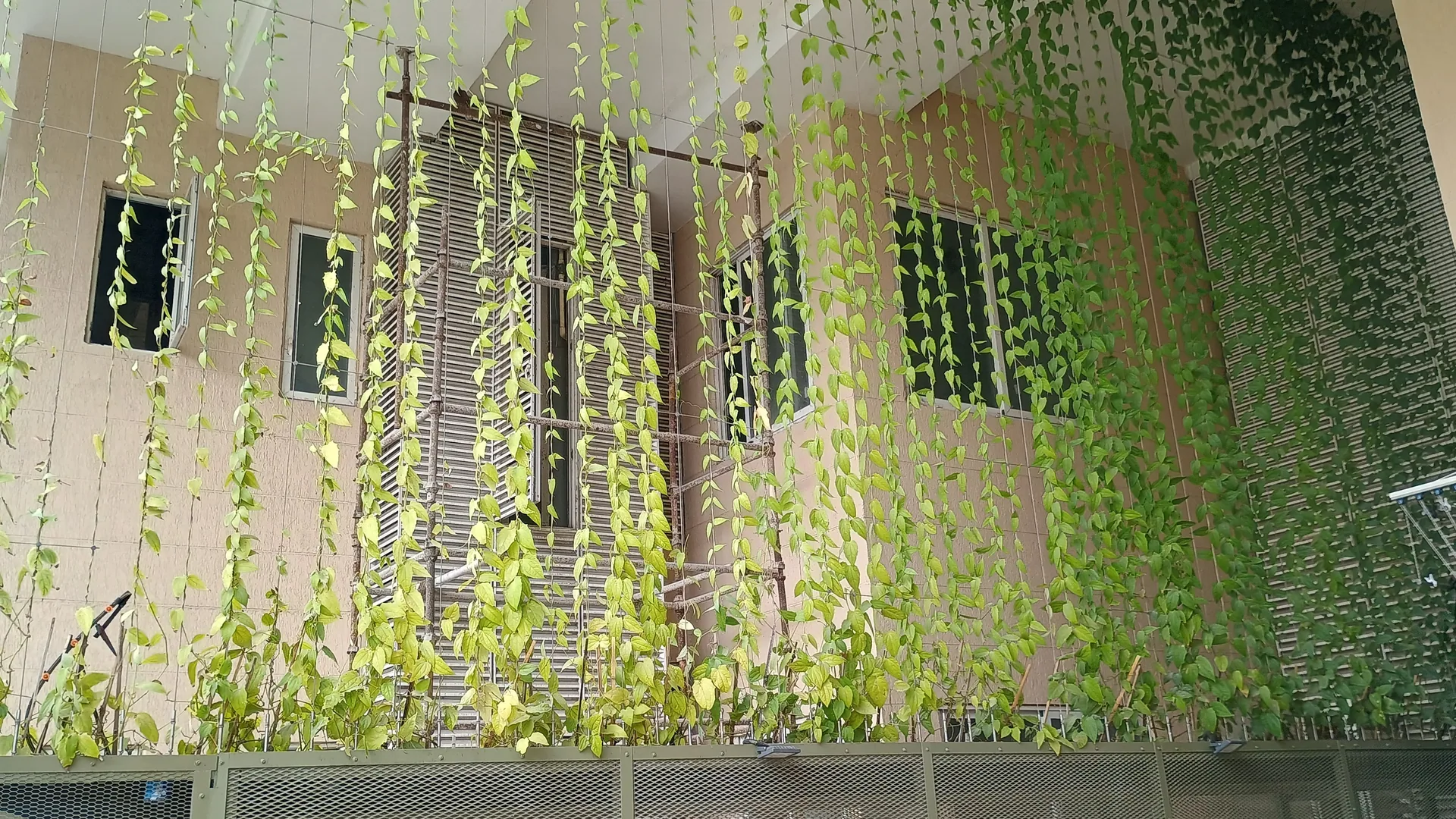
Cover a façade or wall with ropes
Vertical ropes or a rope grid for climbers.
We’d chooseRopes 150 to 250 mm apart; twining and tendril climbers
See the pageCable greening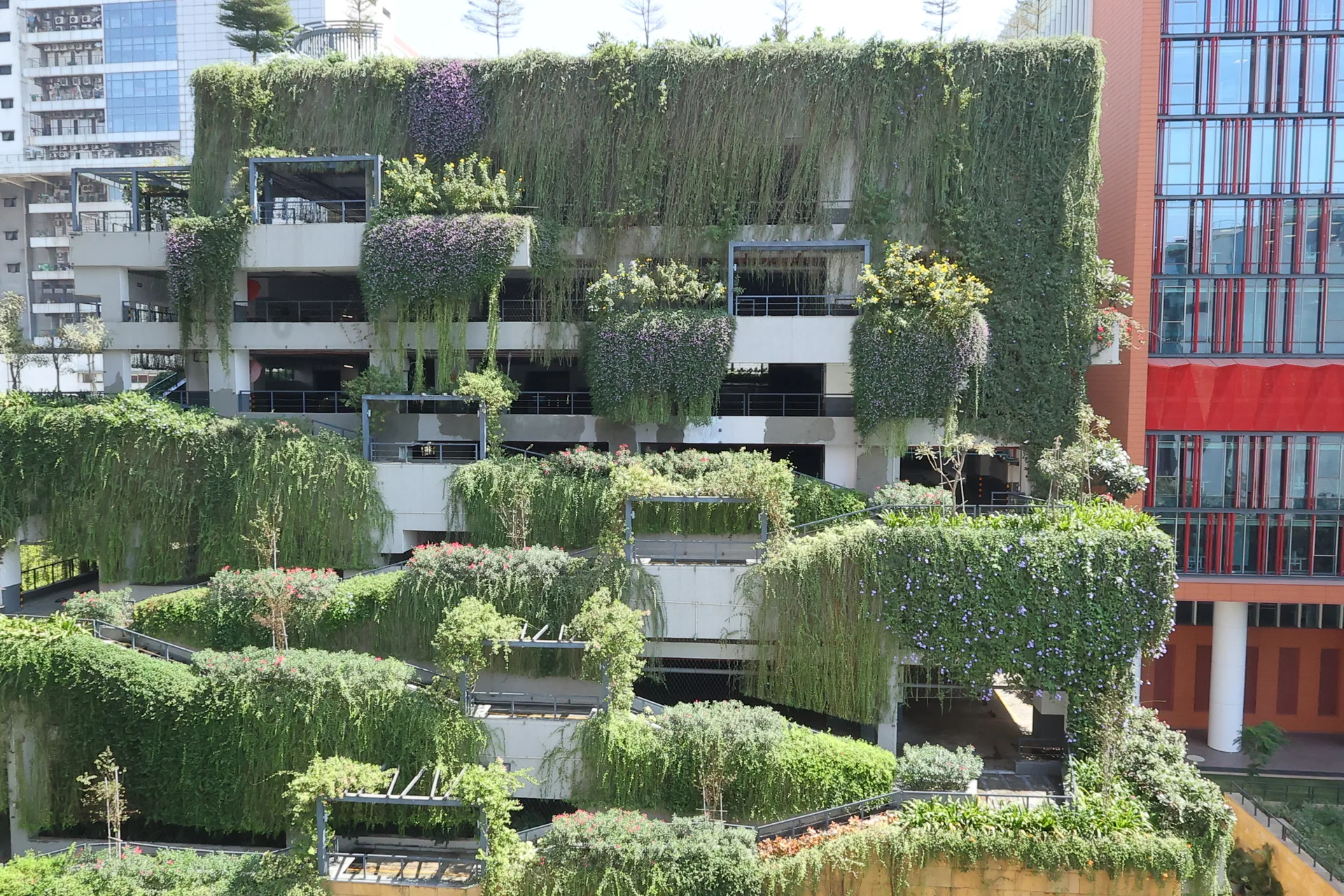
Even cover over the whole surface
A hold every few centimetres.
We’d chooseWebnet on a framework of Jakob Ø6 mm ropes
See the pageMesh green façades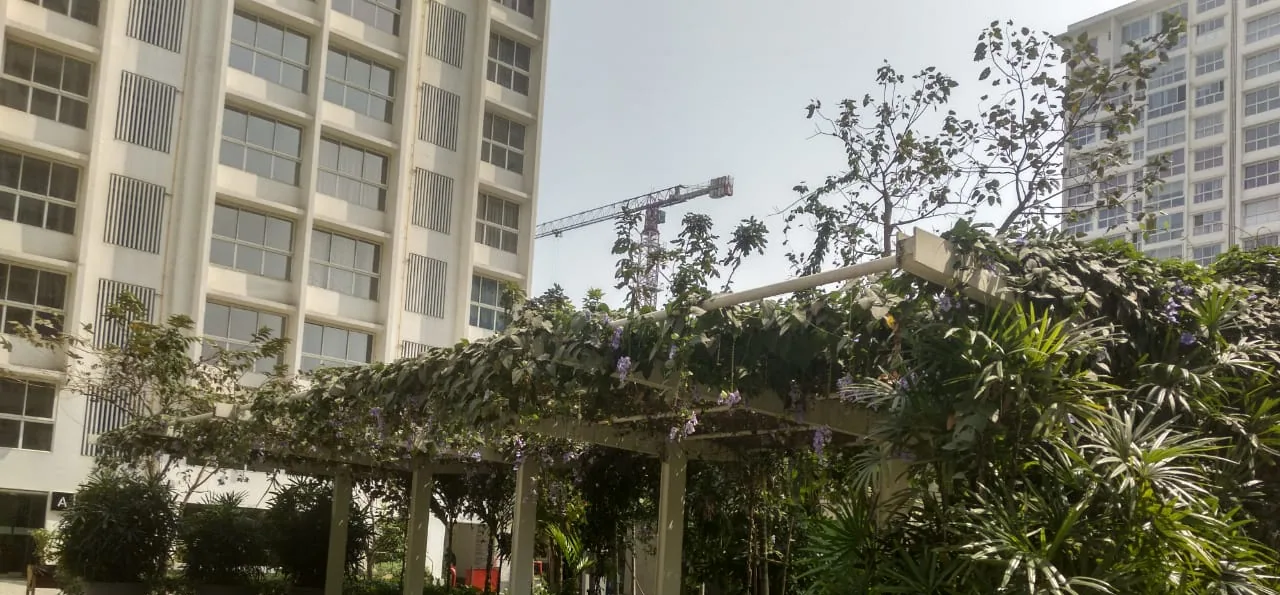
Shade a walkway or parking
A planted roof on tensioned ropes.
We’d chooseRopes across a frame, climbers from the posts
See the pageRope pergolas and green canopies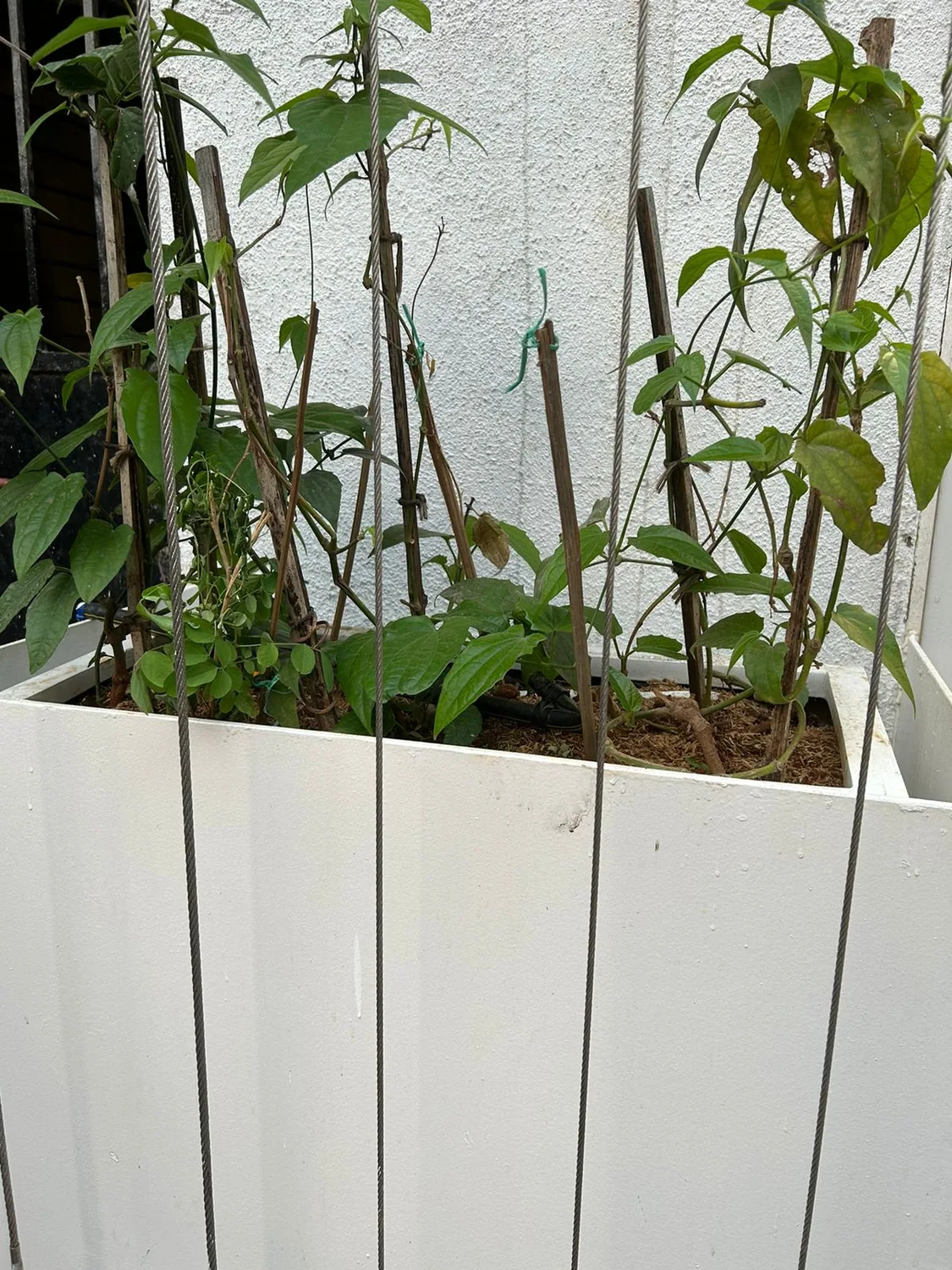
Make it grow and stay green
Planters, drip irrigation, planting and care.
We’d choosePlanters at the base or on each level; live or artificial
See the pagePlanters, irrigation and planting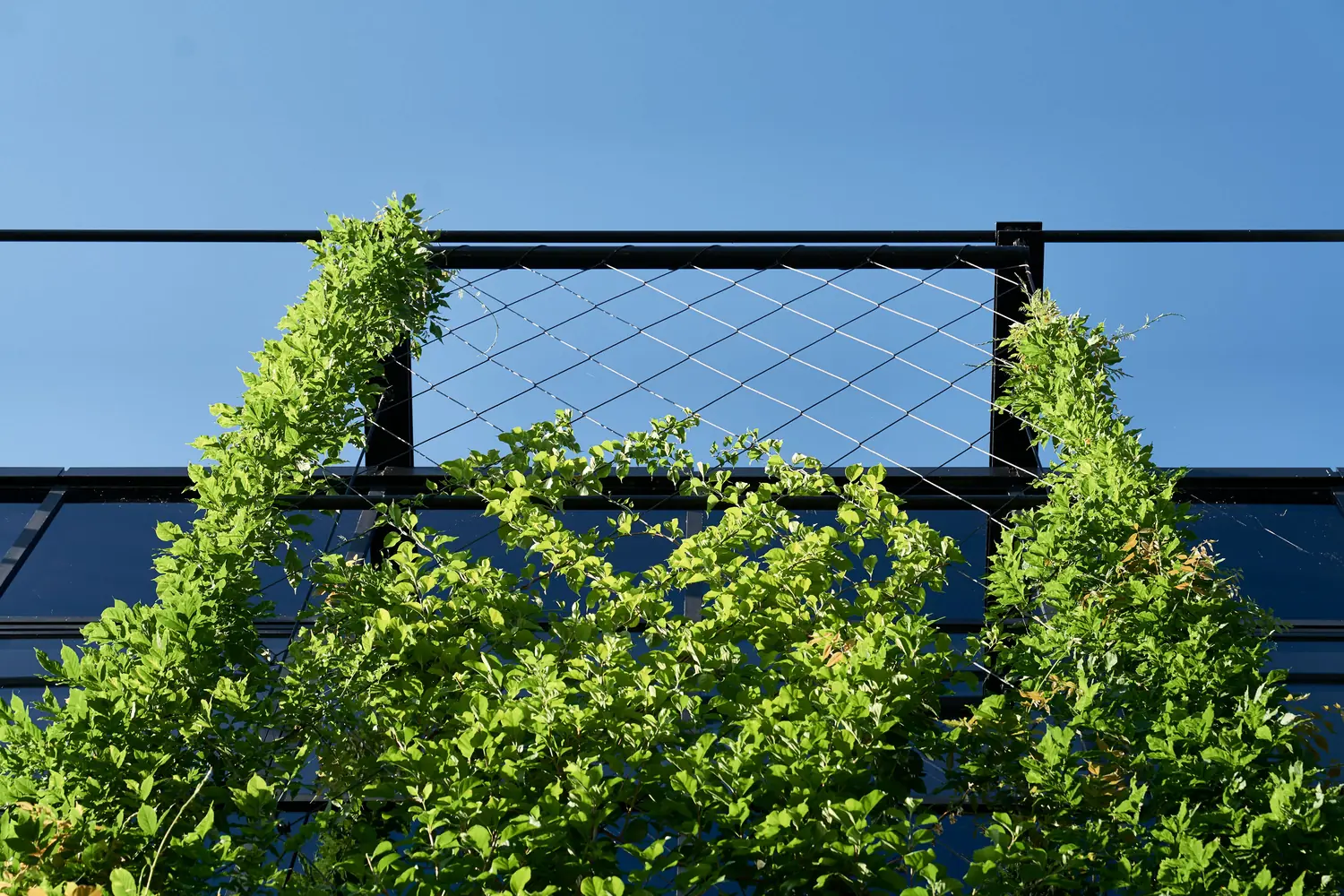 Jakob reference
Green a boundary or screen
Rigid panels that plants cover over time.
We’d choose3D welded mesh panels; chain-link for long runs
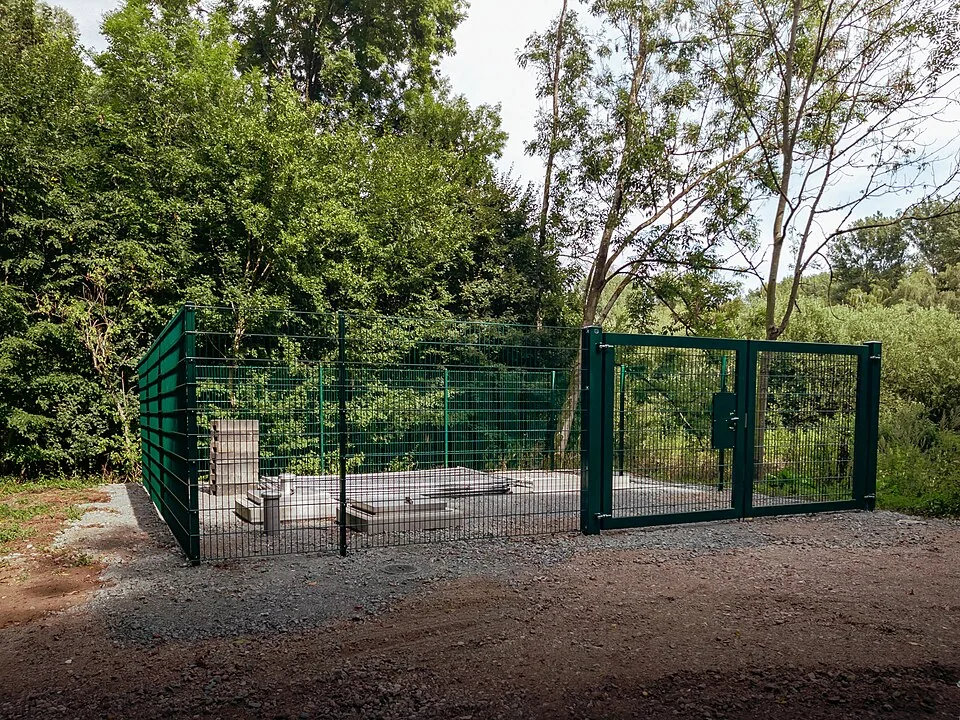 3D and welded meshAcier range→
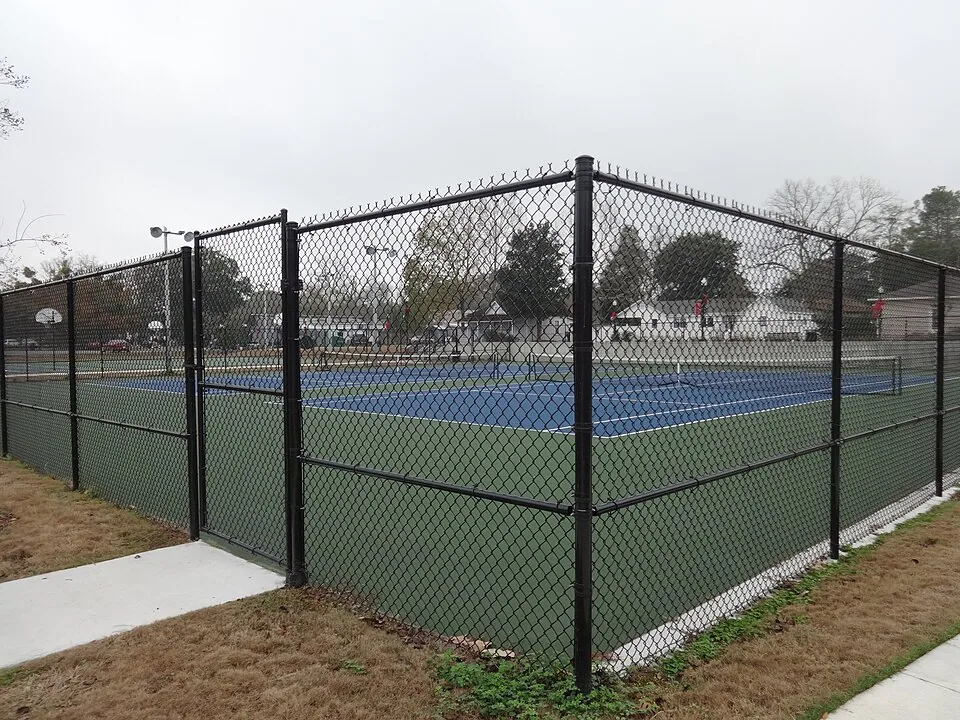 Chain-link fencingAcier range→
For long boundaries, chain-link fencing can carry climbers too.
Plan itPlan your green wall
Planner
SpacingRope spacing that grows dense
Vertical rope spacing
| Spacing | Result | Use |
|---|---|---|
| 150 to 250 mm | One dense green surface | Most green façades: our usual range |
| 250 to 300 mm | Dense with fast climbers | The practical maximum for full cover |
| Over 300 mm | Separate green strands | Striped, lighter looks |
Grids add horizontal ropes every 200 to 600 mm so plants spread sideways. Plan a planter or bed at the base, drip irrigation, and plants at 2 to 3 per metre, and most walls are dense within 12 to 18 months. Planters, irrigation and planting →
ProjectsBuilt by Acier
Green façade, Nirlon Knowledge Park
About 3,200 m² of Jakob Webnet on a Ø6 mm rope framework turns the car park at Nirlon Knowledge Park, Goregaon, into a green building fed by planters on every level.
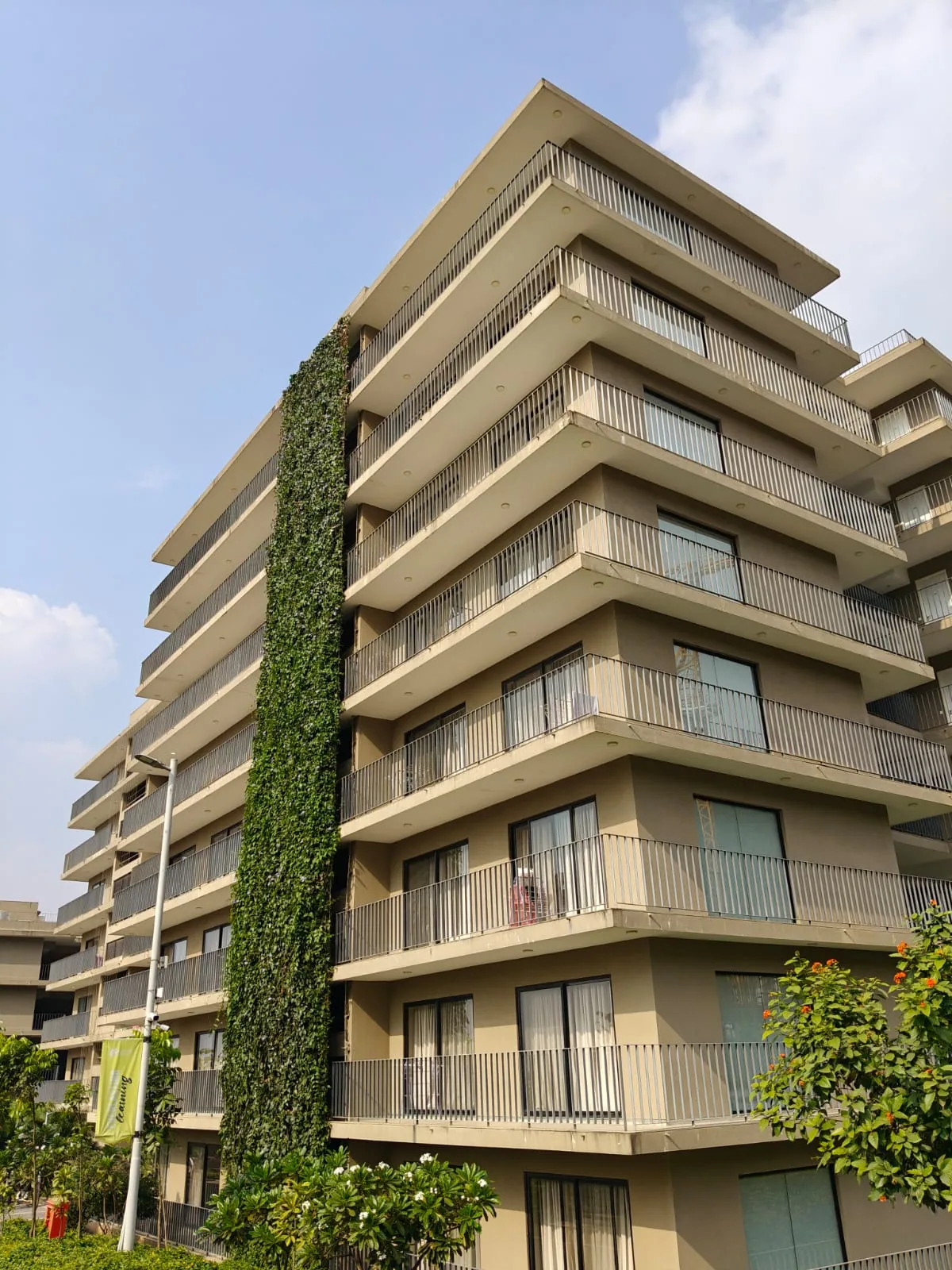
Green façades, FLAMES University
Bands of green on Jakob Webnet over the open staircases of 12 student housing buildings at FLAMES University, Pune, added one building at a time since 2021.
Green-canopy pergola, Godrej Properties
A rope-hung pergola for Godrej Properties in Mumbai that puts parking under a living canopy, with Ø10 mm AISI 316 tension ropes holding the structure.
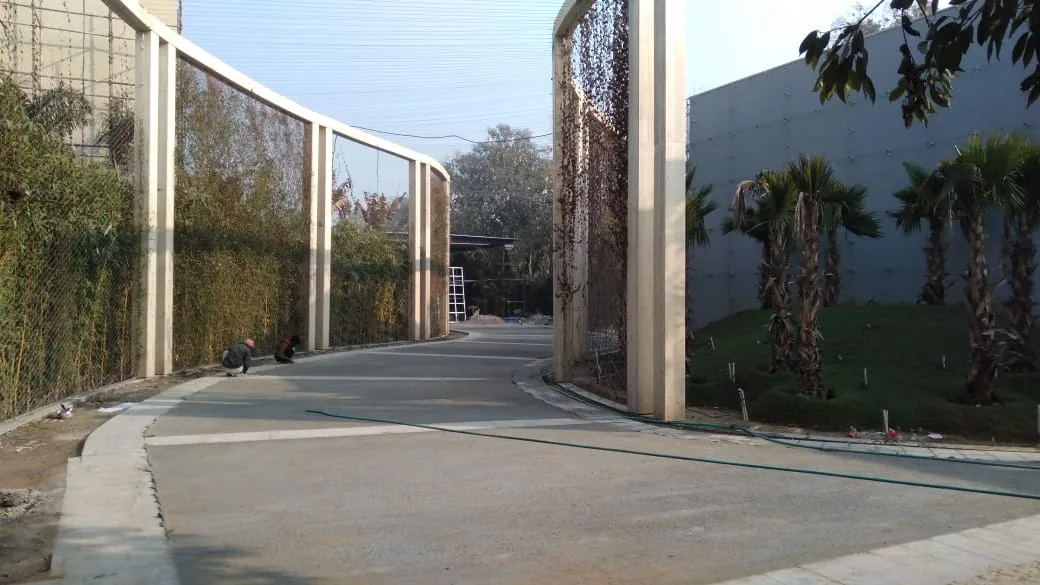
Webnet green canopy, private farmhouse, Delhi
A farmhouse driveway in Delhi turned into a green passage under a Webnet trellis canopy, planted with bamboo and climbers.
Green privacy wall, Lower Parel
A green privacy wall, 7 m high and 9 m long, on a high-rise duplex deck in Lower Parel, Mumbai: climbers on a grid of Ø4 mm Jakob ropes in a welded MS frame.
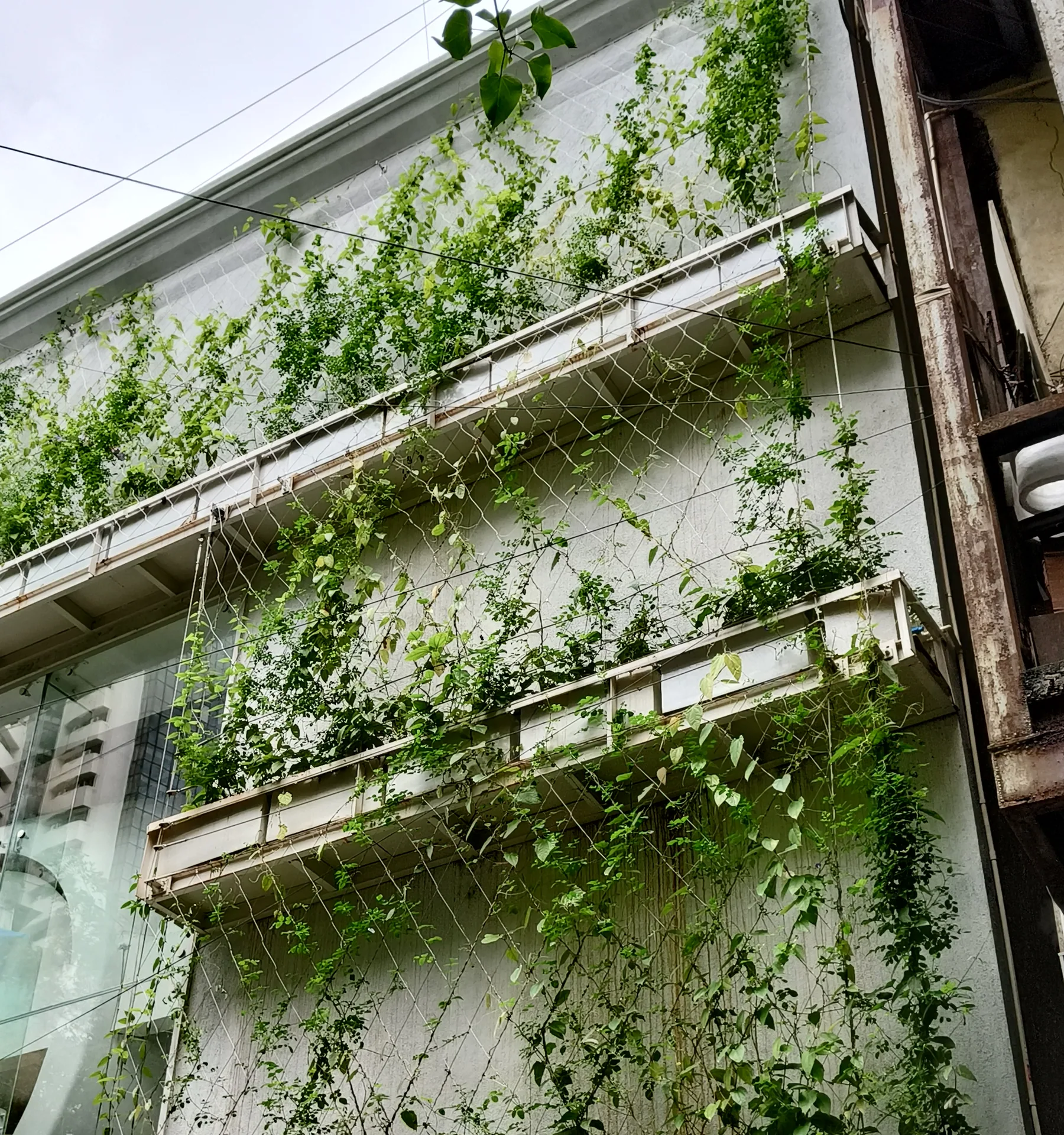
Façade planters, Kala Ghoda
Planter troughs, Jakob ropes and Webnet bring planting to a shopfront building in Kala Ghoda, Mumbai's heritage district.
From first visit to handoverHow we work →
QuestionsFrequently asked
What is the best system for a green wall?
It depends on the plant. Twining climbers want vertical cables, tendril climbers a grid or mesh, and trailing plants planters on each level. We choose the system with the planting.
How long does a green façade take to cover?
With fast climbers, drip irrigation and planters at every floor or beds at the base, typically 12 to 18 months to full, dense cover.
How far apart should the ropes be?
Usually 150 to 250 mm for one dense green surface, and not more than about 300 mm. Wider spacing gives separate green strands.
Read moreGuides
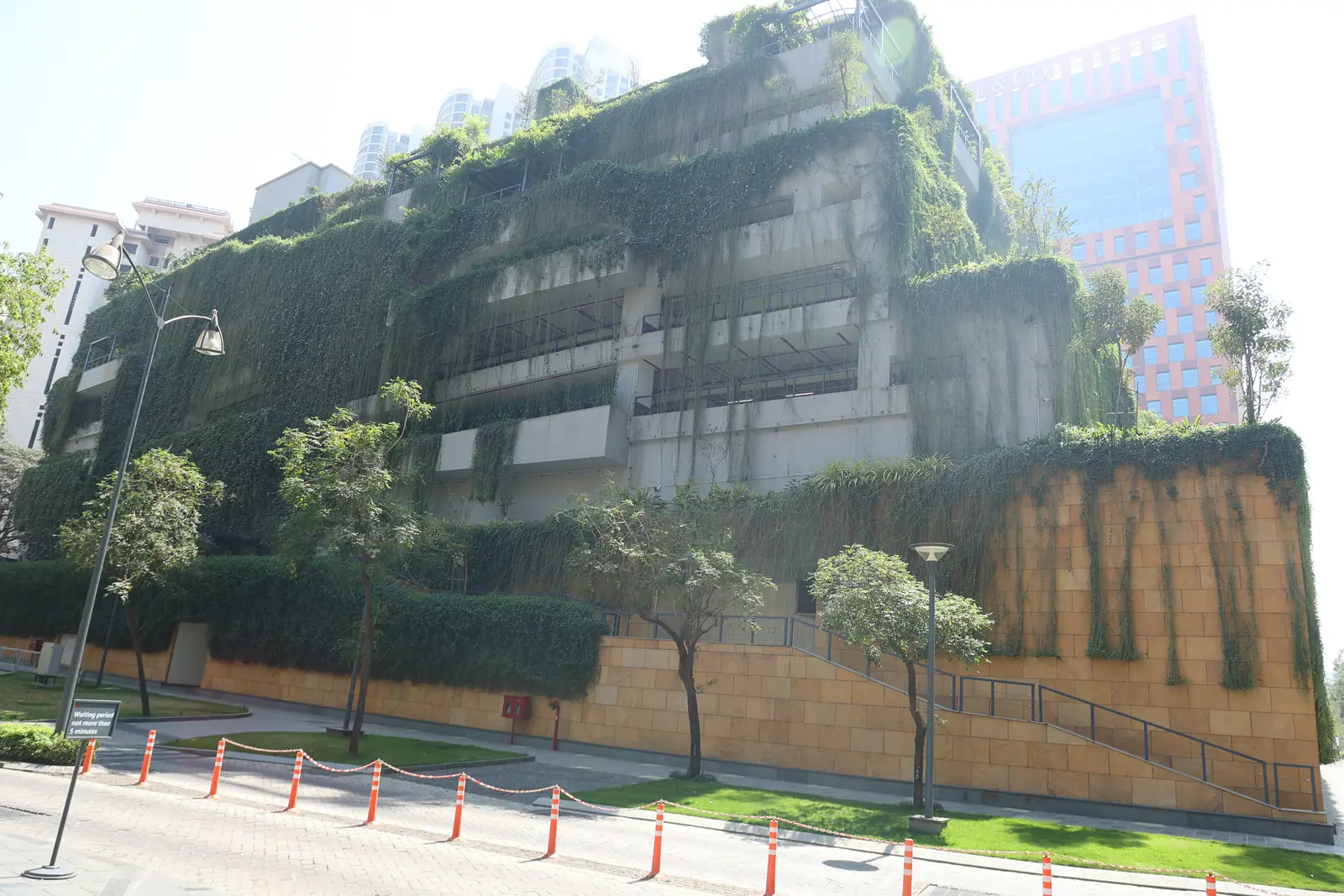
Green façades explained: cables, Webnet or trellis?
The three main ways to support climbing plants on a building, and how to match each one to the plants, the wall and the look you want.
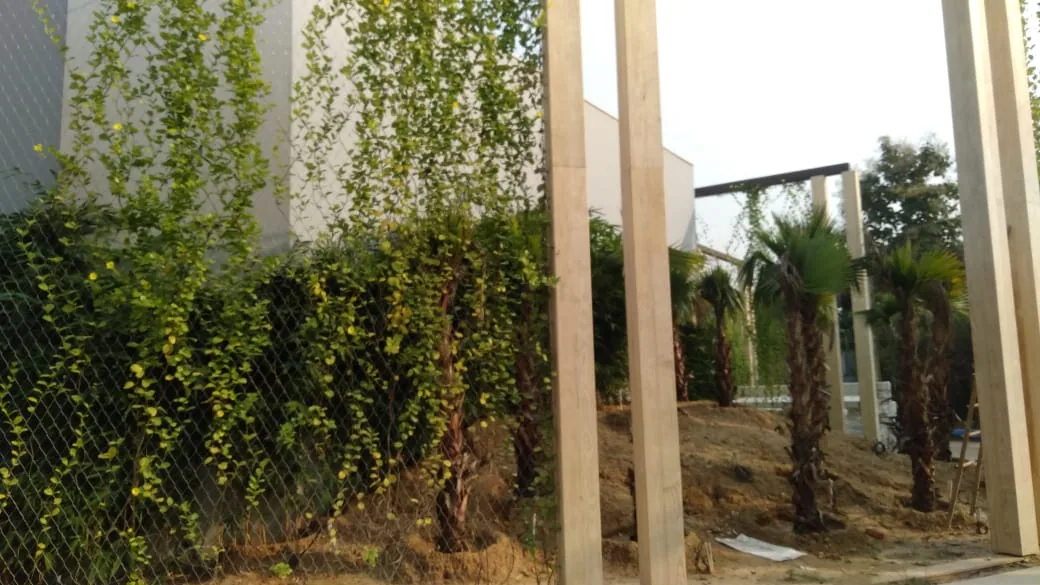
Will climbing plants burn on stainless steel ropes or mesh?
The question we are asked most about green façades in India. The short answer is no. Here is why, and what really stresses plants in the heat.