
In this section ▾
Cable railings
Stainless ropes tensioned between posts: the lightest railing there is.
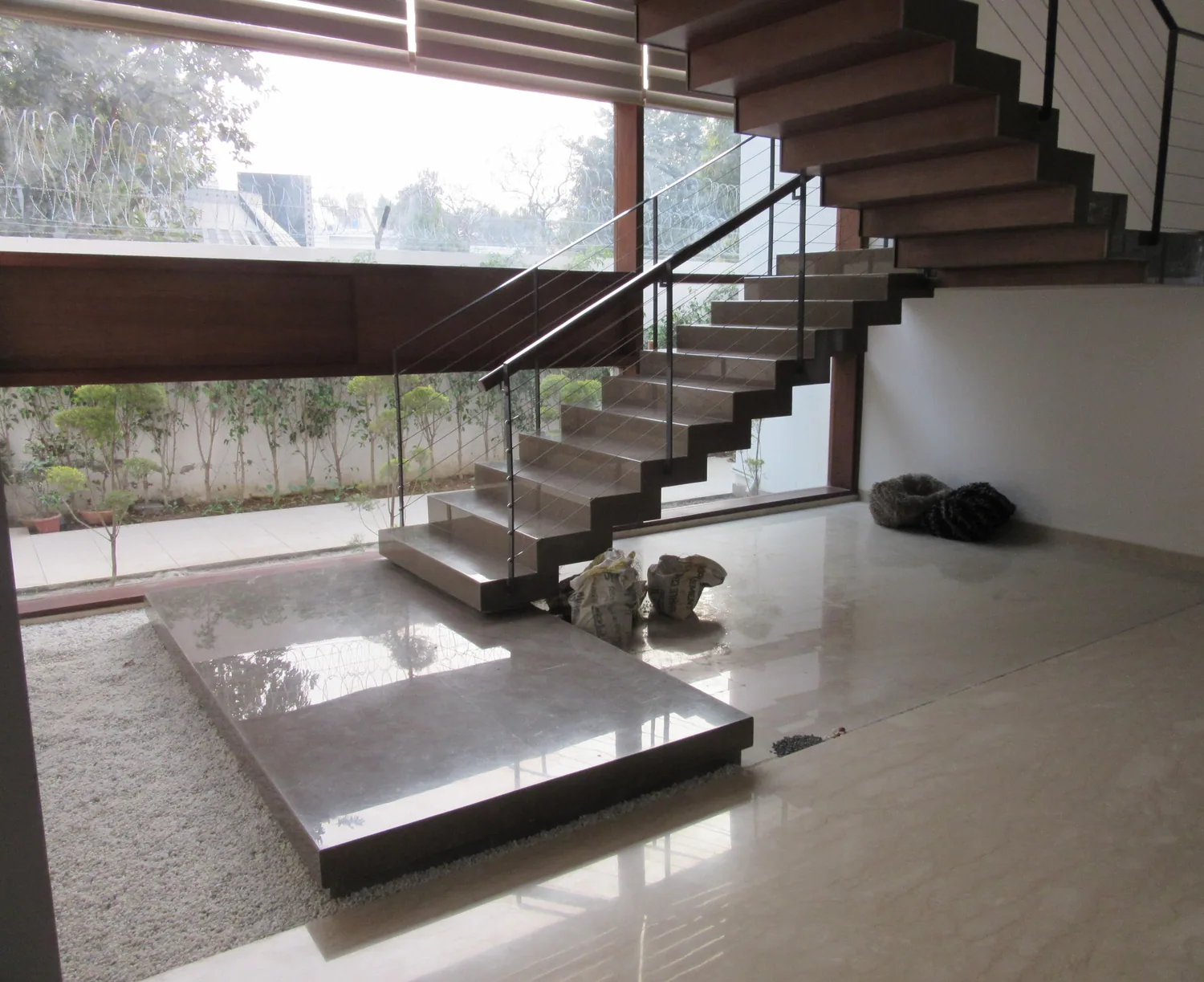 Acier project
OverviewWhat it is
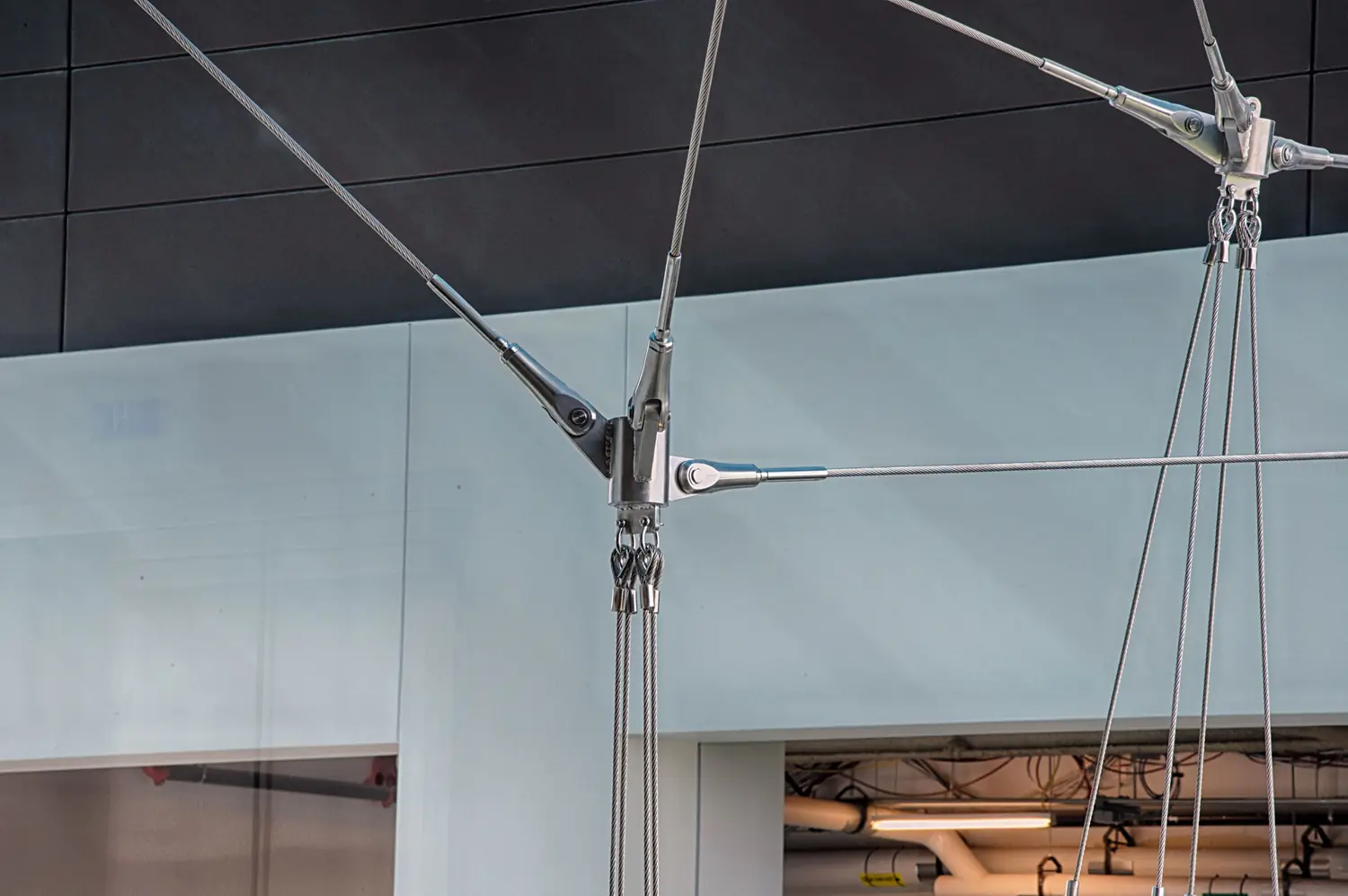
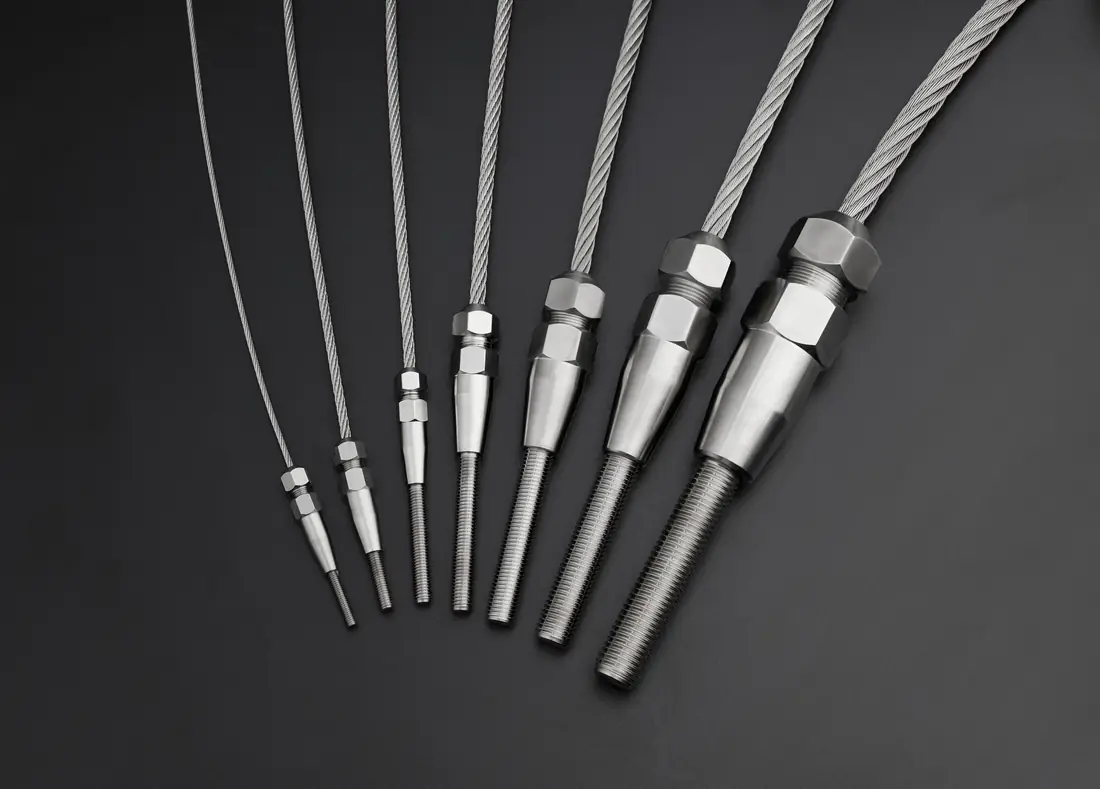
Horizontal or vertical Jakob stainless ropes, tensioned between posts with threaded, radius-head or swaged terminals. We design the posts in stainless steel, MS or aluminium and drill them to the rope spacing.
For a villa in Delhi by DADA & Partners we used Ø4 mm rope with external threads and radius heads. Panchshil in Pune and a villa in Jhansi followed.
Options
Plan itCable railing drawing or planner
Enter the run and choose the ropes, posts and handrail. The sheet, the Jakob fittings and the quantities update as you go, and architects can download the sheet with their name on it. Switch to Planner to try the 100 mm sphere.
Planner
Technical dataSizes and figures
Jakob stainless ropes for cable railings
| Rope Ø (mm) | MBL, typical (kN) | Weight (kg/100 m) |
|---|---|---|
| 3 | 7.42 | 4.5 |
| 4 | 13.10 | 7.9 |
| 5 | 20.60 | 12.4 |
| 6 | 29.60 | 17.8 |
Post and handrail materials
| Posts | Finish | Best for |
|---|---|---|
| SS 316 | Satin or mirror | Coastal, exteriors, pools |
| SS 304 | Satin or mirror | Interiors, sheltered areas |
| MS | Galvanised + powder coat | Robust, any RAL colour |
| Aluminium | Anodised or powder coat | Light, no rust |
SafetyThe 100 mm sphere test, explained
A railing must not let a 100 mm sphere, about the size of a small child’s head, pass through any gap. The UK standard (BS 6180) uses 100 mm, the US codes use 4 inches, and we design to 100 mm with a 1.1 m railing height.
A cable is flexible. With the railing at rest, a 80 mm gap is clearly smaller than the sphere. But a child can push two cables apart, so the real test is the gap under a push. That is why the planner above shows both: “blocked at rest” means the sphere cannot pass untouched; “blocked when pushed” is the result that matters.
Ways to meet the rule
| Option | How it passes the test | Best for |
|---|---|---|
| Horizontal cables, 75 to 80 mm apart | Posts or spacers every 1.2 m, stiff rope, correct pretension, rigid top rail | Adults, views, terraces |
| Closer cables, 60 to 70 mm | More margin under a push | Mixed use |
| Vertical cables | No footholds; shorter free lengths deflect less | Homes with children |
| Webnet mesh infill | Small openings, cannot be climbed, follows curves | Children, stairs, public areas |
| Thicker rope, higher pretension | Less deflection between posts | Longer post spacing |
- Horizontal cables form a ladder. Where children use the space, choose vertical cables or Webnet infill.
- Cables relax after installation. We re-tension after the first months and check yearly.
PhotosIn use
What we useProducts
ProjectsBuilt by Acier
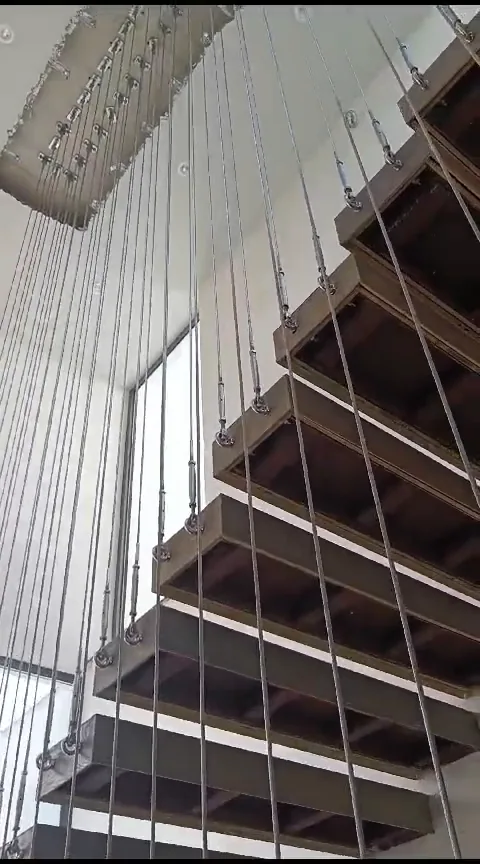
Vertical cable railing, private residence, Delhi
Vertical stainless cables from stair to ceiling at Sundial House, a private residence by DADA Design & Development Atelier, fixed into the stair and to hidden ceiling anchors.
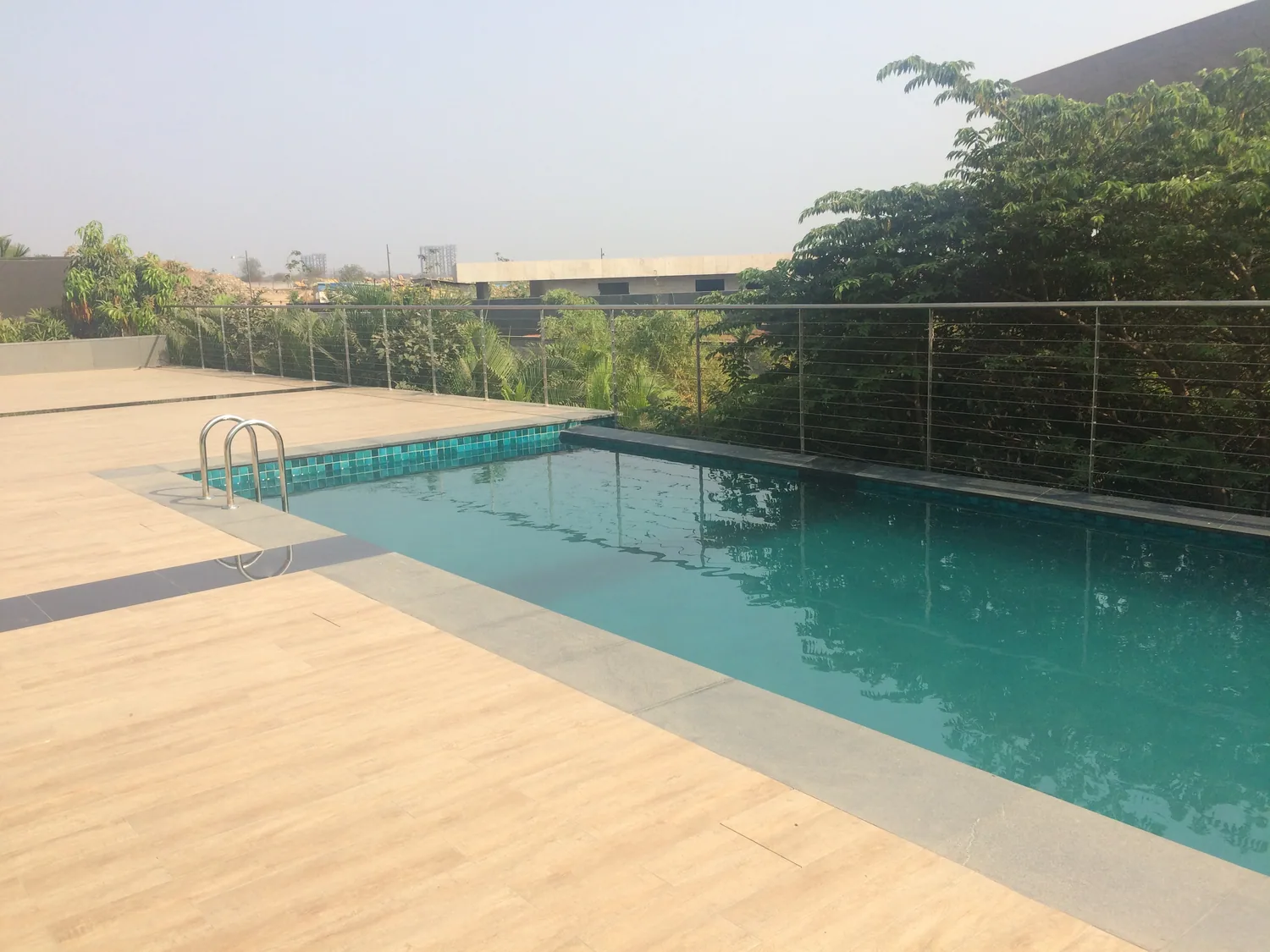
Cable railings, Panchshil YOO Villas, Pune
Stainless cable railings for Panchshil at YOO Villas, Pune: inside the villas in 2019, and along the landscaped clubhouse stair in 2022.
Cable railing, private villa, Jhansi
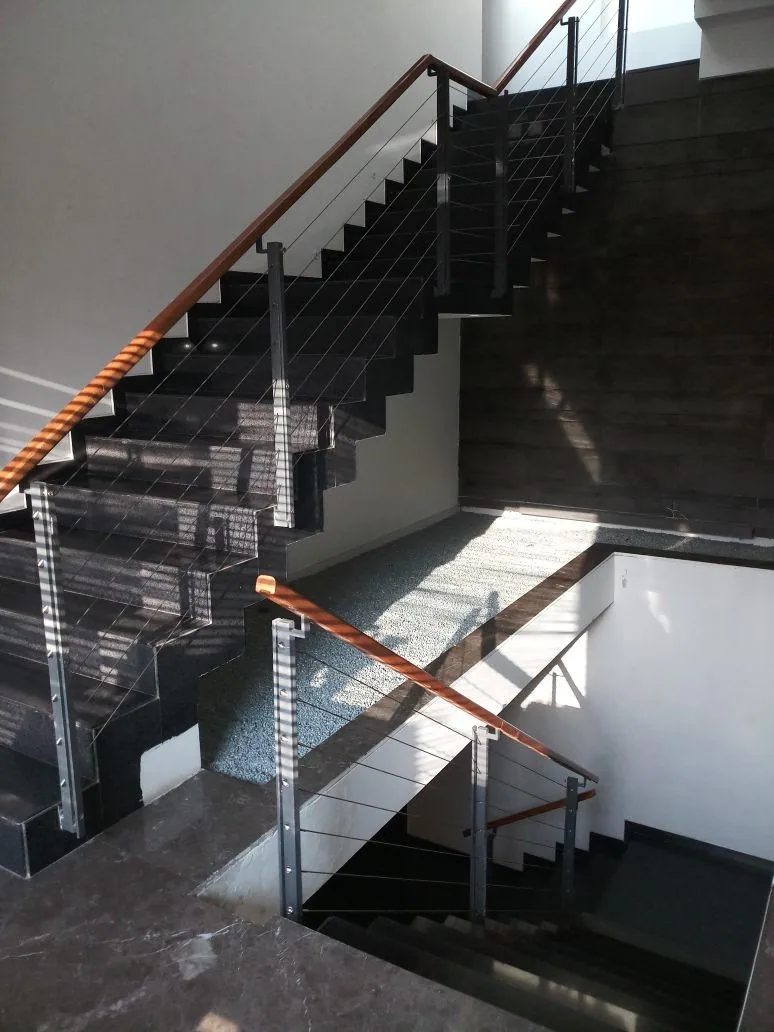
A stainless cable railing on the stone stair of a private villa in Jhansi: 21 Jakob Ø4 mm ropes between steel posts, with radius-head ends, under a timber handrail.
DownloadsCatalogues and drawings
Jakob catalogues open on jakob.com, so you always get the current edition.
QuestionsFrequently asked
What is the 100 mm sphere test?
Building codes say a 100 mm ball, roughly a small child’s head, must not pass through any gap in a railing. Ropes flex when pushed, so the gap has to pass the test under a push, not just at rest. We keep about 75 to 80 mm between horizontal ropes and posts about 1.2 m apart.
What are the options if the gap is too big?
Close the rope spacing, add intermediate spacers or posts, use thicker rope, run the ropes vertically, or use Webnet infill.
Can posts be aluminium or MS?
Yes. The ropes and fittings are always stainless; posts can be stainless, powder-coated MS or aluminium.
Read moreGuides
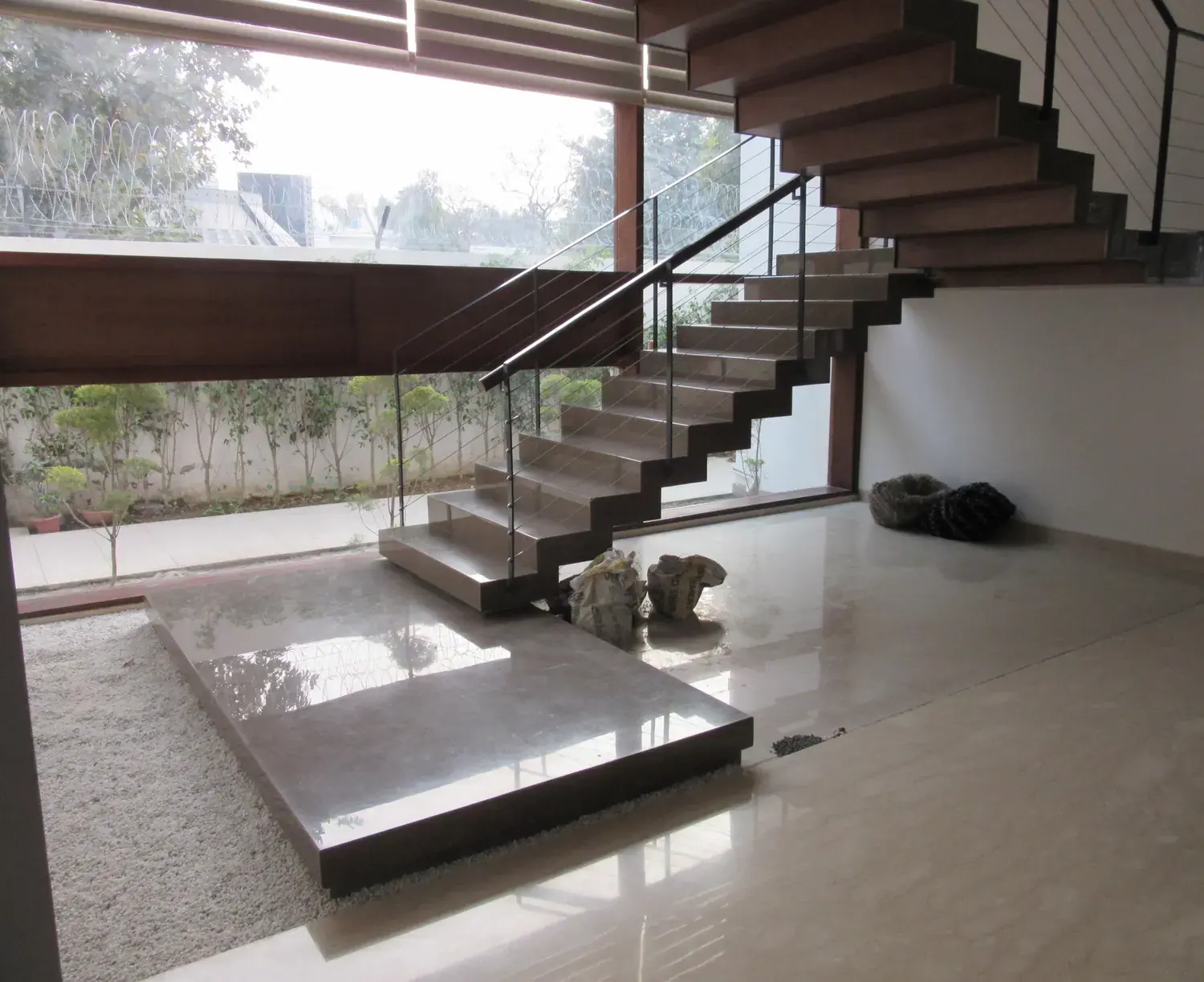
Cable railings and the 100 mm rule
Why rope spacing alone does not make a cable railing safe, and how posts, pretension and fittings keep the gap closed under load.
SS 304 or 316? Stainless steel near the coast
Why 316 stainless steel is the safer choice for railings and ropes in Mumbai and other coastal cities, and where 304 is enough.