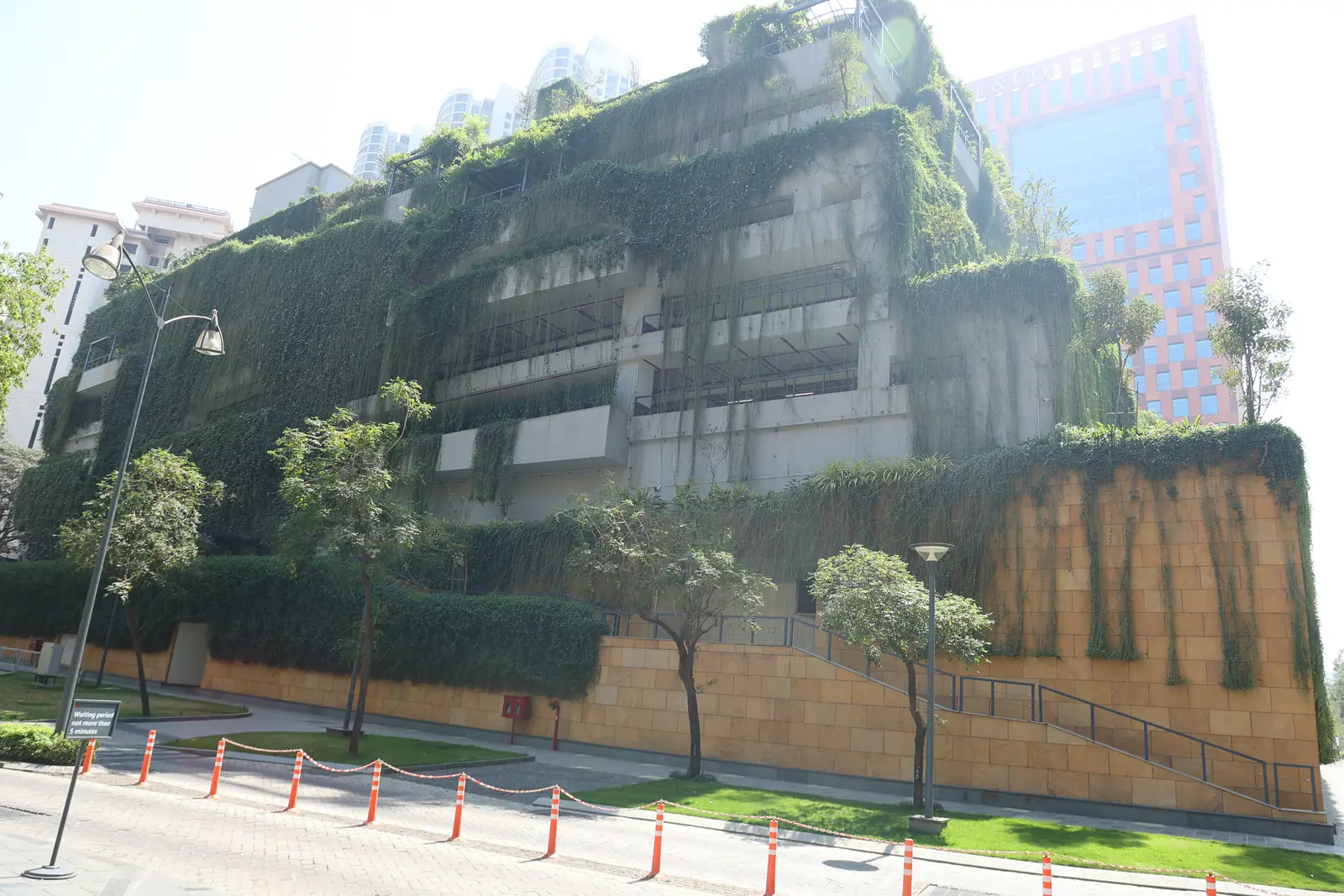
Green façade or vertical garden?
The terms are often mixed up. A vertical garden, or living wall, grows plants in modules fixed to the wall, each with its own growing medium and irrigation. A green façade uses climbing plants rooted in the ground or in planters, trained up a support that stands off the wall.
This guide is about green façades. The wall carries the support and the plants, not soil, and the plants do the covering over time. The support is the part that stays when the plants are cut back, so it is worth choosing well.
Match the support to the plant
Climbing plants hold on in different ways, and the support should suit the way they climb.
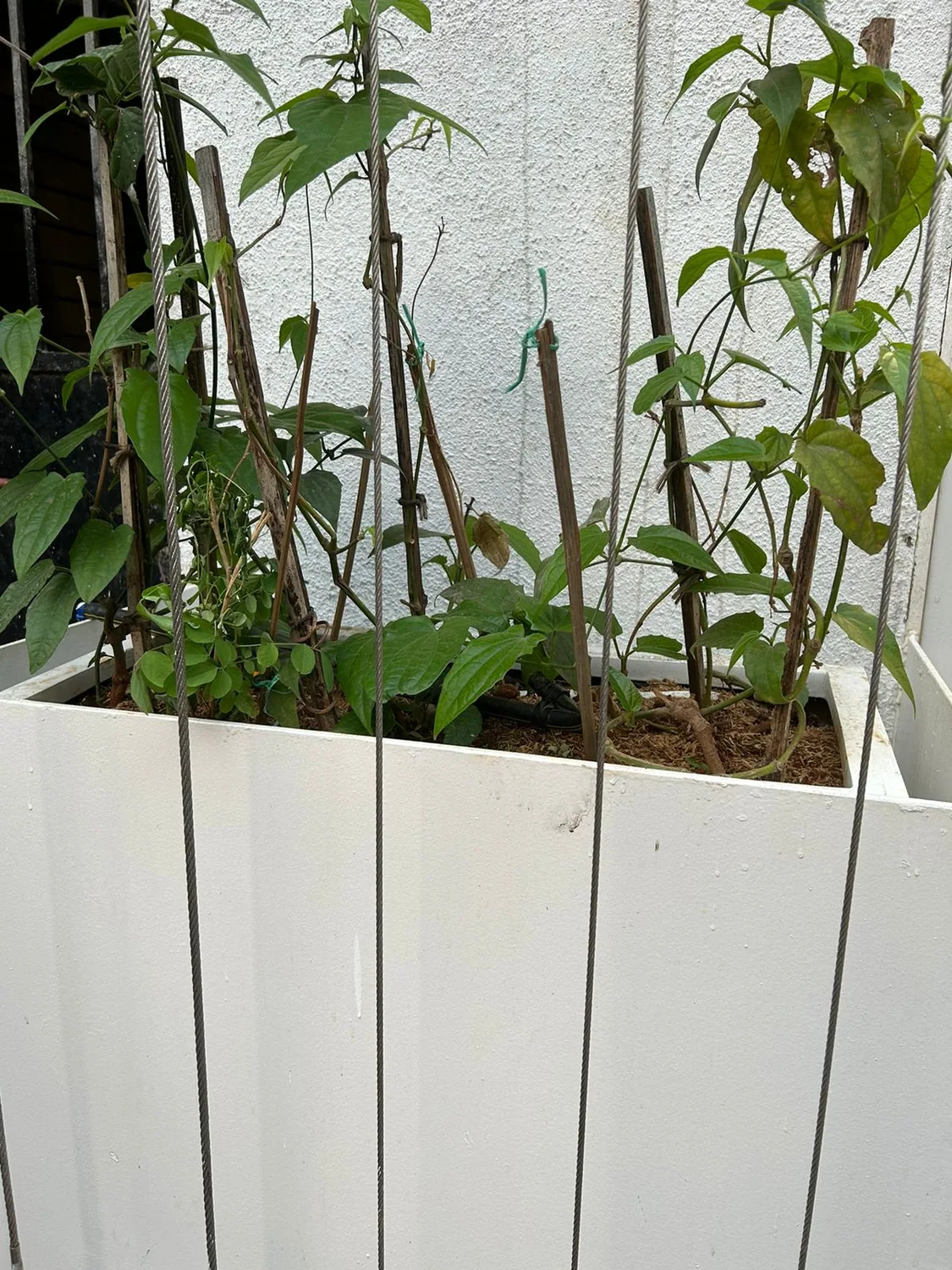
- Twining plants wrap their stems around a support. They do well on vertical cables, usually 150 to 250 mm apart for a dense result, and not more than about 300 mm.
- Tendril climbers hook onto thin elements. They need a grid or mesh with crossings close enough to reach.
- Scramblers lean and weave. They need a mesh or trellis they can be tied to.
- Self-clinging climbers stick to the wall itself and need no support, but they fix to the surface and can be hard to remove.
Option 1: tensioned cables
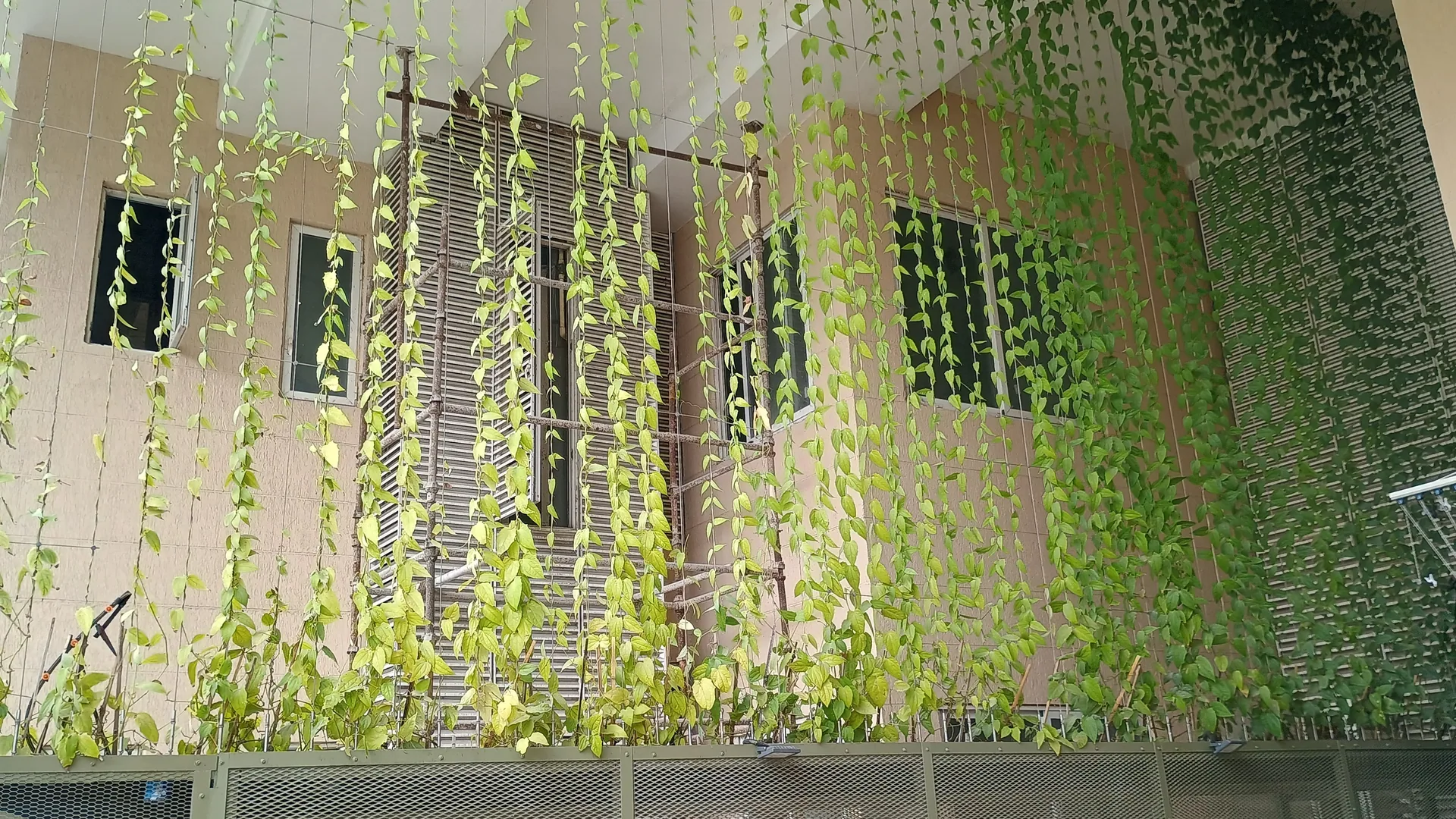
Stainless steel ropes are tensioned between brackets fixed to the wall or a frame, in vertical lines, a grid or diagonals. Cables are light, almost invisible until the plants grow, and easy to set out on large or irregular façades.
Our cable greening uses Jakob ropes and fittings, from Ø2 to Ø12 mm. On a residence deck in Mumbai, Acier fixed Ø4 mm Jakob ropes to an MS frame to make a green privacy wall. The same rope logic carries the Godrej Properties pergolas, where Ø10 mm tension ropes hold the structure from the top and on the diagonal.
Option 2: Webnet rope mesh
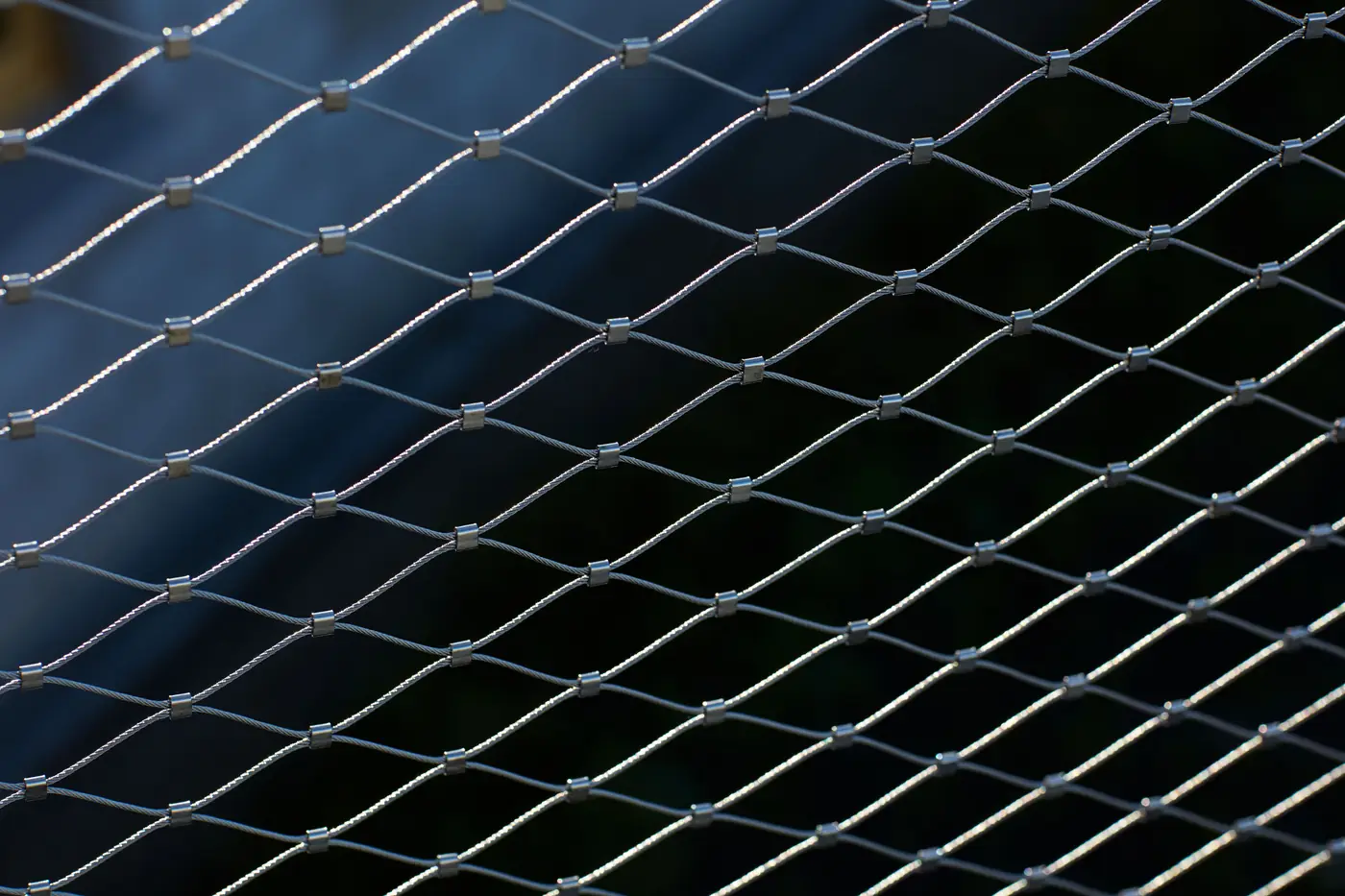
Webnet gives plants support over the whole surface, not just along lines. That suits tendril climbers and gives more even cover. It is AISI 316 stainless steel, flexible, and can be tensioned flat, curved or overhead.
On a wall, we hold Webnet on a framework of Jakob Ø6 mm ropes, fixed off the wall with our eye brackets. There are no frames: the ropes are the frame, so the façade stays light and almost invisible until the plants take over.
Because it can be tensioned overhead, Webnet also suits pergolas and canopies, where plants grow across the top to give shade. A private farmhouse in Delhi uses Webnet Ø2/W100 on Ø6 mm ropes as a green canopy. At that size the mesh weighs 0.63 kg/m² and lets through 94.6% of light, so it stays light and airy until the plants take over.
Option 3: welded trellis
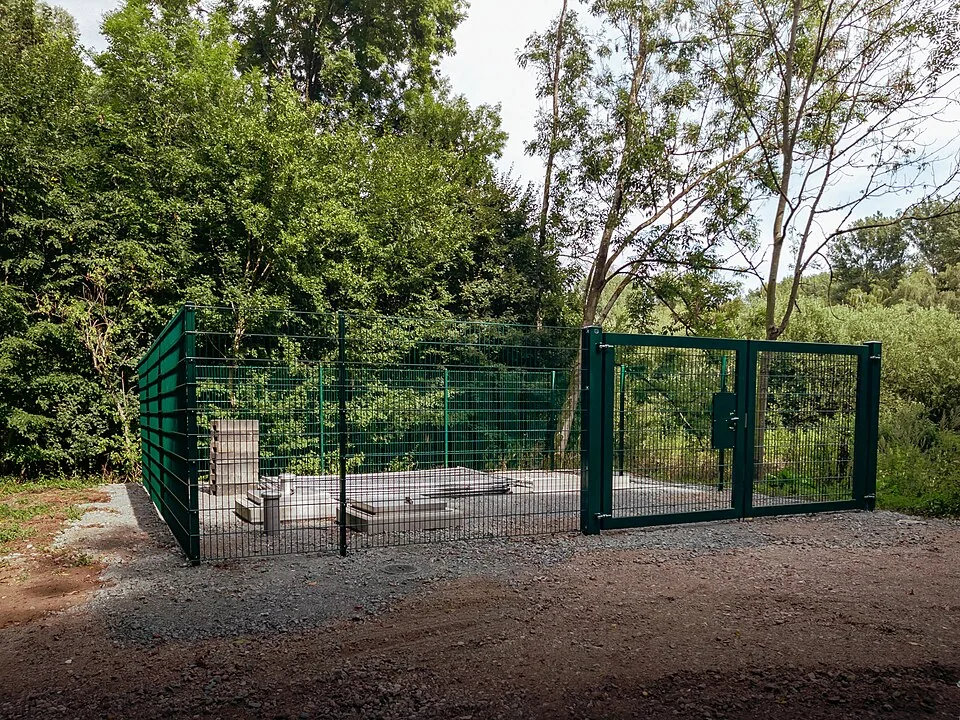
Welded trellis from the Acier range comes as rigid panels, in galvanised or powder-coated MS, or in stainless steel. It suits smaller areas, planter edges and places where a crisp, framed look matters. Panels are simple to fix and give a clean line from day one, so the trellis works as a screen in its own right while the plants are still young.
Quick comparison
| Cables | Webnet | Welded trellis | |
|---|---|---|---|
| Form | Lines, grid or diagonals | Continuous mesh | Rigid panels |
| Best plants | Twining | Tendril, scrambling | Tendril, tied-in |
| Before plants grow | Almost invisible | Fine and transparent, on Ø6 mm ropes, no frames | Visible frame |
| Curves and canopies | Straight runs only | Yes | Flat panels |
A quick checklist
Acier designs, supplies and installs green façade supports across India, from single walls to office campuses such as Nirlon Knowledge Park in Mumbai, together with planters and irrigation from the Acier range.
- Plant species, growth rate and full-grown weight
- Stand-off from the wall, so stems and air can pass behind
- What the fixings go into: RCC, masonry or a steel frame
- Wind load on the full-grown foliage
- Planters, soil depth and irrigation, or beds at ground level, which grow fastest
- Access for pruning at height