Why a helipad needs a net
An elevated helipad is a flat roof with rotor wash. Anyone who steps, slips or is blown off the edge needs something to land in. The rules therefore ask for a safety net or shelf all round the landing area, without making it an obstacle for the helicopter.
What the rules say
Your helipad consultant and the DGCA approval confirm the exact requirements for your site.
| Source | What it says |
|---|---|
| ICAO Annex 14, Vol II | Safety nets or shelves around the edge, never higher than the landing area (TLOF) |
| UK CAA CAP 437 | Net supports at least 1.5 m out from the deck edge; a flexible net with its inboard edge level with, or just below, the deck |
| FAA AC 150/5390-2D | A net or shelf where the pad is more than 0.76 m above its surroundings; at least 1.5 m wide; design load about 122 kg/m² |
| India, DGCA | Heliports are approved under CAR Section 4, Series B, Part III, based on ICAO Annex 14 |
A typical specification
- Width: at least 1.5 m, all round the landing area except at access points.
- Level: the inboard edge at or just below the deck, never above it.
- Slope: rising upward and outward at about 10°.
- Behaviour: a hammock, not a trampoline. It catches and holds a person instead of throwing them back.
- Strength: offshore practice drop-tests the net with a 100 kg mass from 1 m (some specifications use 75 kg).
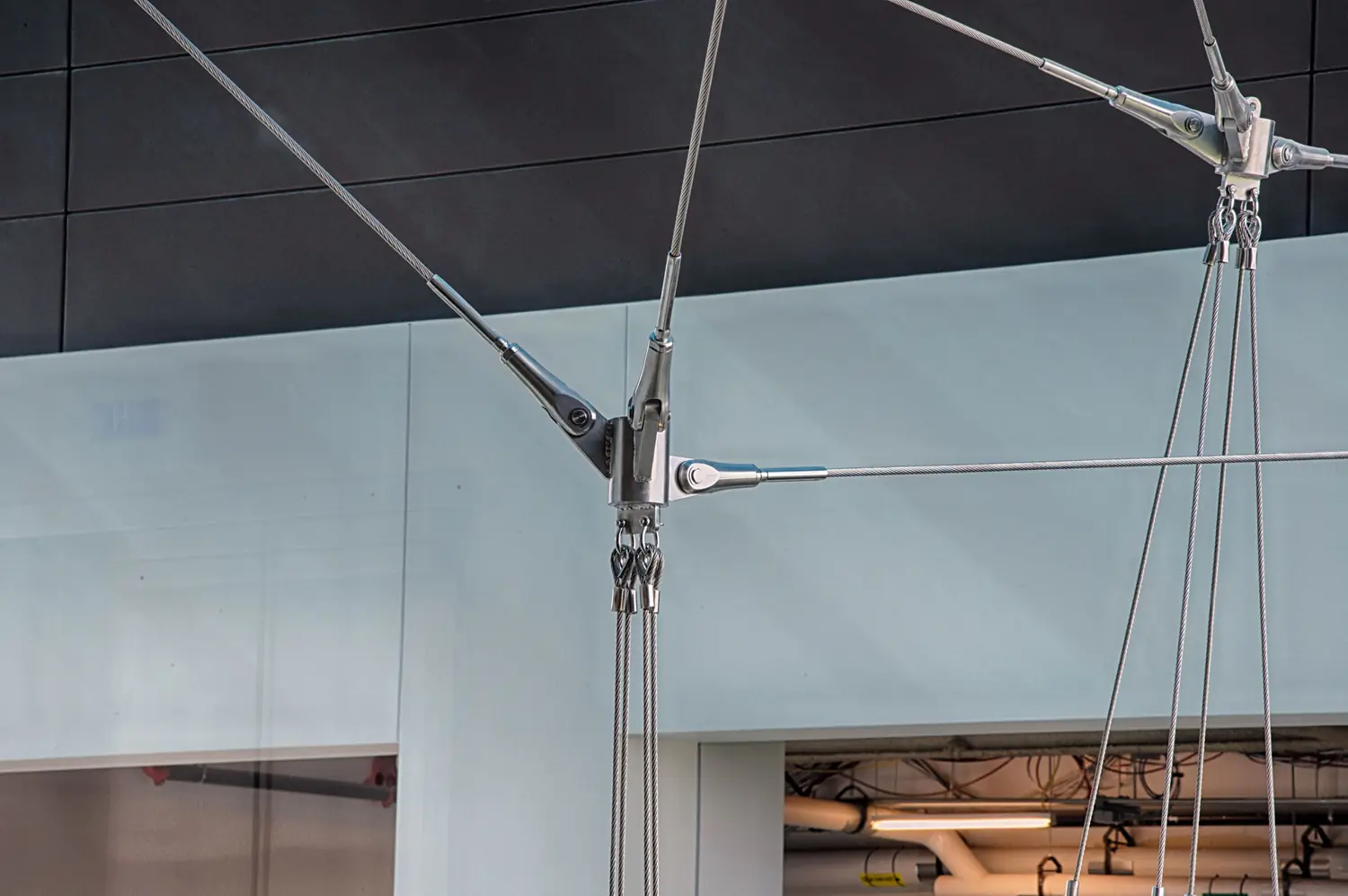
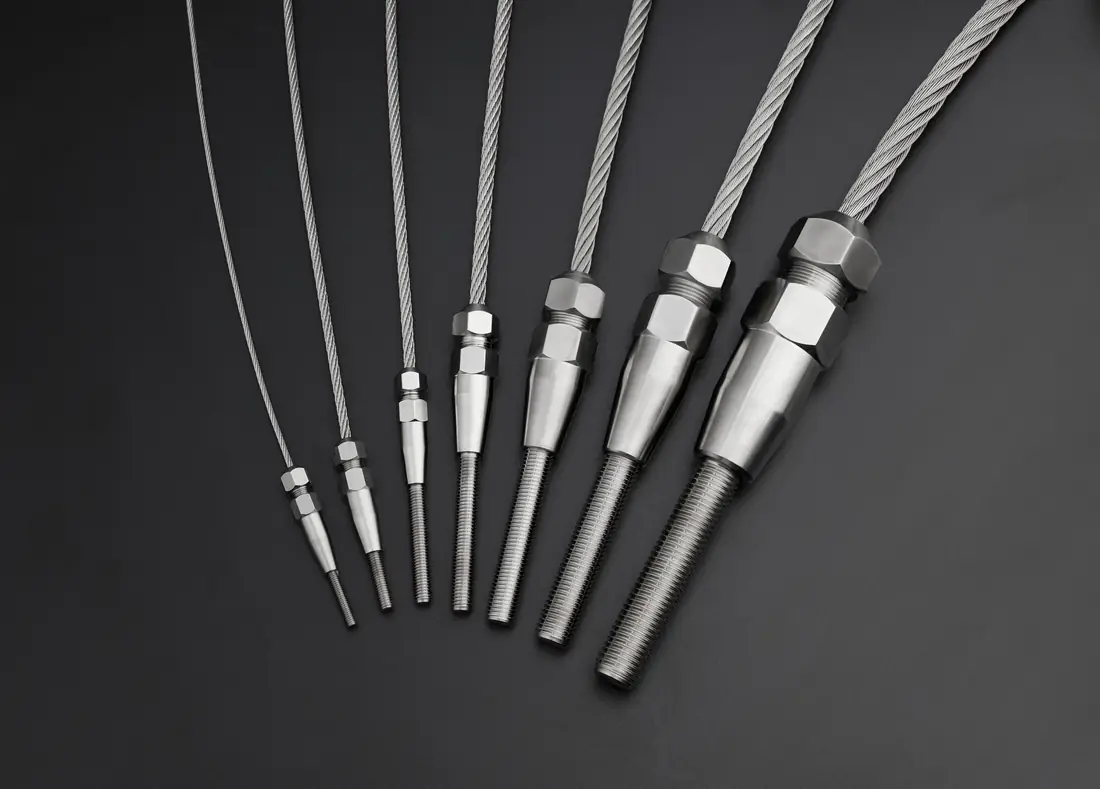
- Fixings: low-profile, designed for the net load plus wind.
Why stainless rope mesh
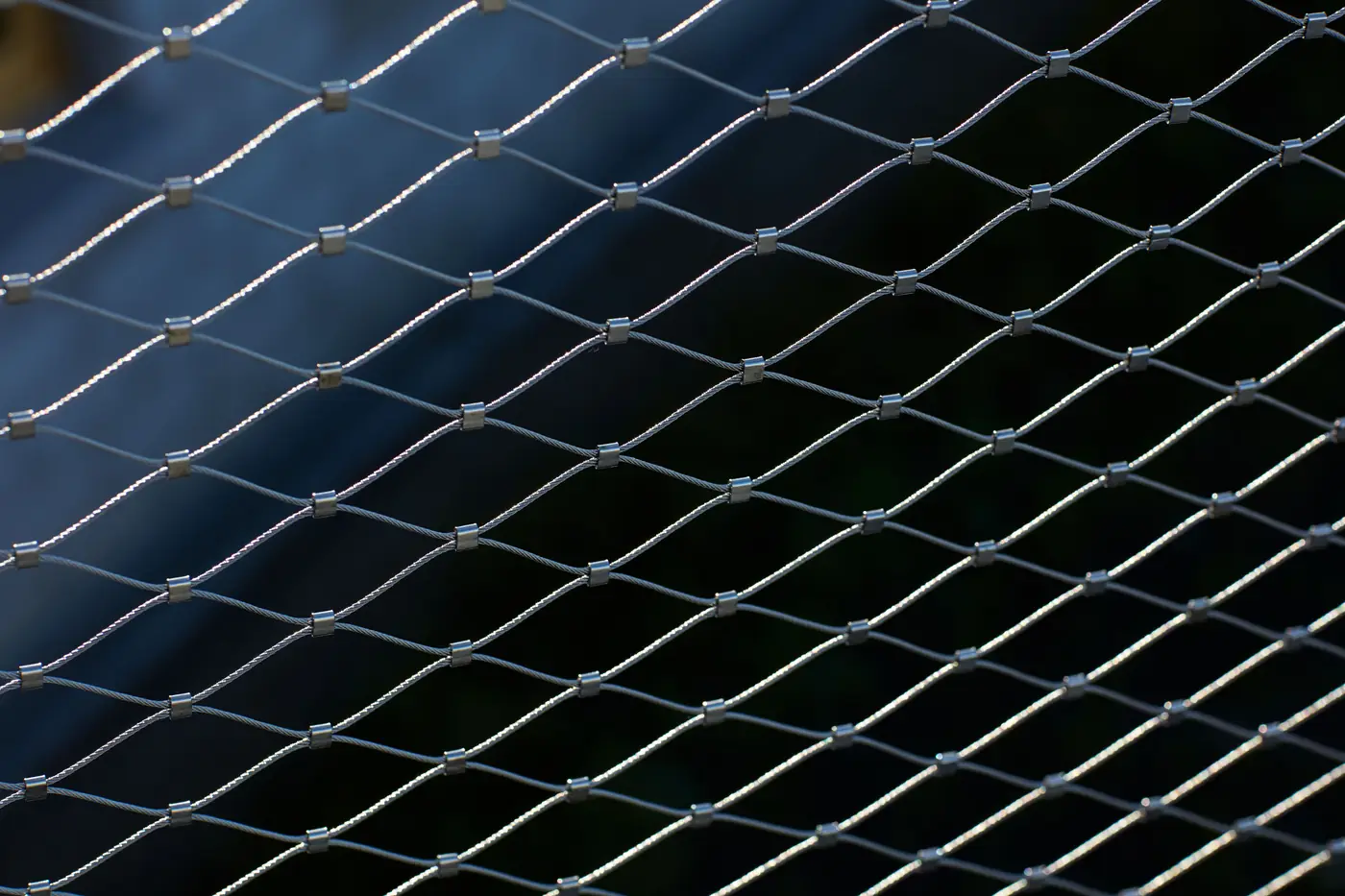
The net lives outdoors, in sun, rain and sometimes salt air, next to aviation fuel. Synthetic nets degrade in UV and can burn. Stainless steel rope mesh in AISI 316 does not burn, rot or flake, stays flexible for decades and can follow any deck shape.
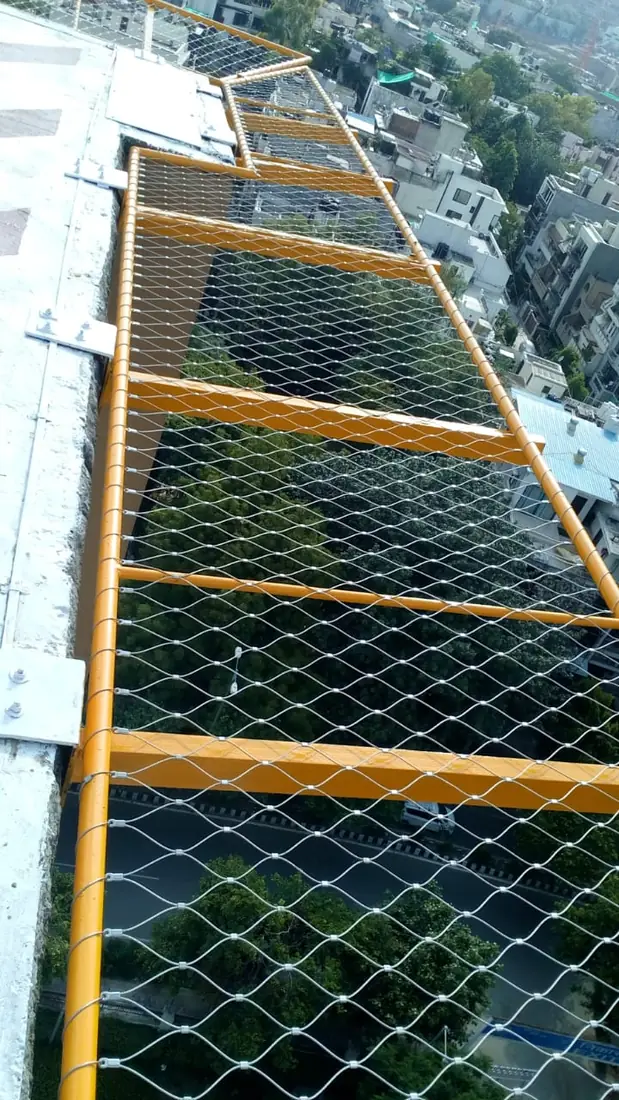
A standard specification is Jakob Webnet with Ø3 mm rope and a 100 mm mesh, laced to a steel frame. We used it on the helipad at AIIMS, New Delhi.
Inspection
Nets are inspected regularly and drop-tested to the regime your regulator sets. Stainless mesh keeps its strength, so inspection focuses on the frame, the fixings and the lacing.