The rule
The mesh must be smaller than the smallest ball you play with, with a margin for the net stretching and the ball squashing on impact, and the twine strong enough for the fastest shot.
Mesh by ball
| Sport | Ball | Mesh | Twine |
|---|---|---|---|
| Golf | 42.7 mm | 20 to 25 mm | 1.5 to 2.5 mm |
| Tennis | about 67 mm | 40 to 45 mm | 2 to 3 mm |
| Cricket | about 72 mm | 40 to 50 mm | 2.5 to 3.5 mm |
| Hockey | about 73 mm | 40 to 45 mm | 3 mm or more |
| Box cricket, multi-sport | smallest ball | 40 to 45 mm | 3 mm |
| Volleyball | about 210 mm | 100 mm | 2 to 3 mm |
| Football | about 220 mm | 100 to 120 mm | 2.5 to 3 mm |
Heights
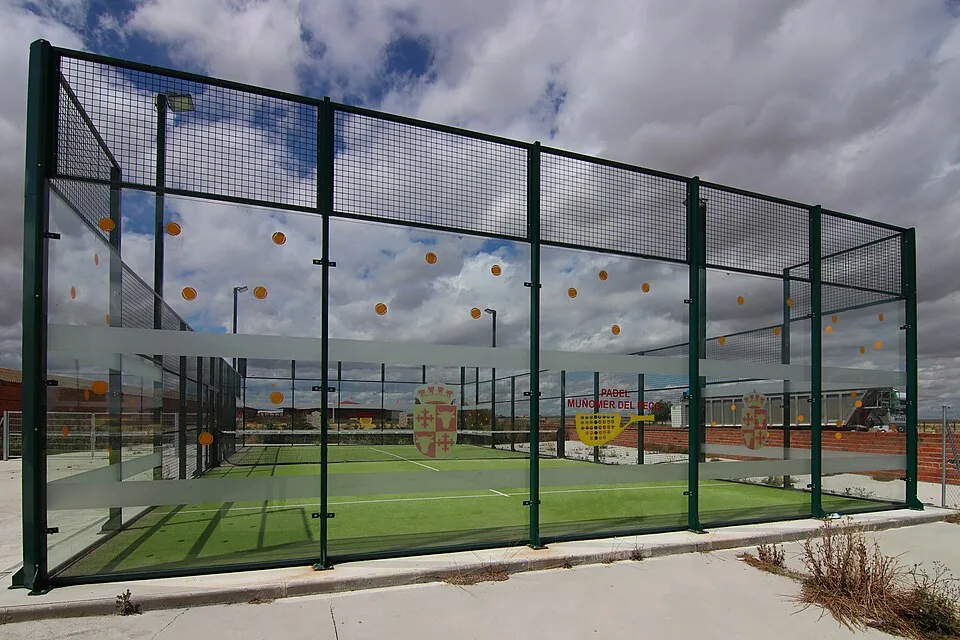
- Tennis and padel surrounds: 3 to 4 m.
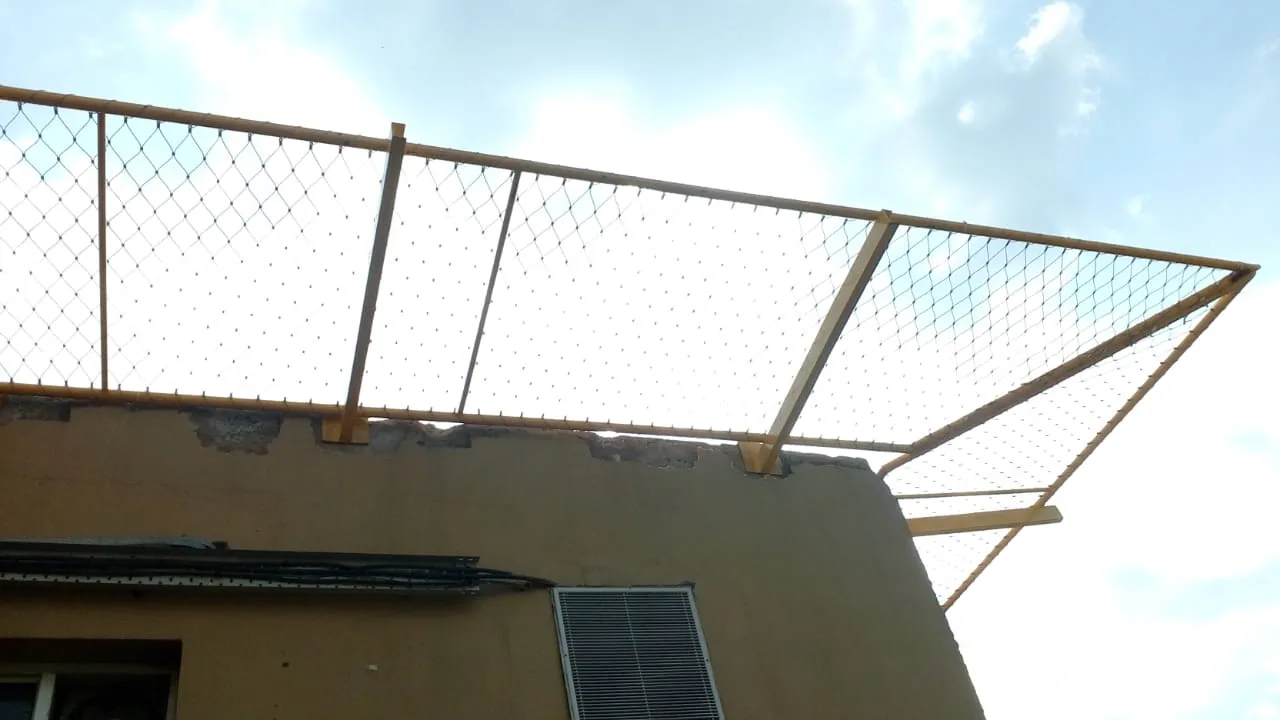
- Rooftop box cricket and football turfs: a fully enclosed cage, sides 6 to 10 m plus a roof net.
- Behind football goals: 6 to 15 m.
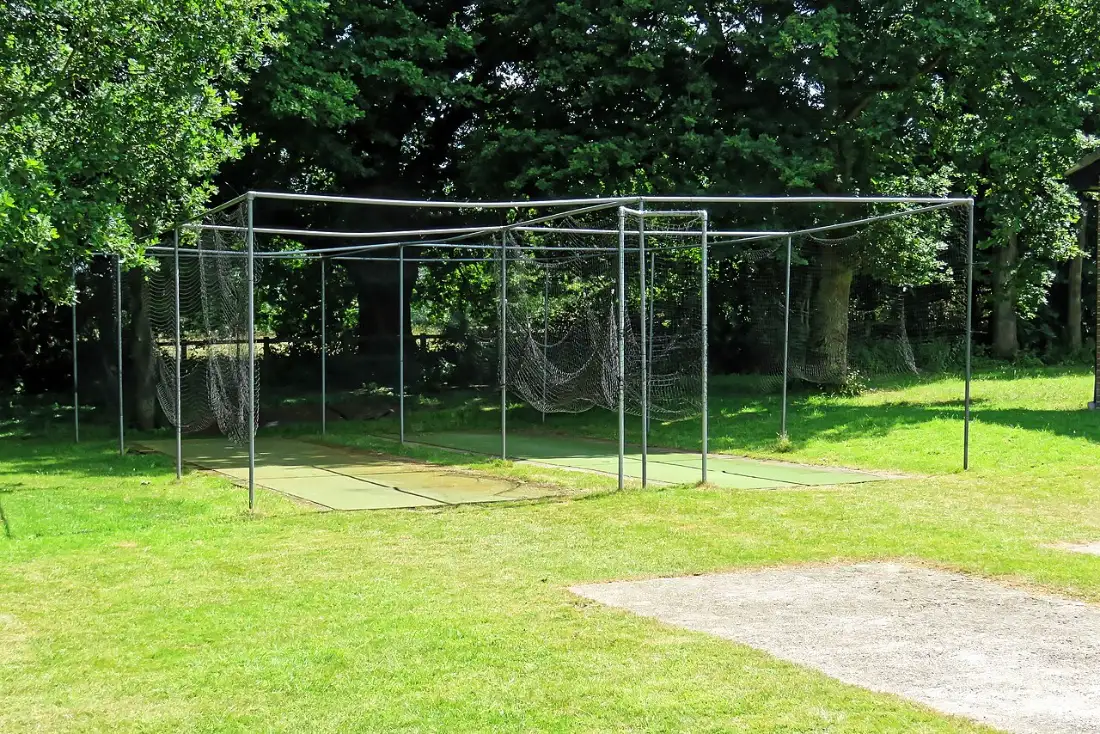
- Cricket practice lanes: about 3 to 3.7 m high.
Materials
- HDPE: the usual outdoor net; does not absorb water; choose UV-stabilised grades.
- Nylon: strongest for its weight, good for impact; needs UV treatment.
- Polyester: good UV resistance and low stretch.
- Knotless nets are lighter, smoother on balls and last longer than knotted ones.
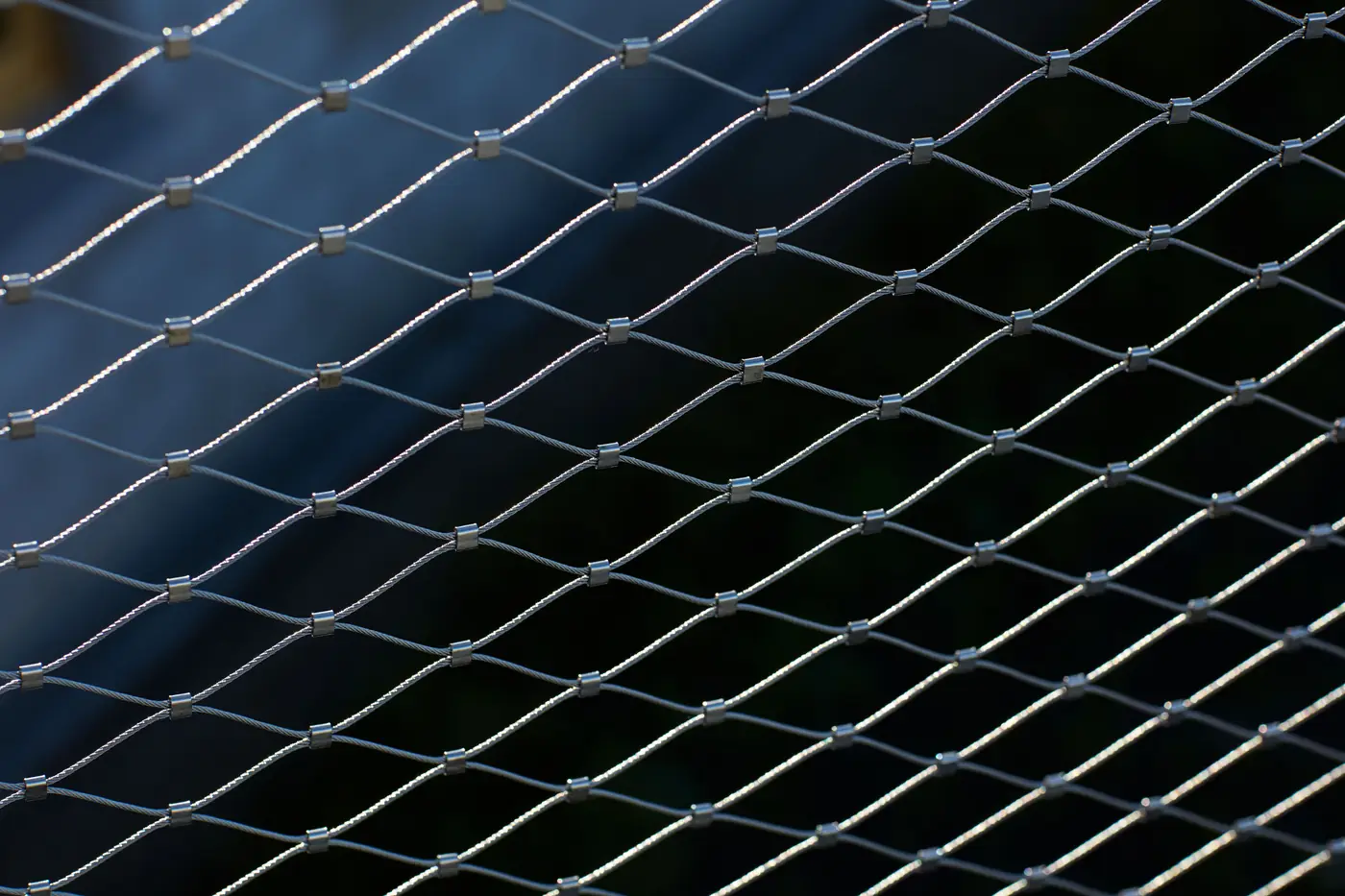
- Stainless steel Webnet: for rooftop turfs and permanent ball-stops. It does not burn, does not degrade in sunlight and lasts decades.
Padel courts
Padel uses steel mesh, not net: openings of 50 to 70.8 mm on the diagonal, wire of 2 to 3 mm. We build complete padel courts to the FIP rules.