What the numbers mean
A wire rope is named by how it is built. The first number is the count of strands, the second is the count of wires in each strand. For the same diameter, more and thinner wires make a rope more flexible, while fewer and thicker wires make it stiffer and less stretchy. Almost every choice in this guide follows from that.
- 1×19: one strand of 19 wires. There is no core; the rope is the strand.
- 6×7+WC: six strands of seven wires, laid around a wire core (WC).
- 6×19+WC: six strands of 19 wires, around a wire core.
1×19: stiff and low-stretch
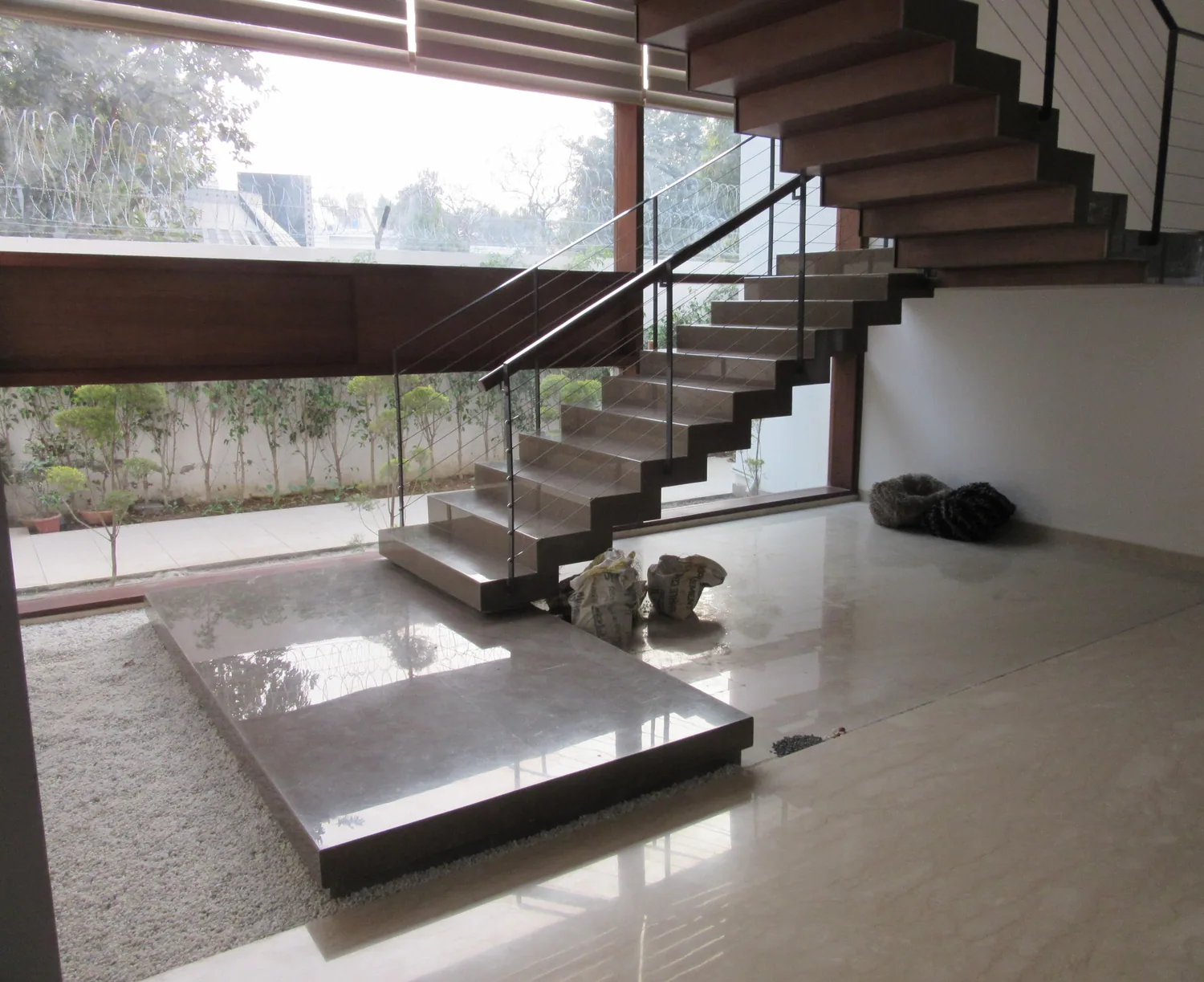
1×19 is the stiffest of the three and stretches least under load. That makes it the rope for stays, balustrade cables, pergolas and primary structures, where the rope should hold a line at a fixed tension. It is not meant to run over pulleys or bend tightly. At the largest size the construction changes: Ø26 mm is 1×37.
6×7 and 6×19: when the rope has to bend
6×7+WC is more flexible than 1×19. It suits lacing, nets and ropes that follow curves. 6×19+WC is flexible, and is the choice for running ropes, pulleys and tight bends.
The same logic runs through Jakob Webnet, which uses flexible rope so the mesh can follow curves and three-dimensional forms.
Breaking loads, Ø3 to Ø8 mm
Values are minimum breaking loads (MBL) from the Jakob Basic 6 catalogue. At the same diameter, 1×19 carries the most load, because more of its cross-section is steel. It is also heavier: at Ø4 mm, 1×19 weighs 7.9 kg per 100 m, against 6.4 kg for 6×7+WC and 6.5 kg for 6×19+WC.
| Ø | 1×19 MBL | 6×7+WC MBL | 6×19+WC MBL |
|---|---|---|---|
| 3 mm | 7.42 kN | 5.2 kN | 5.12 kN |
| 4 mm | 13.1 kN | 9.1 kN | 9.09 kN |
| 6 mm | 29.6 kN | 19 kN | 20.4 kN |
| 8 mm | 52.7 kN | 36 kN | 33.3 kN |
Larger sizes for structures
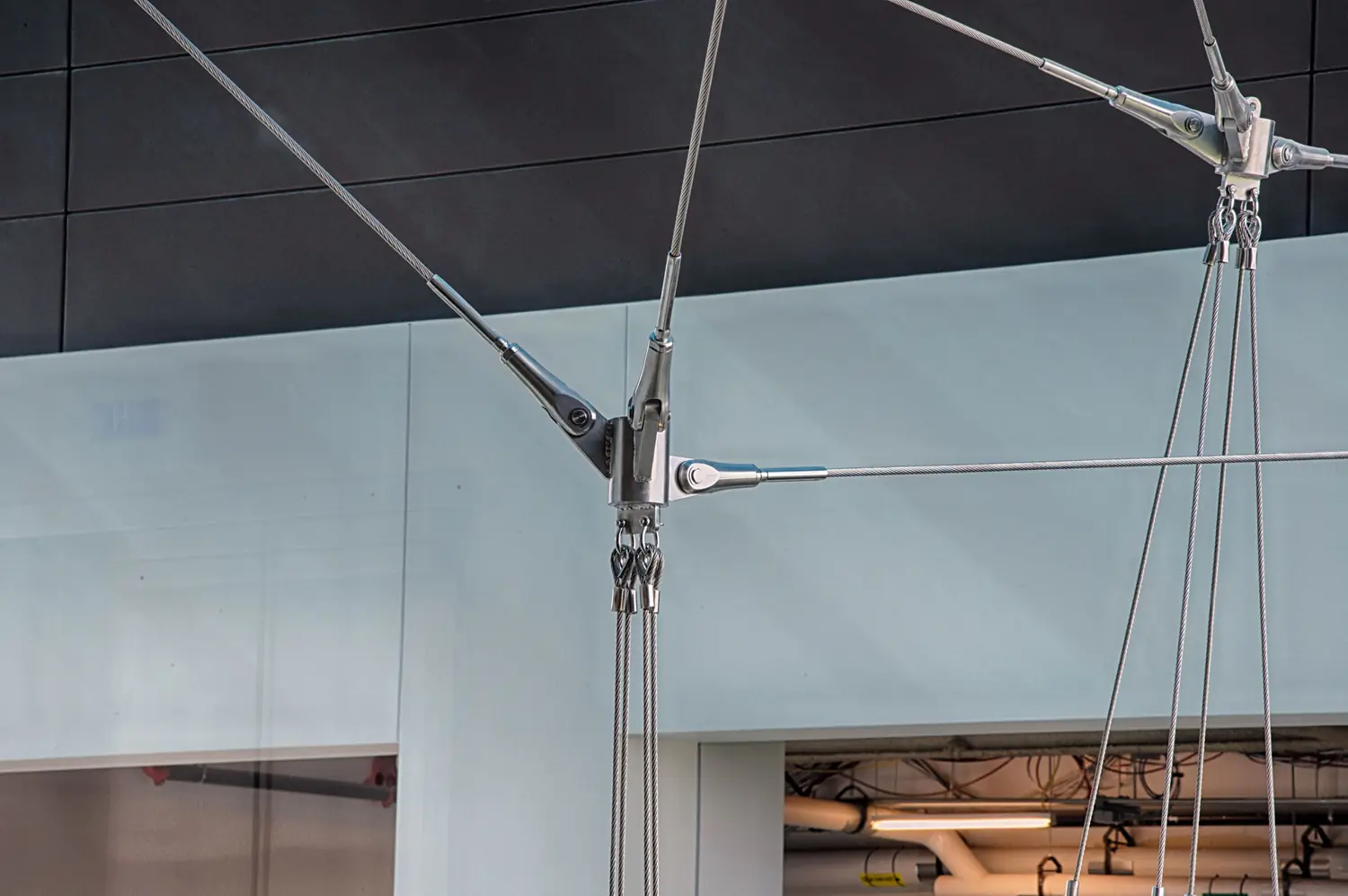
These are the sizes that carry roofs, canopies and nets. The leopard enclosure at Mumbai Zoo hangs on 30 primary ropes of Ø22 mm and 21 of Ø26 mm. At the Godrej Properties pergolas, Ø10 mm tension ropes hold the structure from the top and on the diagonal.
| Ø | Construction | MBL | Weight per 100 m |
|---|---|---|---|
| 10 mm | 1×19 | 82.4 kN | 49.5 kg |
| 12 mm | 1×19 | 118 kN | 71.3 kg |
| 16 mm | 1×19 | 211 kN | 126.8 kg |
| 22 mm | 1×19 | 398 kN | 239.8 kg |
| 26 mm | 1×37 | 551 kN | 330.5 kg |
Fittings and design load
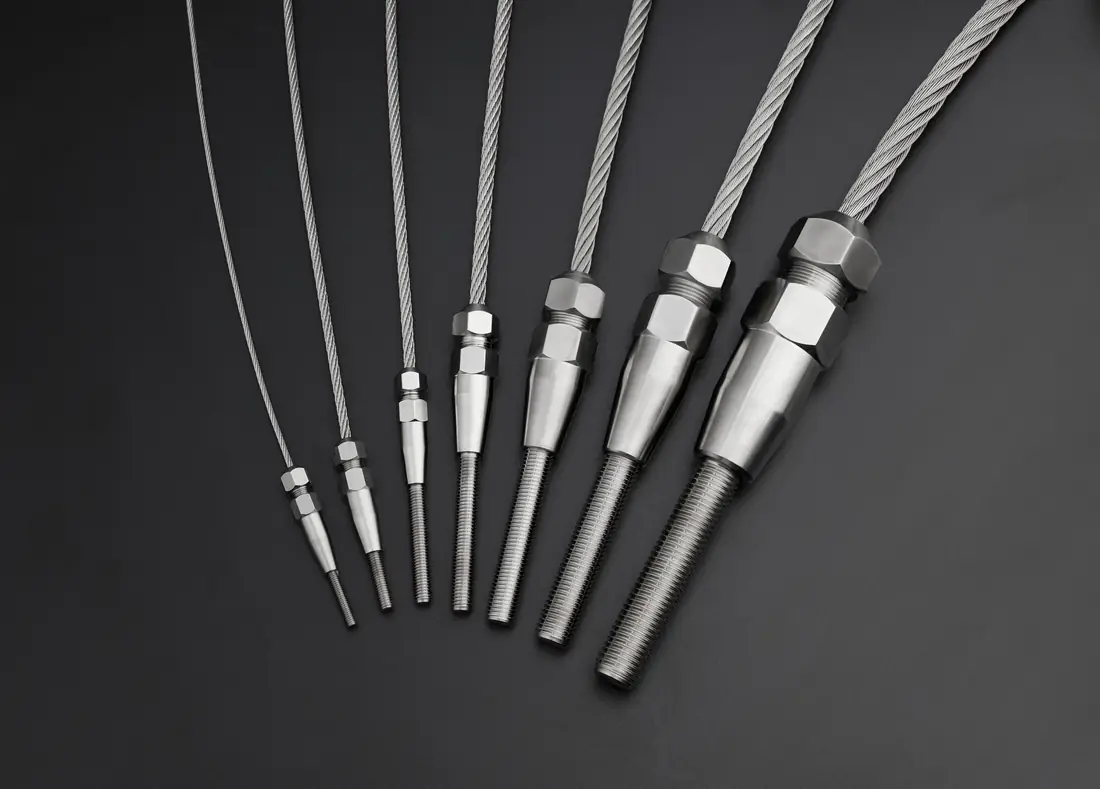
A rope is only as strong as its end. Jakob end connectors reach at least 90% of the rope's minimum breaking load, so the connection does not become the weak link. Swaged, threaded and fork terminals, radius heads and turnbuckles are chosen to suit how the rope is fixed and tensioned.
The MBL is not a working load. Your structural engineer applies the safety factor the application requires, and checks the supporting structure for the rope forces.
Allow for stretch as well. Every rope lengthens a little under load, and a new rope settles in its first period of use. Turnbuckles or threaded terminals leave room to re-tension after installation.
A quick checklist
Acier supplies Jakob stainless steel wire rope and fittings across India, and designs and installs complete rope structures with one point of responsibility.
- Does the rope stay straight or bend? Straight: 1×19. Bending: 6×7 or 6×19.
- What load does it carry, and what safety factor applies?
- How much stretch can the design accept?
- Is the site coastal or exposed? Specify the AISI 316 material group.
- What does the rope connect to, and how will it be tensioned?