
In this section ▾
Animal enclosures and aviary mesh
Habitats that feel open. We design, engineer, draw, quantify, supply and install the whole enclosure: Webnet canopies and walk-through aviaries, the primary ropes, masts and anchors that carry them, and the viewing windows.
PicturesWhat it can look like
Choose a typeWhat do you need?
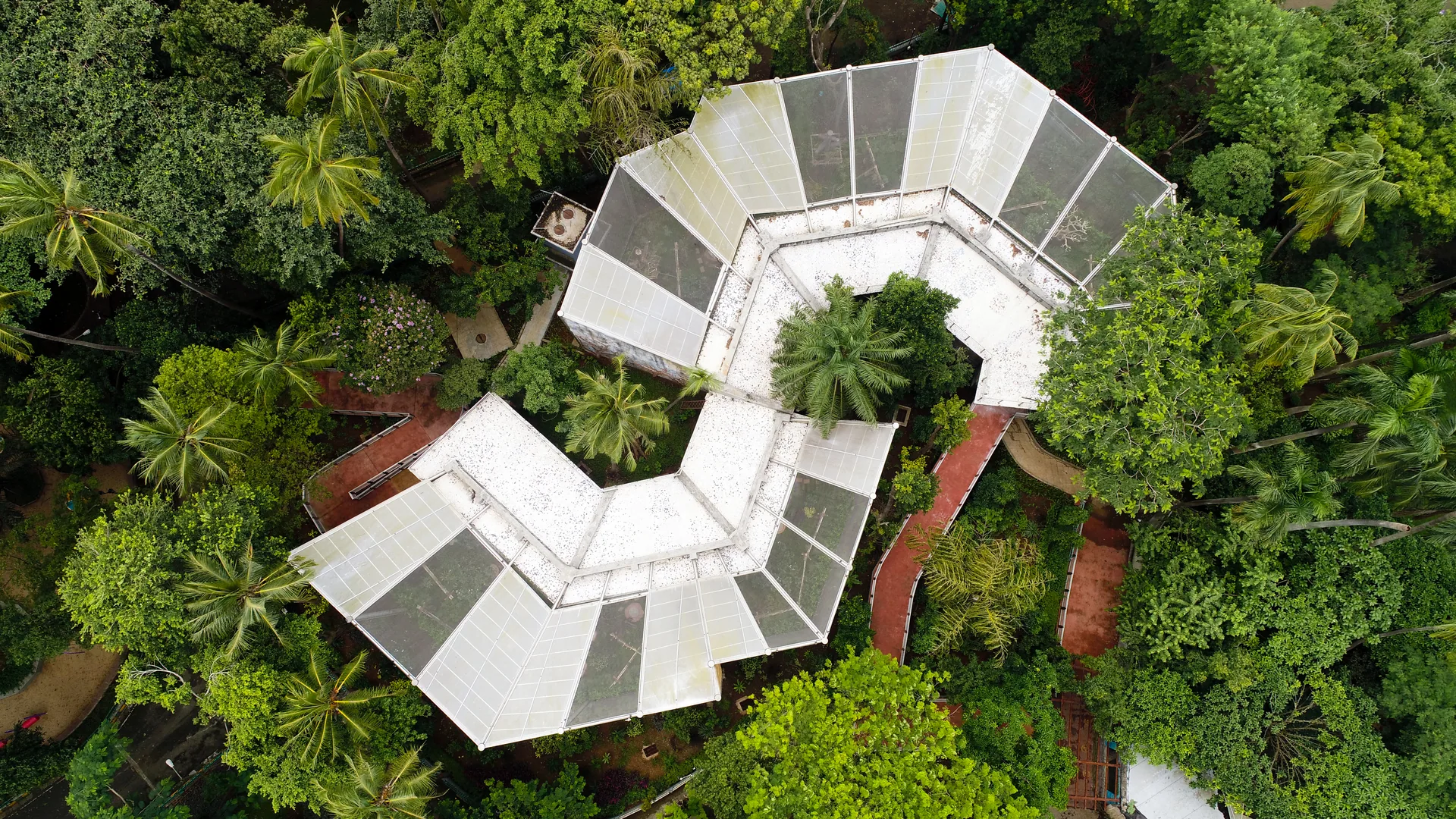
Aviaries
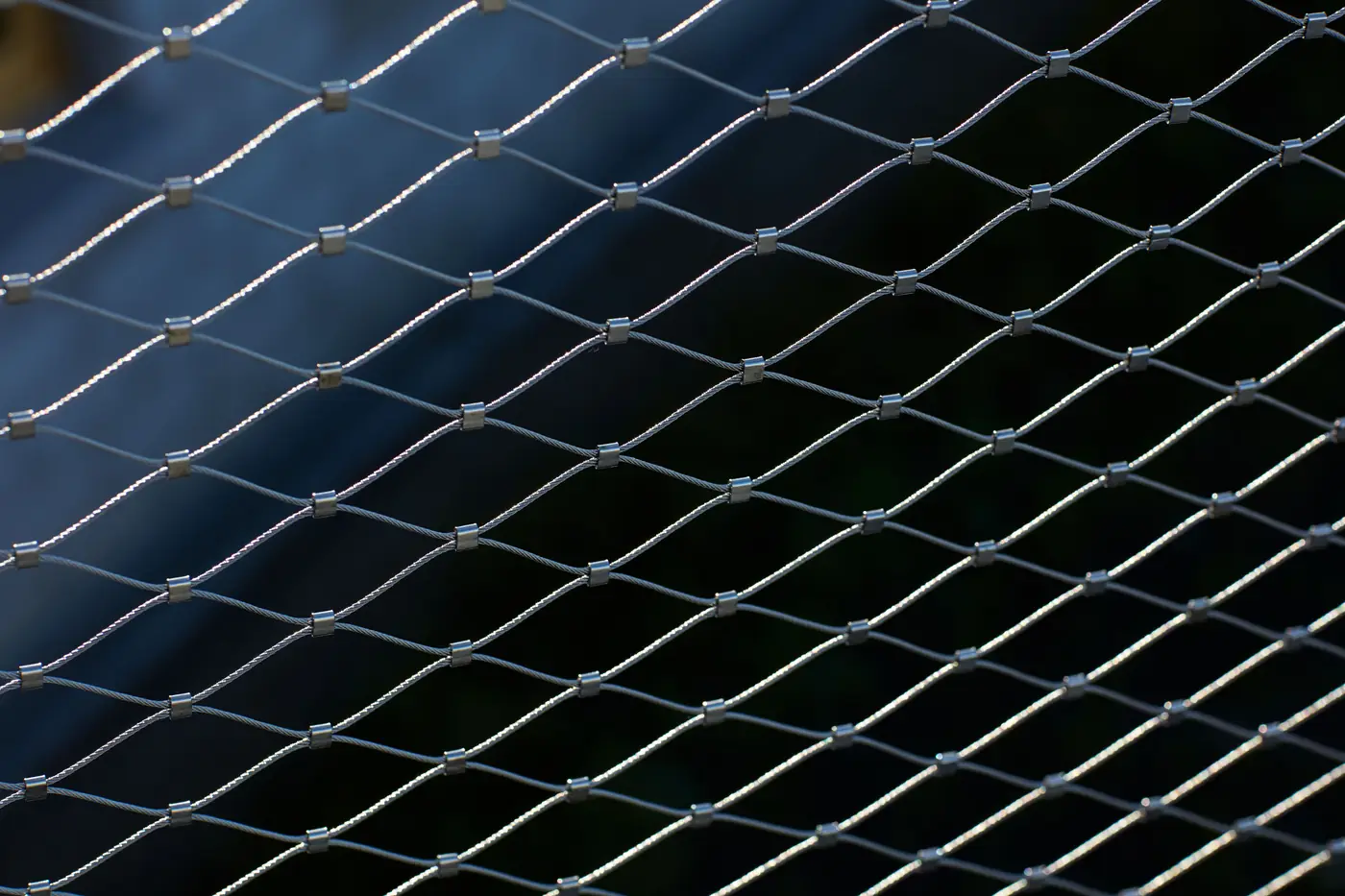
Mesh sized to the smallest bird, on stainless ropes.
We’d chooseWebnet Ø1.5 mm / W 25 for small birds, up to W 50
See the pageAviaries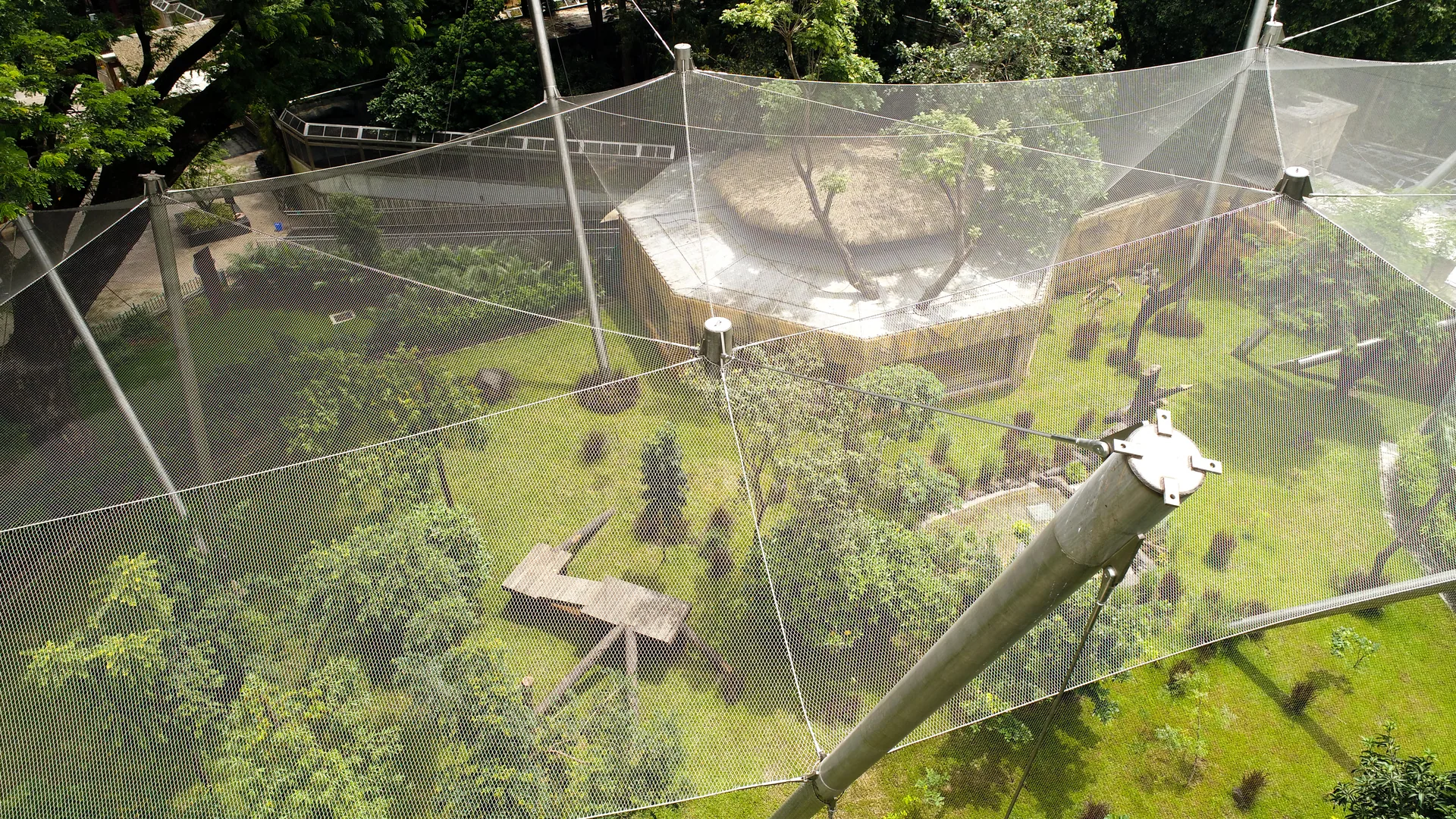
Big cats and primates
Strong, climbable, fully roofed.
We’d chooseWebnet Ø2 to 3 mm / W 50 to 76 on heavy primary ropes
See the pageZoo animal enclosures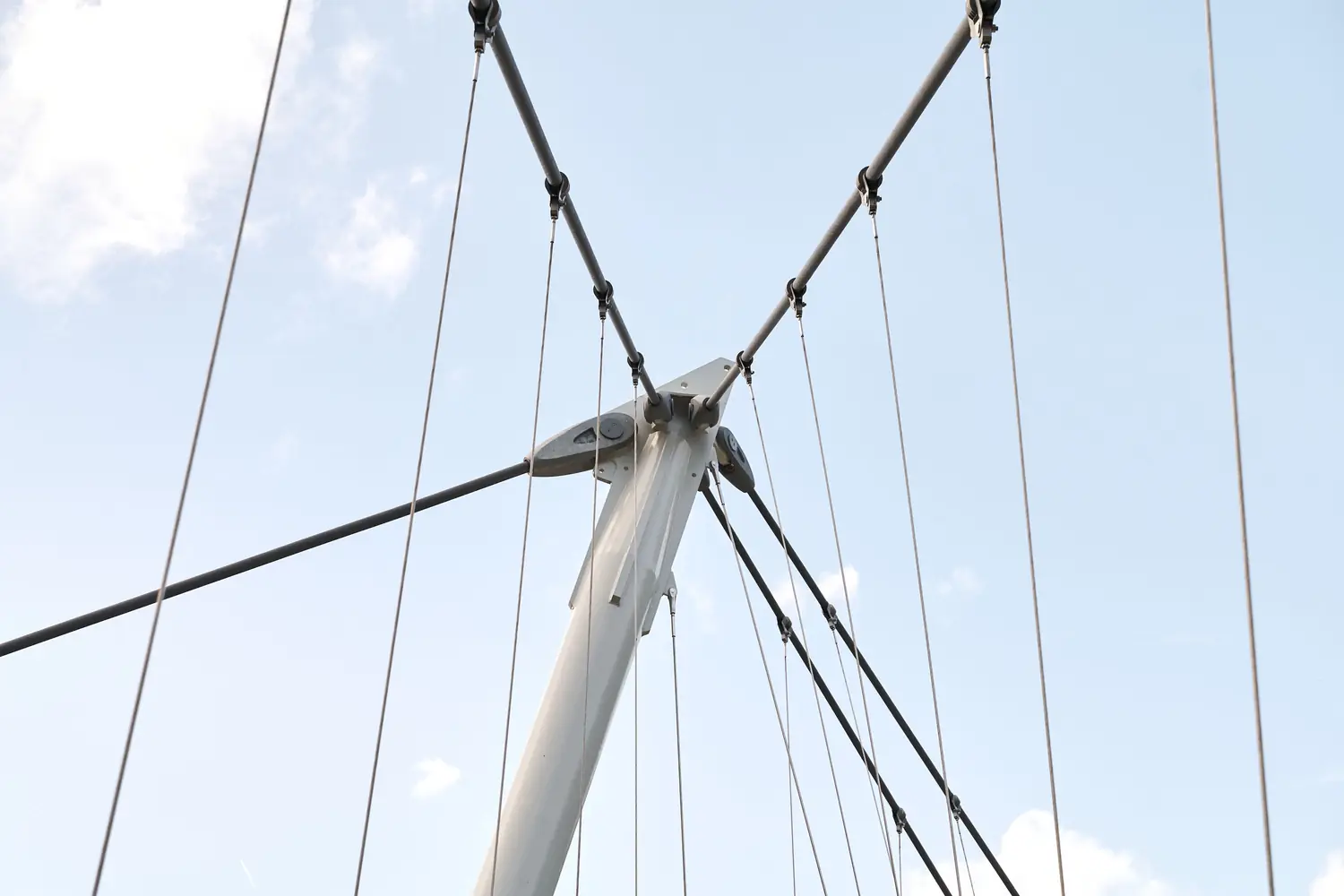 Jakob reference
Primary structure
Ropes, fittings and anchors that carry the mesh.
We’d chooseJakob primary ropes up to Ø26 mm
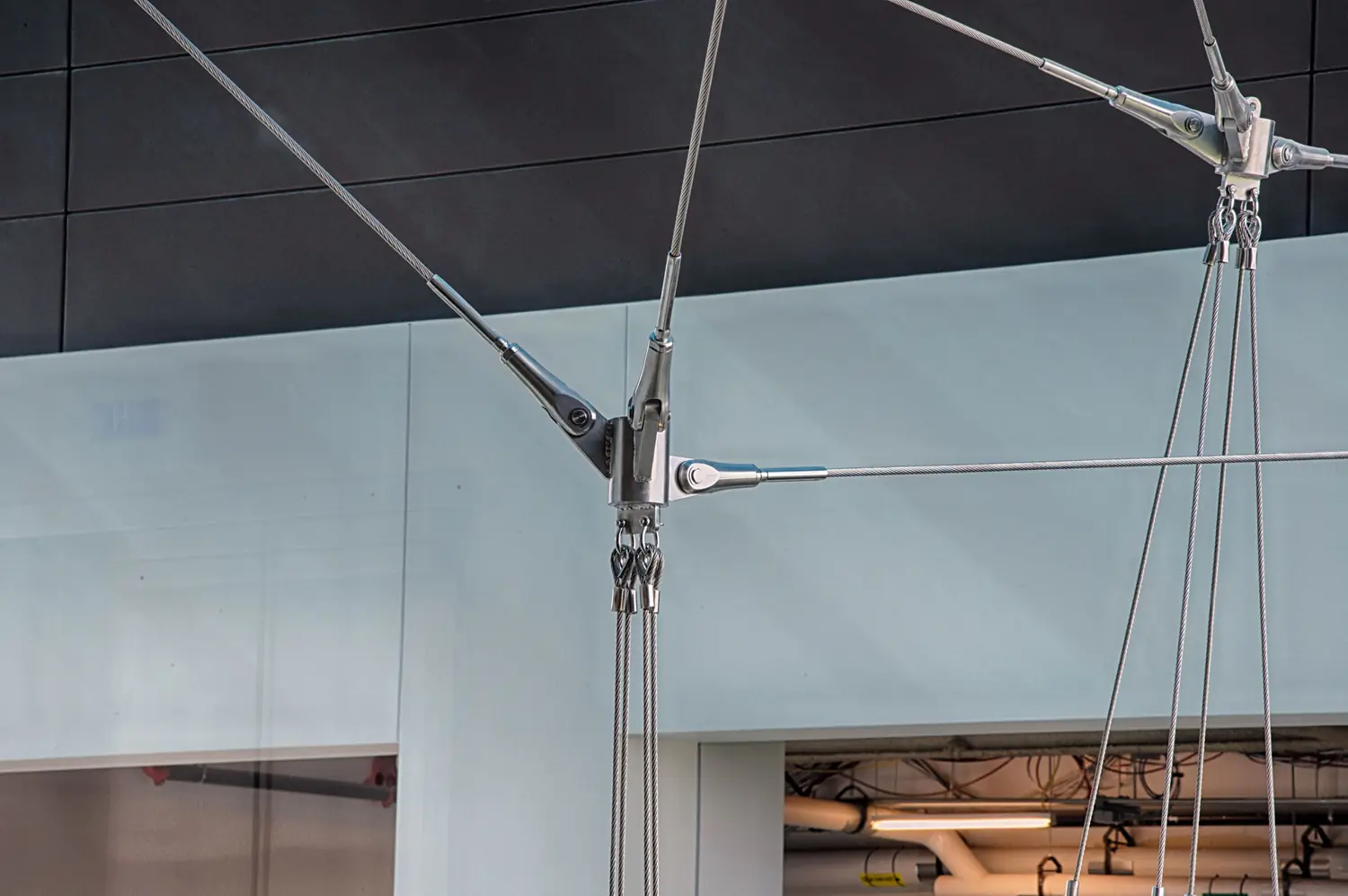 Stainless wire ropesJakob→
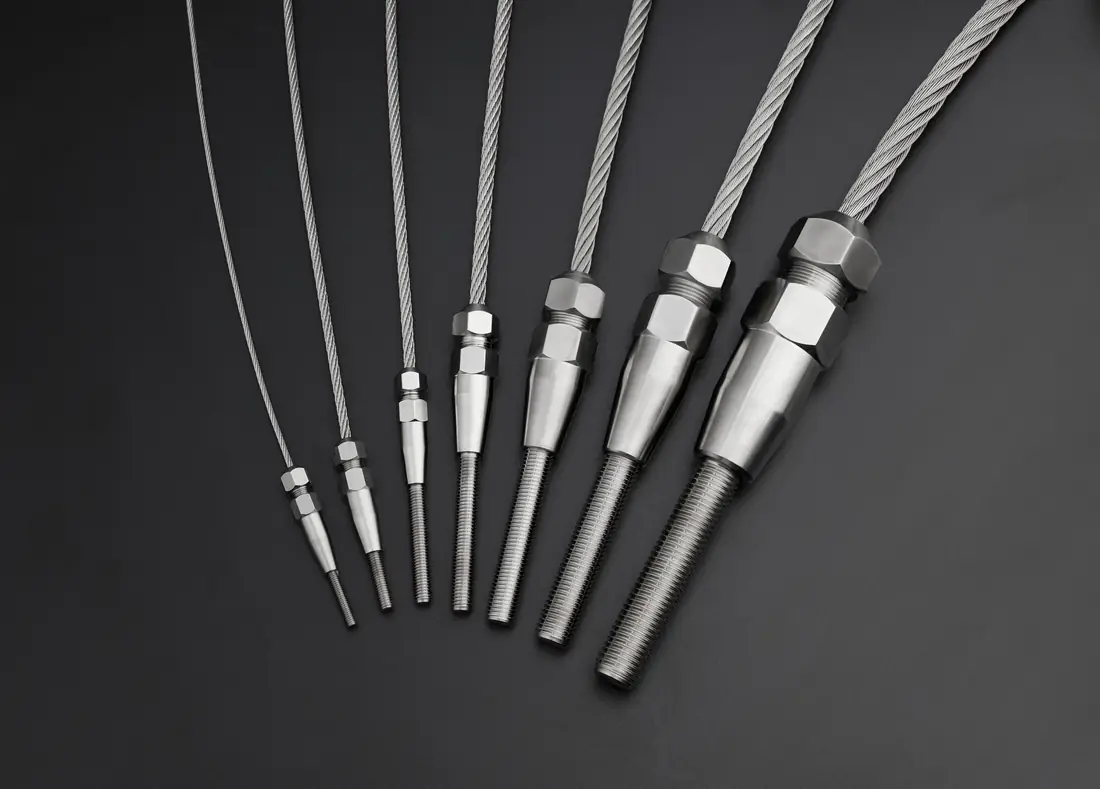 End fittings and tensionersJakob→
 Wikimedia Commons
Holding and service areas
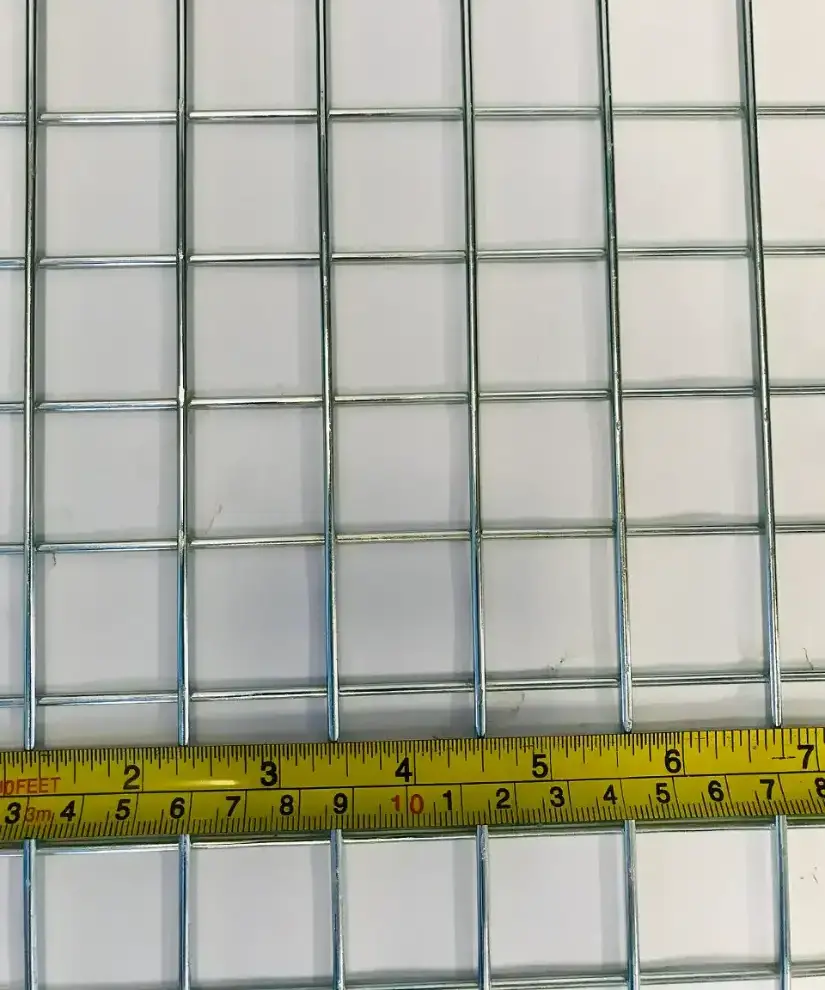
Rigid mesh for pens and yards.
We’d chooseChain-link or 3D welded mesh
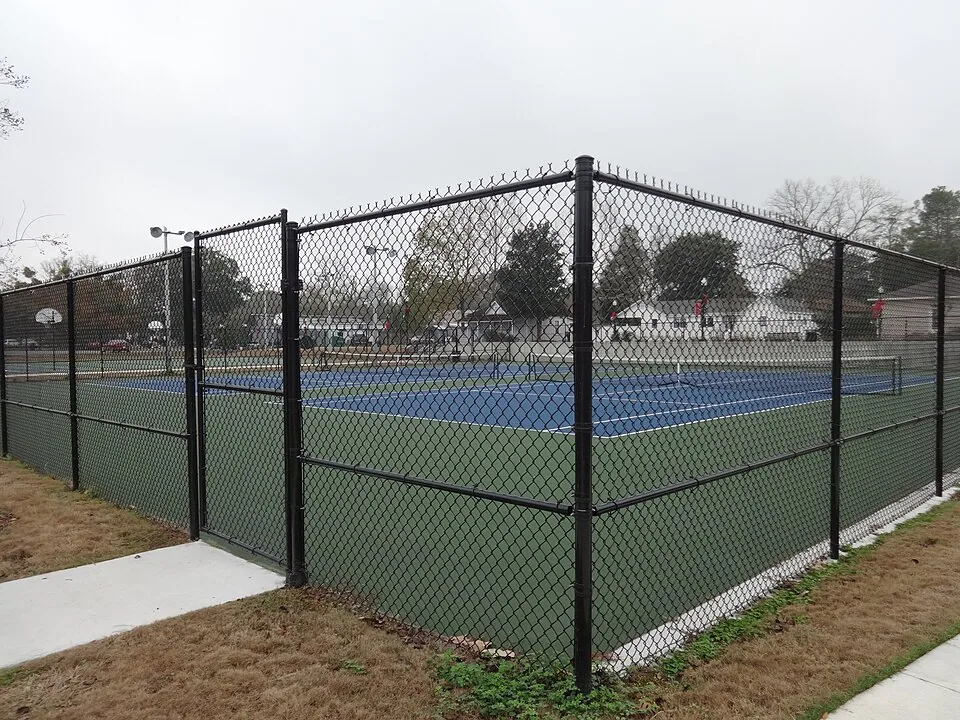 Chain-link fencingAcier range→
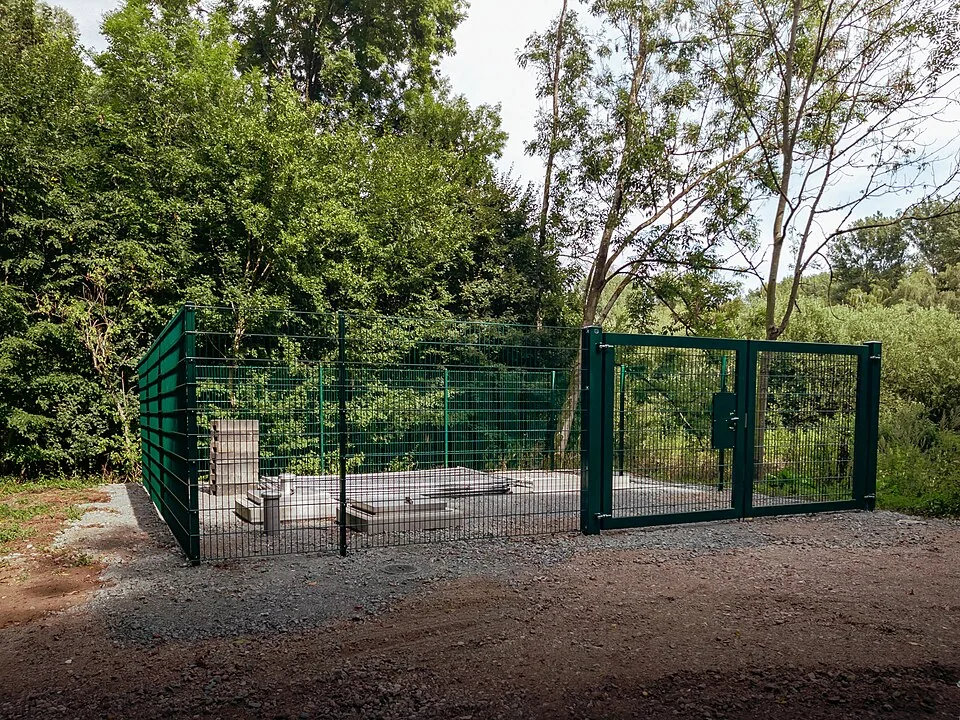 3D and welded meshAcier range→
Plan itPlan your enclosure
Planner
ServicesFrom concept to handover
Enclosure concept with your architect and zoo team
Structure, anchors, rope pretension and loads
Shop drawings for approval
Quantities for budgets and tenders
Jakob Webnet, ropes and fittings, plus viewing panels
By our own rope-access and site teams
RulesRules we design to
- Mesh smaller than the smallest head in the enclosure, juveniles included.
- Climbers (leopards, primates, bears): a full roof, or an inward overhang at 60° as the Central Zoo Authority specifies.
- Double-door entries on every aviary and enclosed exhibit.
- Predators and pests kept out: buried mesh or an apron, and a roof mesh fine enough to exclude wild birds.
- Snake-proofing: fine mesh or solid skirting at the base, sealed joints and meshed drains.
- Stand-off barriers 1 to 2 m back for apes, big cats and large reptiles.
- AISI 316 stainless only: no zinc for parrots to chew, nothing to rust.
- Bird-safe glass: a visible pattern or mesh on every viewing window near birds.
Enclosure sizes and heights follow the Central Zoo Authority guidelines, for example 8 m high for mixed flying birds and raptors.
Viewing windowsAcrylic and glass viewing windows
Clear viewing windows for zoo enclosures and aviaries: acrylic for curves and water, laminated glass for big cats and apes, with bird-safe patterns.
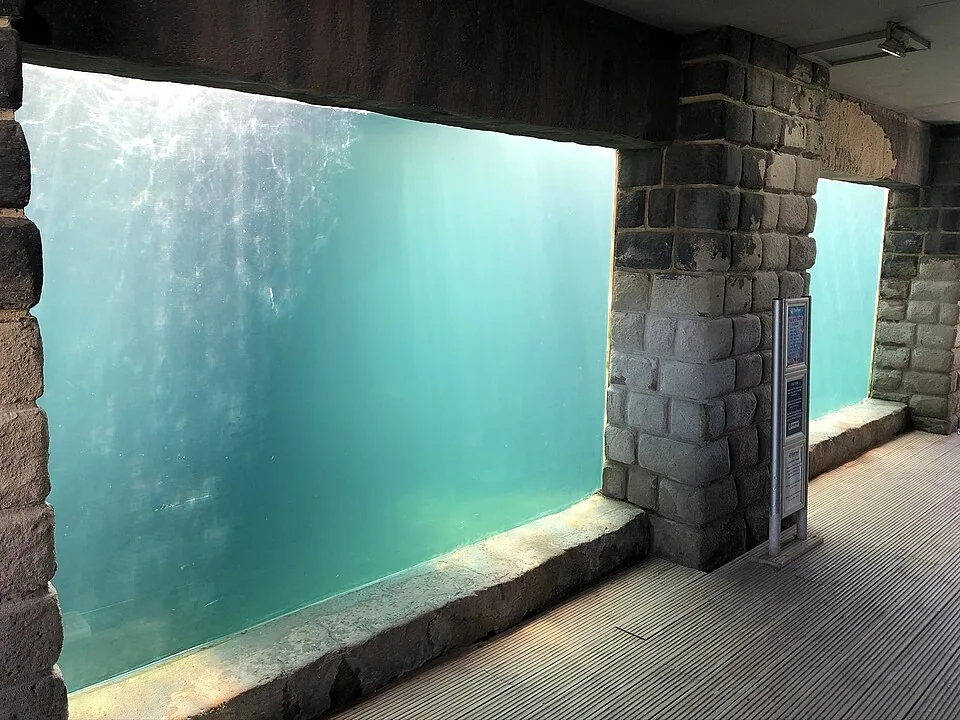
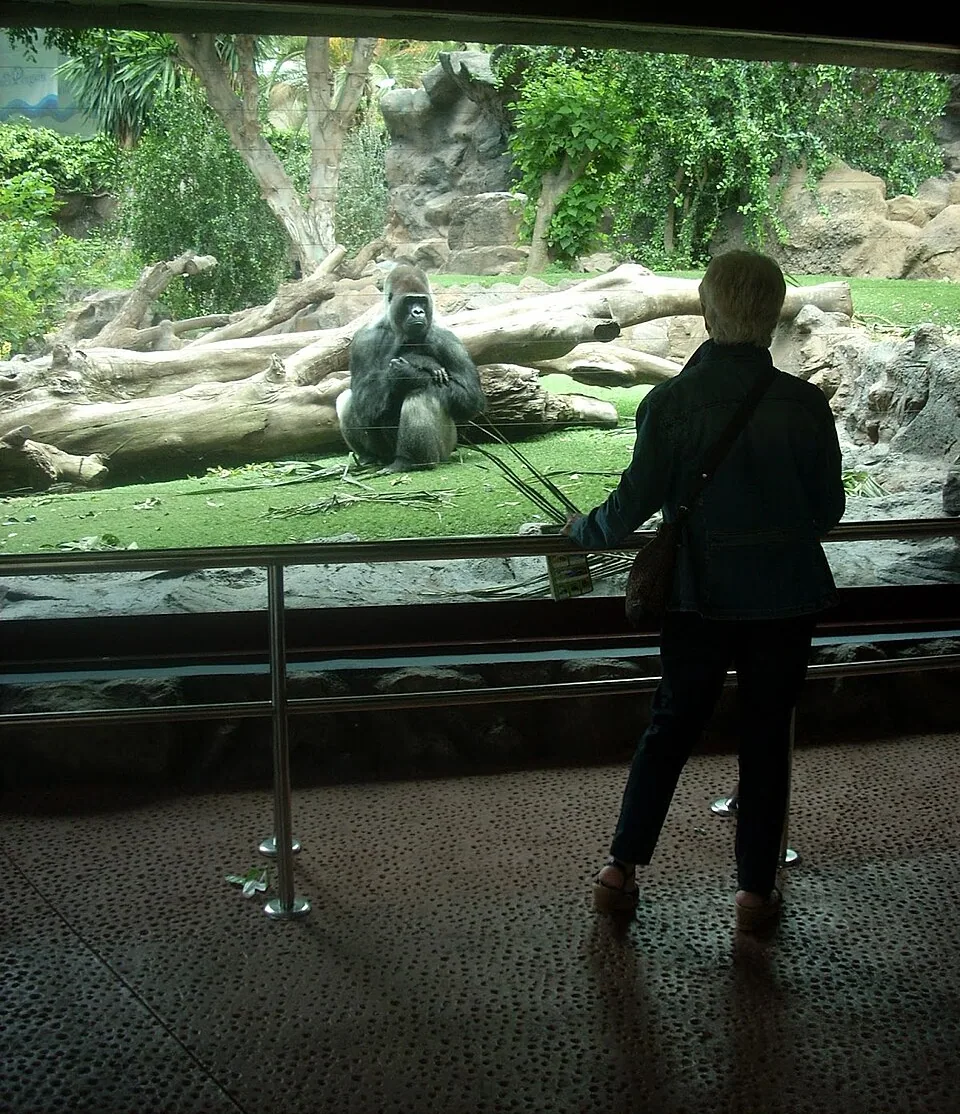
Viewing windows bring visitors face to face with animals. Acrylic (PMMA) is about 92% clear, half the weight of glass and can be curved into domes and tunnels, which makes it the choice for underwater and curved windows. Multi-ply laminated glass is harder and scratch-resistant, the choice for big cats, apes and bears.
Birds cannot see clear glass, so glazing in and around aviaries gets a visible pattern on the outside face: dots or lines no more than 50 mm apart horizontally and 100 mm vertically (the 2×4 rule), or a stainless mesh in front. We design the panel, frame and seals with the enclosure.
Options
| Option | What it is |
|---|---|
| Acrylic (PMMA) | Underwater and curved windows, tunnels and domes; scratch-resistant coatings |
| Laminated glass | Big cats and apes: typically 3 × 12 mm with PVB or SGP interlayers; small monkeys 2 × 6 mm |
| Bird-safe treatments | Ceramic frit or etched dots and lines to the 2×4 rule, UV patterns as a supplement, or stainless mesh in front |
| Anti-reflective | Coatings that cut reflections animals react to |
| Frames and seals | Stainless or galvanised steel frames, engineered to the load |
Choosing the material
| Acrylic | Laminated glass | |
|---|---|---|
| Clarity | About 92%, no green tint even when thick | About 90% in low-iron glass |
| Weight | About half of glass | Heavy |
| Impact | Very high, does not shatter | Plies may crack; the interlayer holds them |
| Scratches | Soft; needs hard coatings and care | Hard, scratch-resistant |
| Shapes | Curves, domes, tunnels | Mostly flat |
| Best for | Underwater viewing, otters, penguins, curved bays | Big cats, apes, bears, reptile houses |
Typical build-ups, engineered for each window
| Animal | Typical build-up |
|---|---|
| Small monkeys | 2 × 6 mm laminated |
| Tigers, lions, bears | 3 × 12 mm laminated (3 × 6 mm for panes up to 1 × 1 m) |
| Chimpanzees, gorillas | 3 × 6 mm to 3 × 12 mm laminated |
| Underwater | Acrylic, thickness engineered for depth and span |
UV patterns look clear to people and visible to birds, but daylight UV is weak in the morning and on overcast days, so we use them as a supplement. Stainless rope mesh in front of the glass does both jobs: it breaks up reflections and gives birds a soft landing. Bird-safe glass and viewing windows →
ProjectsBuilt by Acier
Leopard enclosure, Mumbai Zoo
A leopard habitat at Mumbai Zoo under a single tensioned Webnet canopy: 1,175 m² at an average height of 12 m, the first leopard enclosure in India under a rope and mesh canopy.
Walk-through bird aviary, Mumbai Zoo
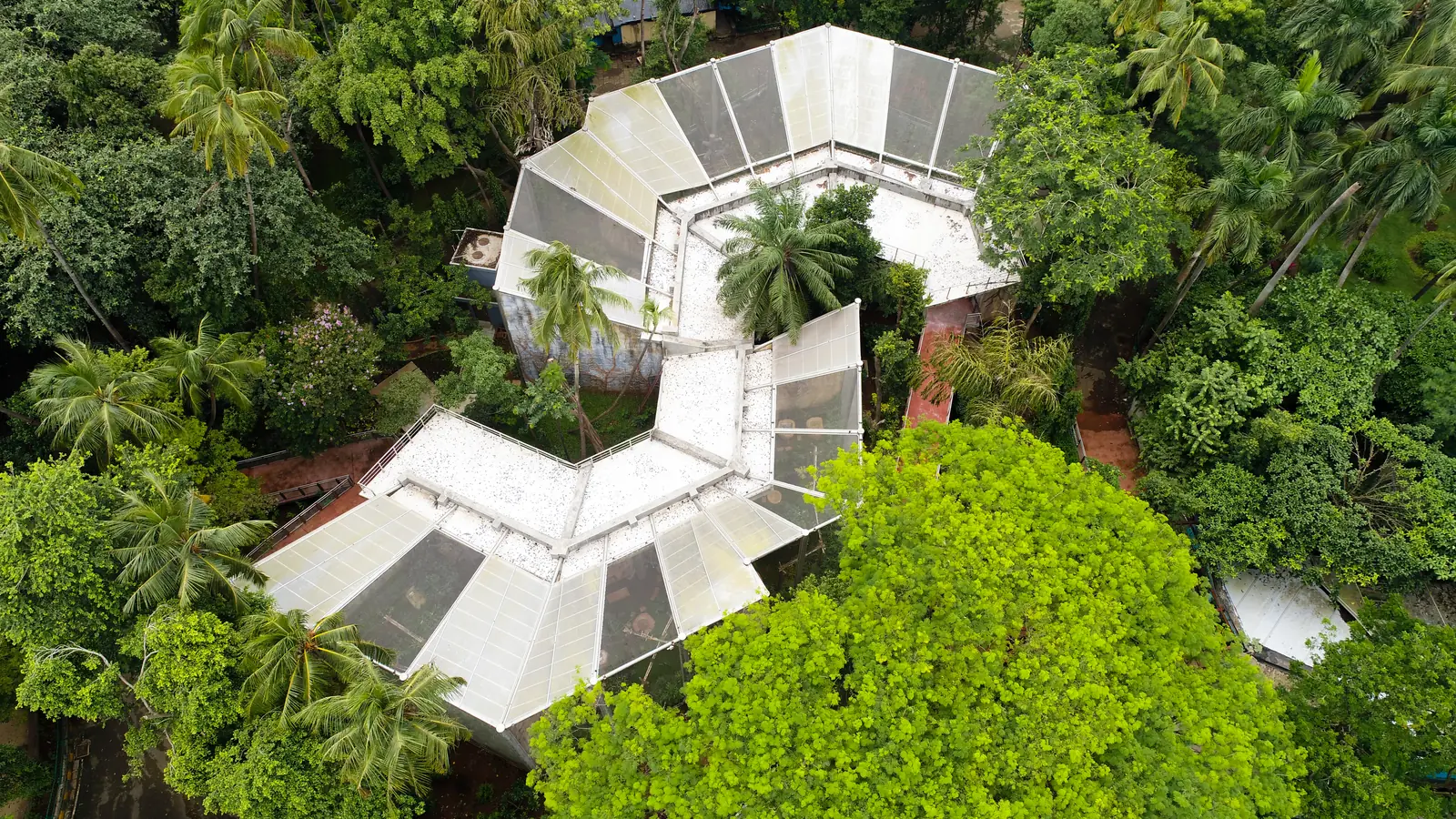
A walk-through aviary for exotic birds at Mumbai Zoo: 752 m² under Jakob Webnet, with a 25 mm mesh that keeps birds of every size safe and stays almost invisible to visitors.
Bird aviary, Rajgir Zoo Safari
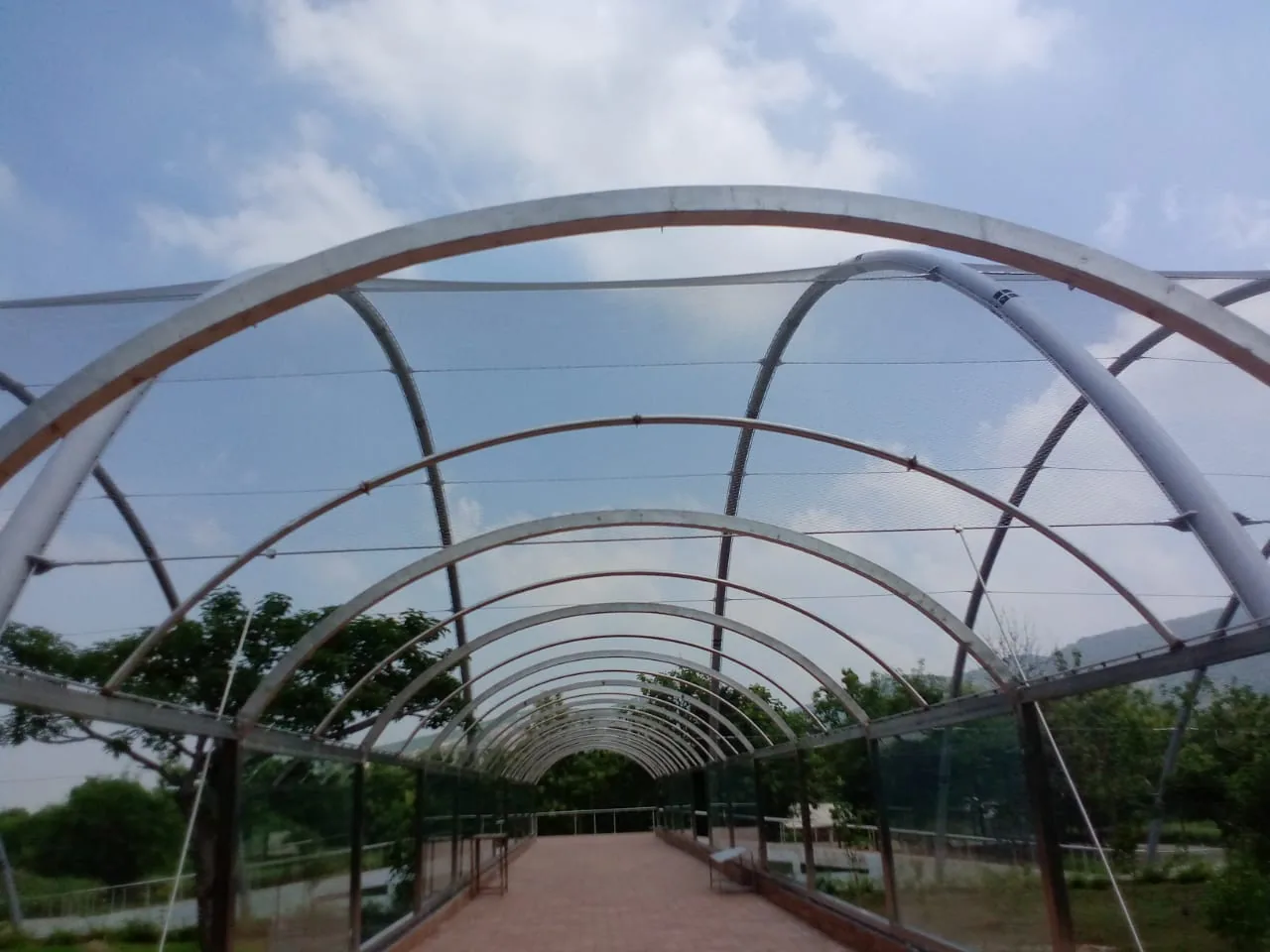
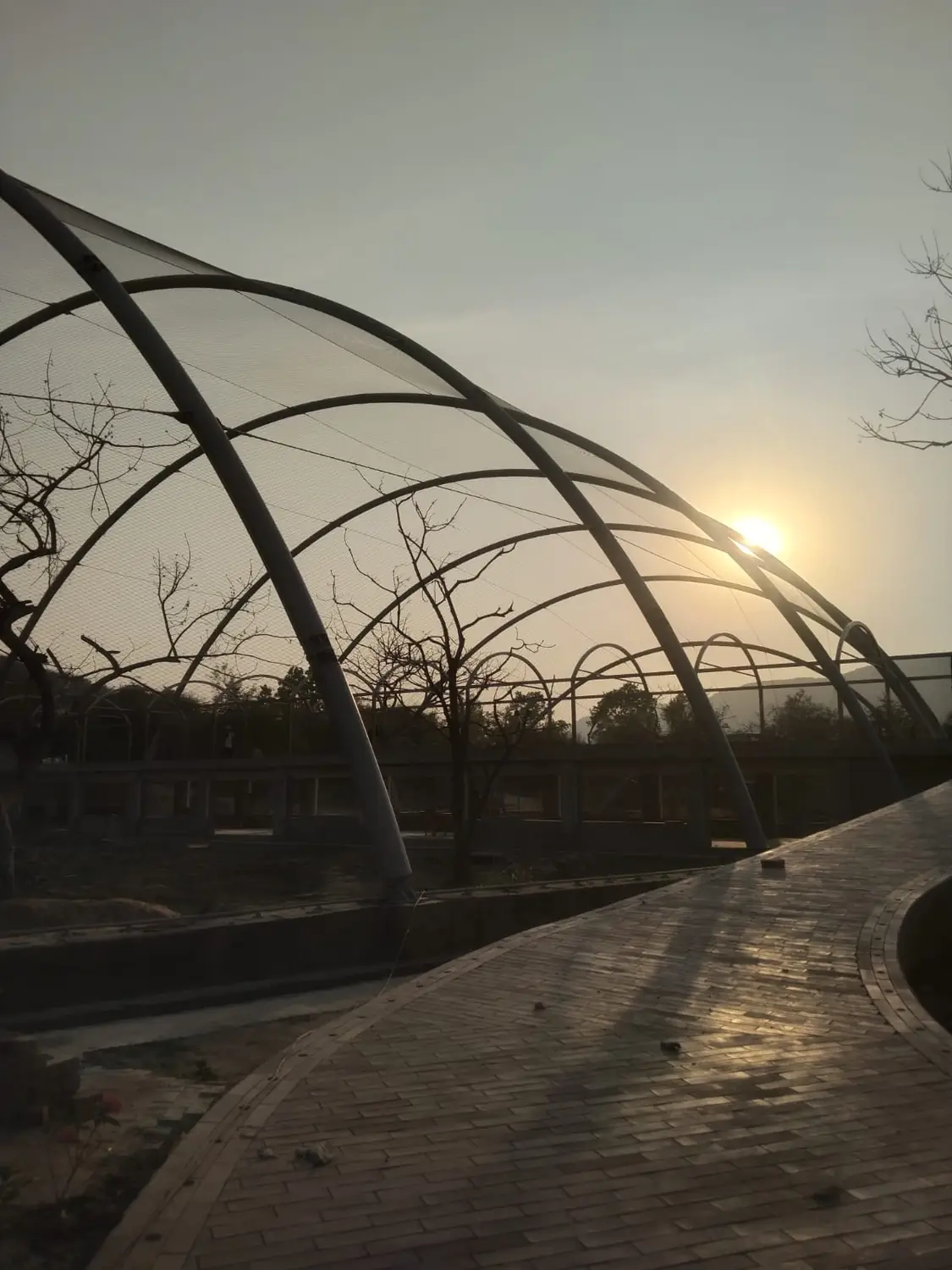
A walk-in aviary beside the Rajgir Animal Safari in Bihar: 2,750 m² under Jakob Webnet carried on steel arches, with an average height of 12 m.
From first visit to handoverHow we work →
QuestionsFrequently asked
What mesh size is used for aviaries?
It depends on the smallest bird. The Mumbai Zoo aviary uses a 25 mm mesh so birds of every size stay in.
How are large enclosures supported?
On primary stainless ropes carried by masts, arches and anchors. The Mumbai Zoo leopard enclosure uses 30 ropes of Ø22 mm and 21 of Ø26 mm.
Read moreGuides
Aviary and zoo mesh: choosing the size by species
How to size stainless steel mesh for every bird and animal you keep, from finches to tigers: mesh opening, rope diameter, the rules enclosures follow and what we used at Mumbai Zoo and Rajgir.
Bird-safe glass and viewing windows
Why birds fly into glass, the 2 × 4 rule that stops it, and how to choose between acrylic and laminated glass for zoo viewing windows.
Webnet, welded mesh or chain-link: choosing a mesh
How flexible rope mesh, rigid welded panels and woven chain-link compare for safety, enclosures and fencing, and how to choose between them.