Three families of mesh
Most metal mesh used for safety, fencing and enclosures falls into three families: wire rope mesh such as Jakob Webnet, welded mesh and chain-link. Each is good at different things. The right choice depends on what the mesh has to stop, how closely it will be seen, and the shape it has to take.
Webnet: flexible stainless rope mesh
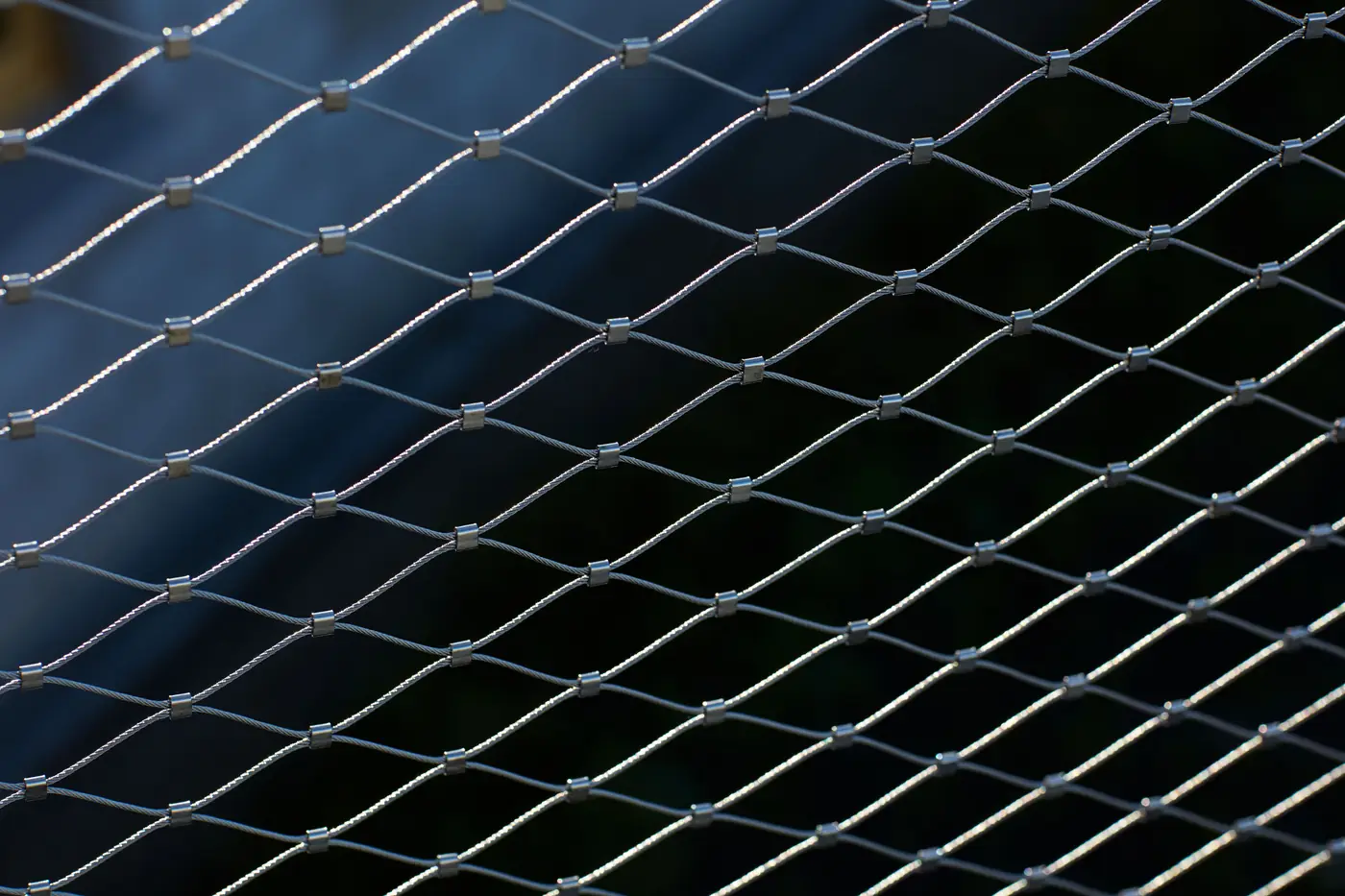
Webnet is a mesh of stainless steel wire ropes in the AISI 316 material group, with a sleeve swaged at every crossing. Ropes run from Ø1.0 to 4.0 mm and mesh widths from 20 to 400 mm, at a standard 60° angle. It holds DIBt general building approval Z-14.7-557.
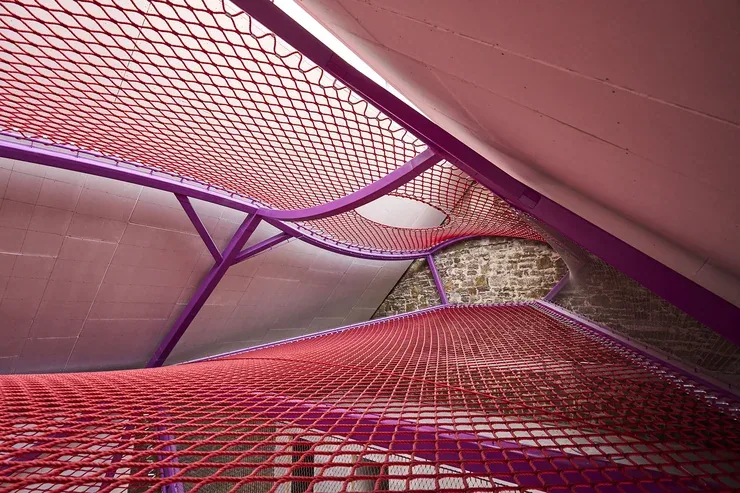
Because it is flexible, Webnet can be tensioned in three dimensions: over domes, around curves and between masts. It is nearly transparent, comes in any RAL colour or black, and is climbable, which suits primate enclosures.
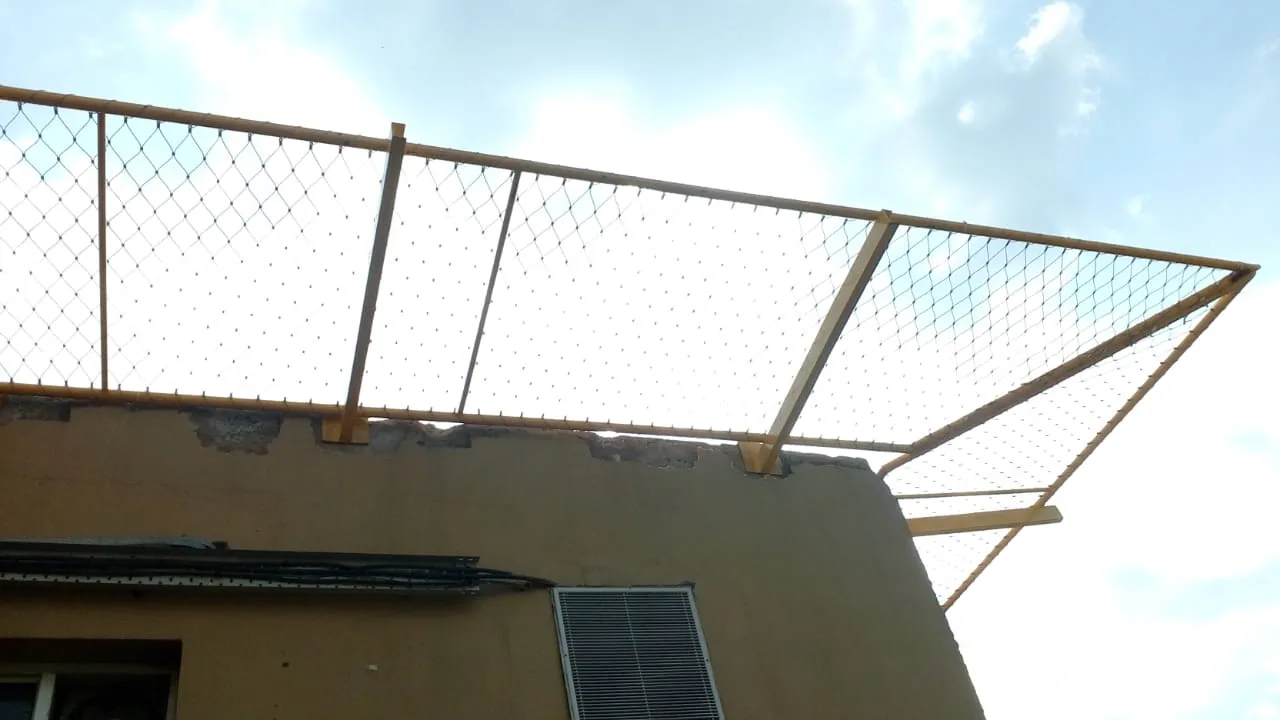
At the AIIMS helipad in New Delhi, Webnet Ø3/W100, a standard helipad specification, is laced to the steel frame with Ø4 mm rope. The walkway bridge in Panjim for DHIPL uses Ø2/W50, and an embassy in Delhi has an all-black fence of Ø2/W60 on Ø8 mm ropes.
Welded mesh: rigid panels
Welded mesh is made of wires welded at every crossing into rigid panels. It comes in galvanised or powder-coated MS, or in stainless steel, as flat panels or 3D-folded panels that add stiffness. Panels are quick to fix to posts and give a clean, straight line. That makes them a practical choice for boundary fences, screens and cages that do not need to follow curves.
Chain-link: woven, for long runs
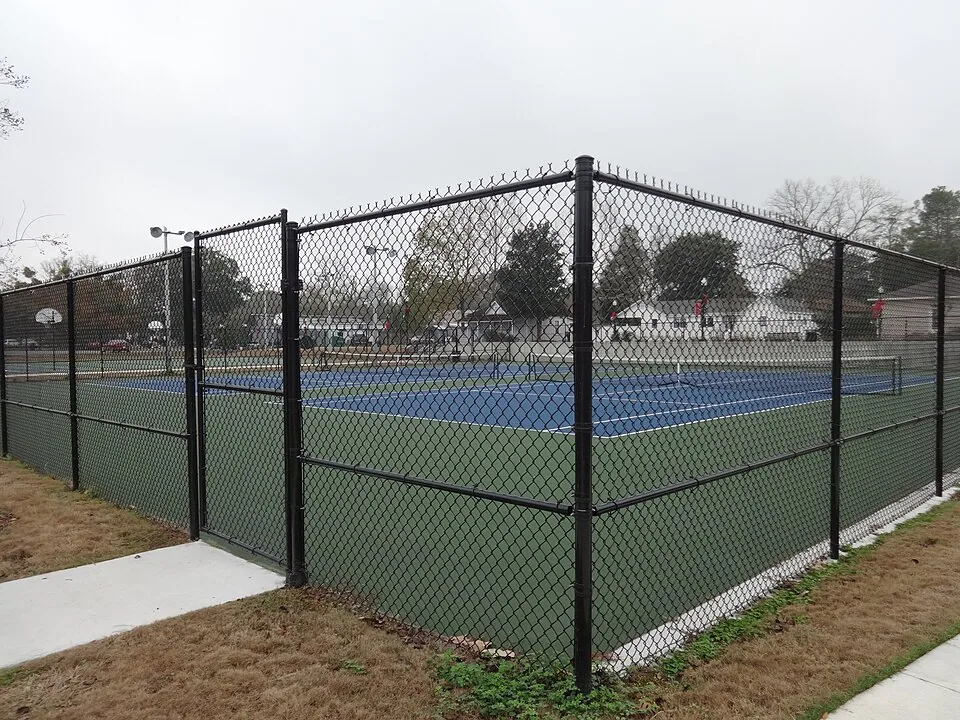
Chain-link is woven from wire into a flexible diamond pattern. It is usually GI or PVC-coated, comes in rolls and follows uneven ground well. For long perimeters such as campuses, plots and sports grounds, it is quick to install. Where a fence will be seen close up, or needs a crisp edge, welded panels or rope mesh give a neater result.
Side by side
Across the Acier range we supply MS, aluminium and stainless steel options where the application allows.
| Webnet | Welded mesh | Chain-link | |
|---|---|---|---|
| Build | Stainless rope, swaged sleeves | Welded wire panels | Woven wire diamonds |
| Behaviour | Flexible, 3D shapes | Rigid, flat or folded | Flexible, follows the ground |
| Material | AISI 316 stainless | Galvanised or powder-coated MS, or stainless | GI or PVC-coated |
| Look | Nearly transparent | Crisp and framed | Practical |
| Typical uses | Balustrades, aviaries, helipads, façades | Fences, screens, cages | Long perimeters, sports grounds |
When a net is the better answer
Some openings need a net rather than a mesh. Jakob's polypropylene safety net is made to EN 1263-1 type S: 5 mm rope, square mesh of 45, 60 or 100 mm, and a 12 mm border rope with 30 kN strength, in standard, green, orange or black. To keep birds out, netting from the Acier range is typically about 19 mm for small birds such as sparrows and 50 mm for pigeons and crows.
A quick checklist
Acier designs, supplies and installs Jakob Webnet and mesh from the Acier range across India, and recommends the option that fits the job.
- What must the mesh stop: people, animals, balls, birds or debris?
- The largest opening allowed, and any sphere test in the code
- Flat, curved or three-dimensional?
- Seen close up or from a distance?
- Coastal or exposed site? Choose 316 stainless or a suitable coating.
- Length of run and access for installation