Start with the smallest animal
An aviary mesh has two jobs. It must keep every bird inside, and it must keep predators and wild birds outside. The mesh opening is set by the smallest bird in the collection, not the average one.
The same rule holds for every enclosure: the mesh opening must be smaller than the head of the smallest animal inside, juveniles included, and the rope strong enough for the strongest beak, claw or bite. Every row in the table below follows from that.
A walk-through aviary adds a third job: visitors should see the birds, not the mesh. That means the finest rope that still carries the loads, and the highest light transmission you can get.
Mesh by species
These are typical selections. We confirm them with your zoo team and the species list.
| Animal | Mesh (mm) | Rope Ø (mm) |
|---|---|---|
| Finches, sunbirds, munias | 12 to 25 | 1.0 to 1.5 |
| Budgies, lovebirds | 20 to 25 | 1.2 to 1.6 |
| Pigeons, doves | 25 to 40 | 1.2 to 1.6 |
| Medium parrots | 25 to 38 | 1.6 to 2.0 |
| Macaws, large cockatoos | 38 to 50 | 2.0 to 2.4 |
| Raptors, owls | 25 to 60 | 2.0 to 3.2 |
| Water birds | about 50 | 1.6 to 2.0 |
| Small primates | 20 to 40 | 1.5 to 2.0 |
| Monkeys | 38 to 60 | 1.6 to 2.0 |
| Great apes | about 50 | 3.2 |
| Leopards | 50 to 76 | 3.0 to 3.2 |
| Tigers, lions | 76 walls, 100 roof | 3.2 to 4 |
| Bears | 50 to 76 | 3.2 to 4.0 |
| Deer, antelope | 90 to 100 | 2.4 |
| Snakes, small reptiles | 25 or finer | 1.2 to 1.6 |
How Webnet mesh is described
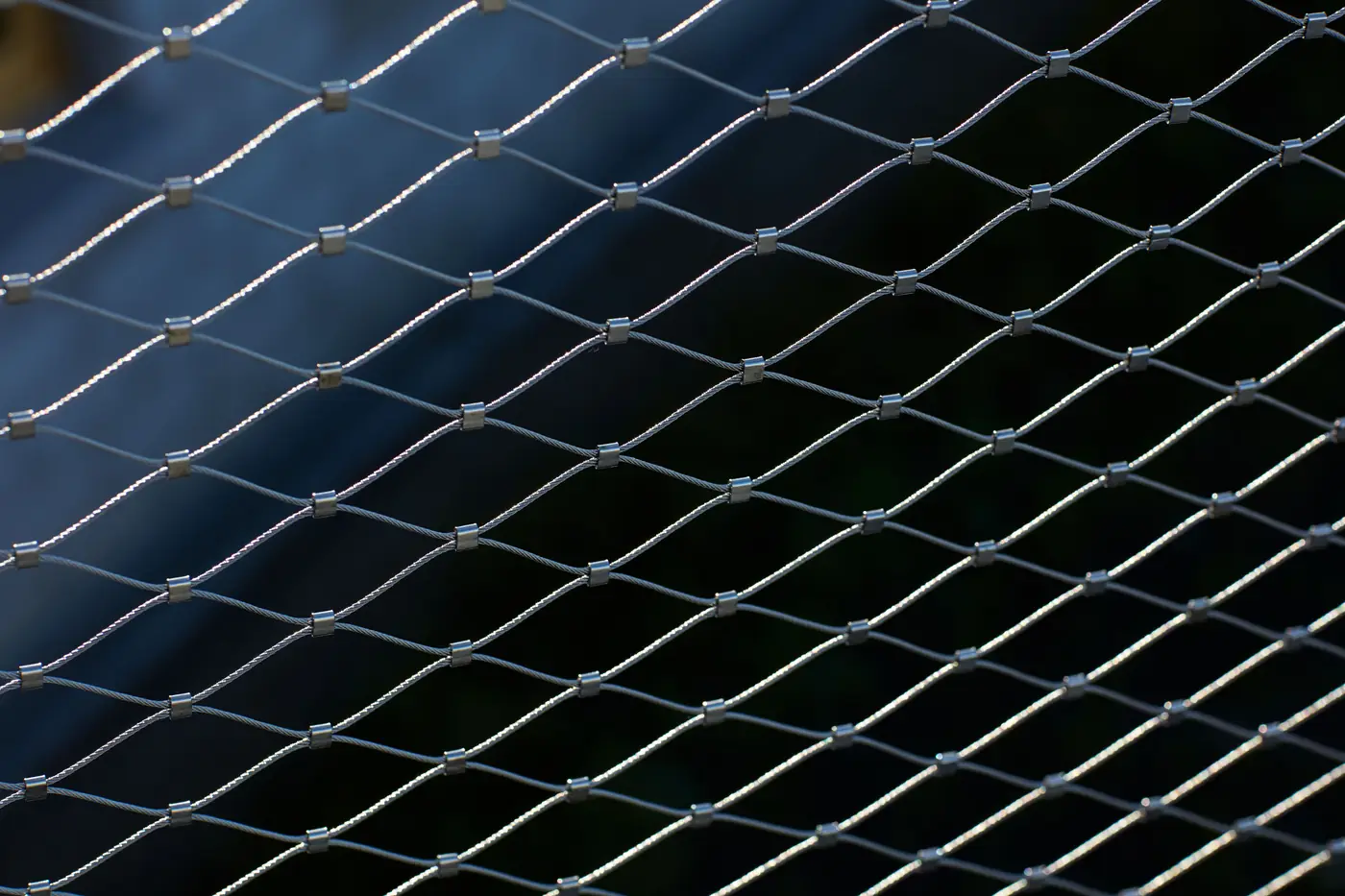
Jakob Webnet is a stainless steel wire-rope mesh in the AISI 316 material group. A sleeve is swaged at every rope crossing, so each diamond keeps its shape. The standard mesh angle is 60°.
A Webnet specification has two numbers: rope diameter and mesh width. Ø1.5/W25 means Ø1.5 mm rope and a 25 mm mesh width. Ropes range from Ø1.0 to 4.0 mm and mesh widths from 20 to 400 mm. At the 60° angle each diamond is taller than it is wide, so every width has a matching mesh height H.
Catalogue values for aviary sizes
Two patterns stand out. A wider mesh is lighter and more transparent. A thicker rope is stronger, but heavier and a little more visible. The minimum breaking load of a single Webnet rope rises from 1.4 kN at Ø1.5 mm to 2.4 kN at Ø2.0 mm and 4.6 kN at Ø3.0 mm.
| Rope / mesh width | Mesh height H | Weight | Light transmission |
|---|---|---|---|
| Ø1.5 / W25 | 55.9 mm | 1.96 kg/m² | 82.9% |
| Ø1.5 / W30 | 61.6 mm | 1.85 kg/m² | 88.8% |
| Ø1.5 / W40 | 75 mm | 1.20 kg/m² | 89.6% |
| Ø1.5 / W50 | 90 mm | 0.85 kg/m² | 91.8% |
| Ø2.0 / W50 | 90.5 mm | 1.66 kg/m² | 88.4% |
What we used at Mumbai Zoo and Rajgir
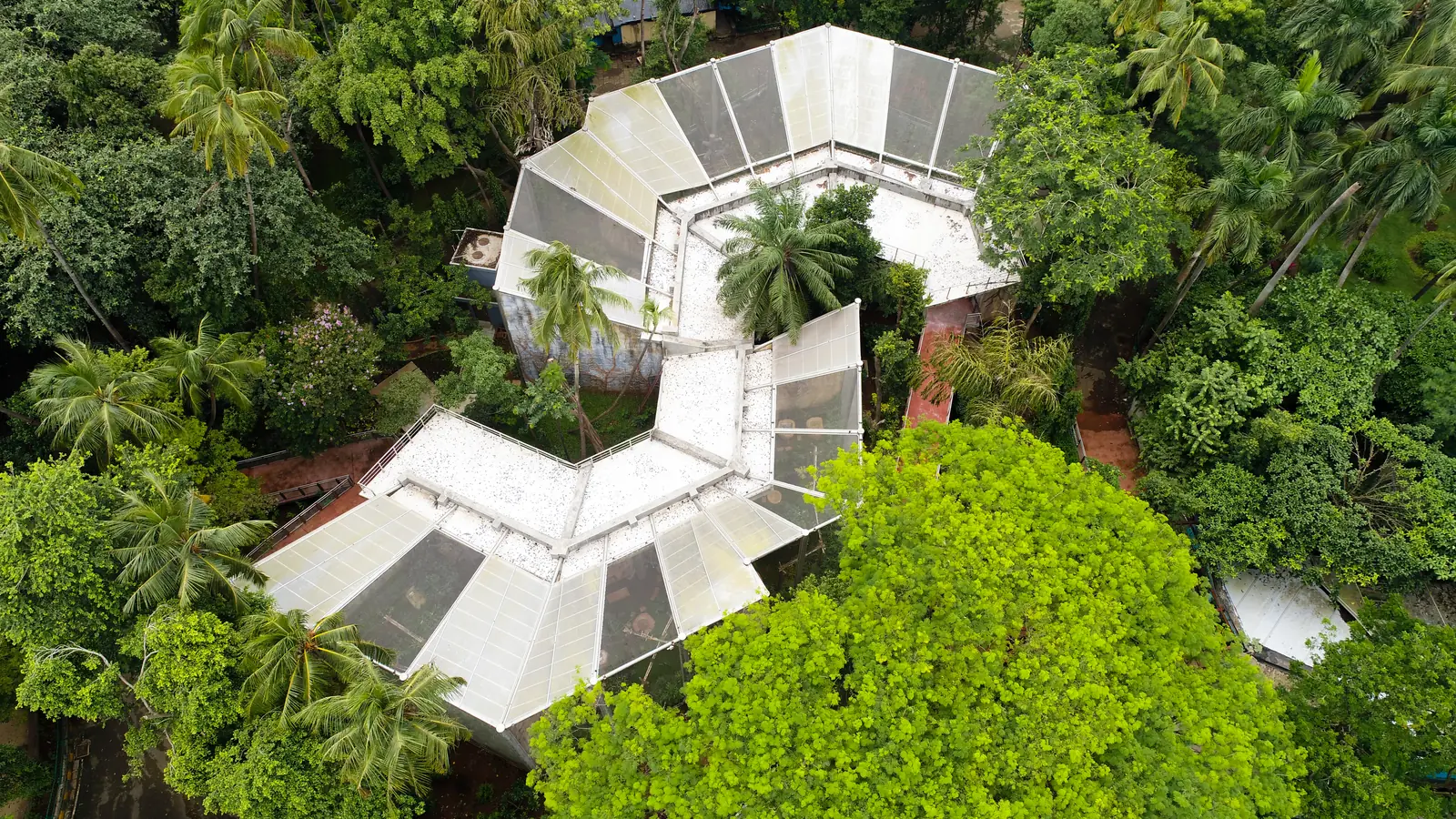
The walk-through bird aviary at Mumbai Zoo (V.J.B. Udyan, Byculla, 2020) covers 752 m² at 11 m high, with 1,672.29 m² of Webnet Ø1.5/W25. The 25 mm mesh keeps birds of every size safe and is nearly invisible to visitors.
The bird aviary at Rajgir Zoo Safari in Bihar (2024) is larger: 2,750 m² covered, 12 m high, with 4,002.69 m² of Ø1.5/W30 and W50 mesh. One aviary can use more than one mesh width.
Big cats need a heavier mesh. The leopard enclosure at Mumbai Zoo covers 1,175 m² at an average height of 12 m, with 2,132.76 m² of Webnet Ø2/W50 carried on 30 primary ropes of Ø22 mm and 21 of Ø26 mm.
Rules we design to
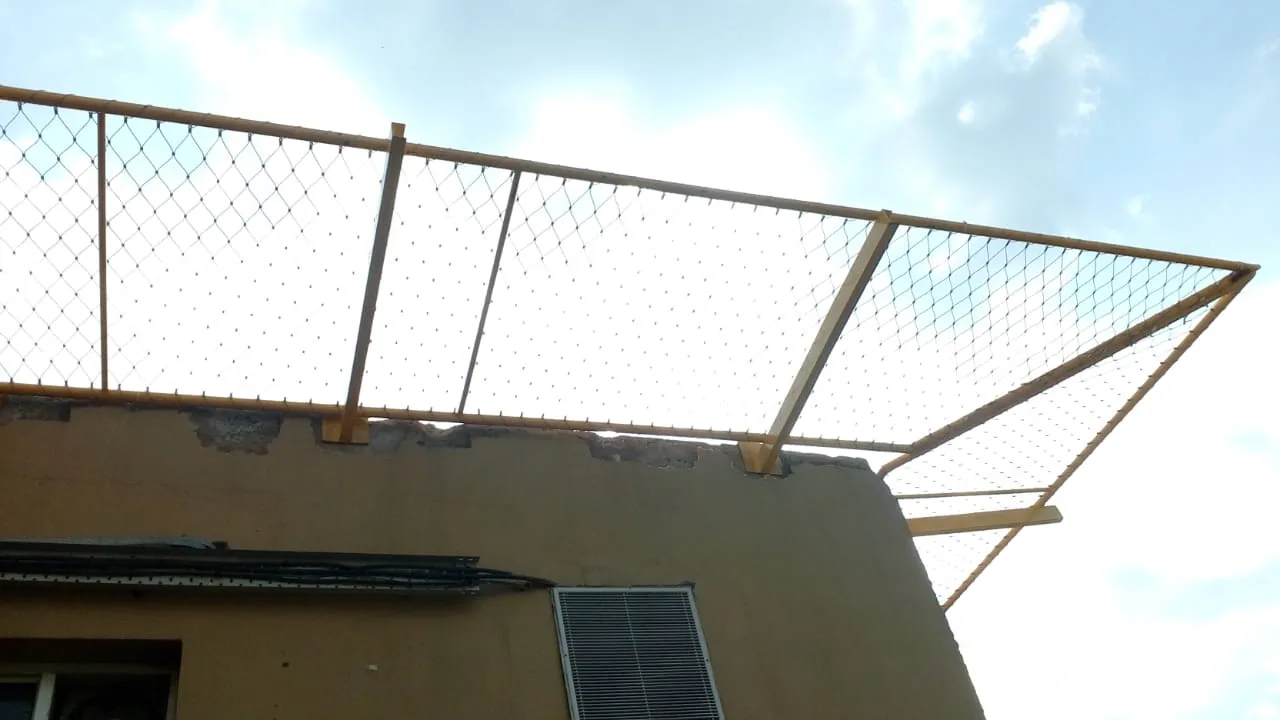
- Climbers (leopards, primates, bears) get a full roof, or an inward overhang at 60°, as the Central Zoo Authority specifies.
- Every aviary and enclosed exhibit has a double-door entry, so only one door is open at a time.
- Predators and pests are kept out with buried mesh or an apron, and a roof mesh fine enough to exclude wild birds.
- Snake-proofing: fine mesh or solid skirting at the base, sealed joints and meshed drains.
- Stand-off barriers 1 to 2 m back for apes, big cats and large reptiles.
- AISI 316 stainless only: no zinc for parrots to chew, and nothing to rust.
- Viewing glass near birds carries a visible pattern or a mesh layer.
Heights and sizes
The CZA guidelines set minimum sizes and heights: for example 8 m high for mixed flying birds and raptors, 3 m for pheasants and about 12 m for water birds. Big cats need a fully roofed enclosure or a high fence with an inclined overhang.
Structure, edges and details
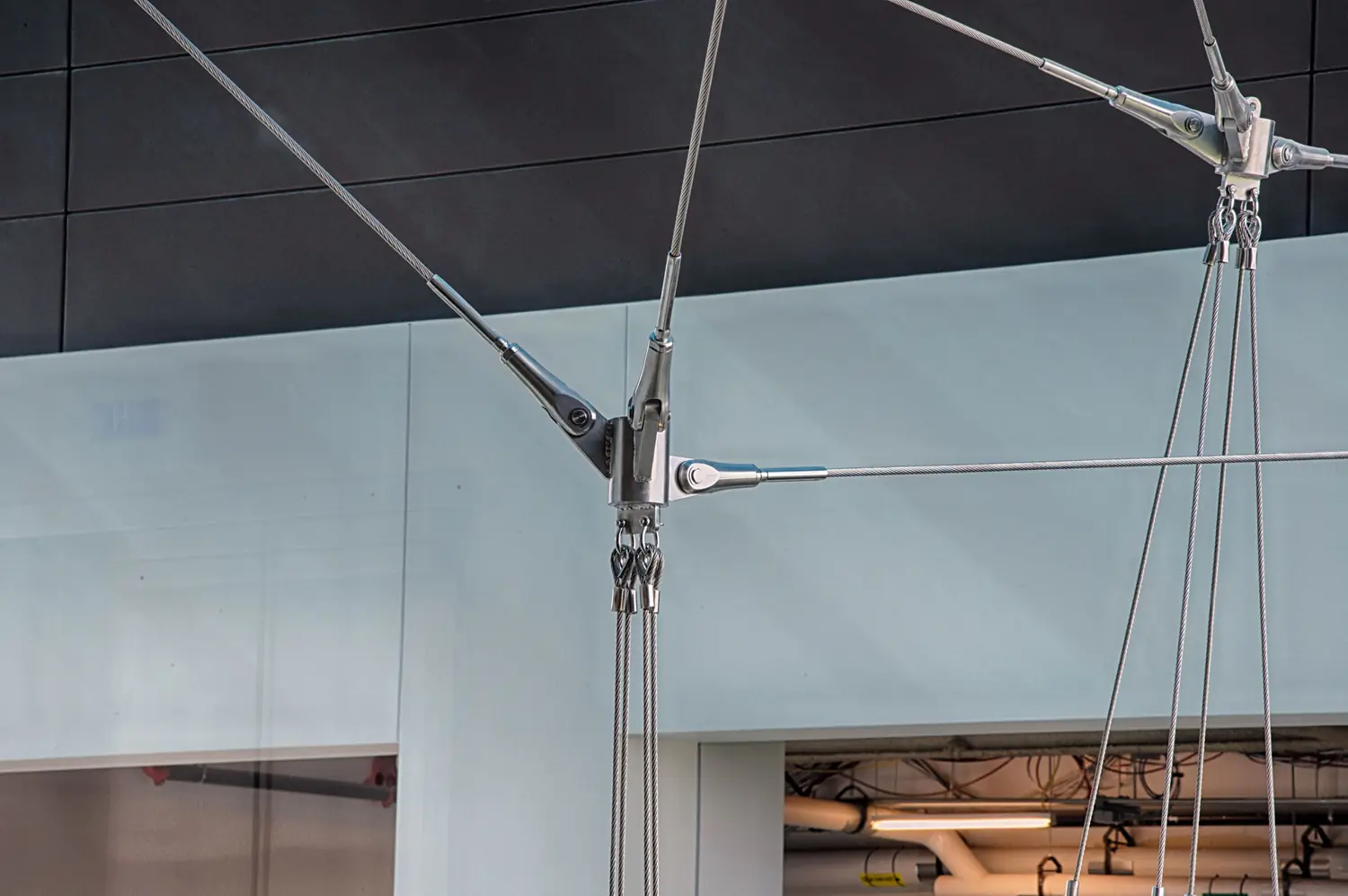
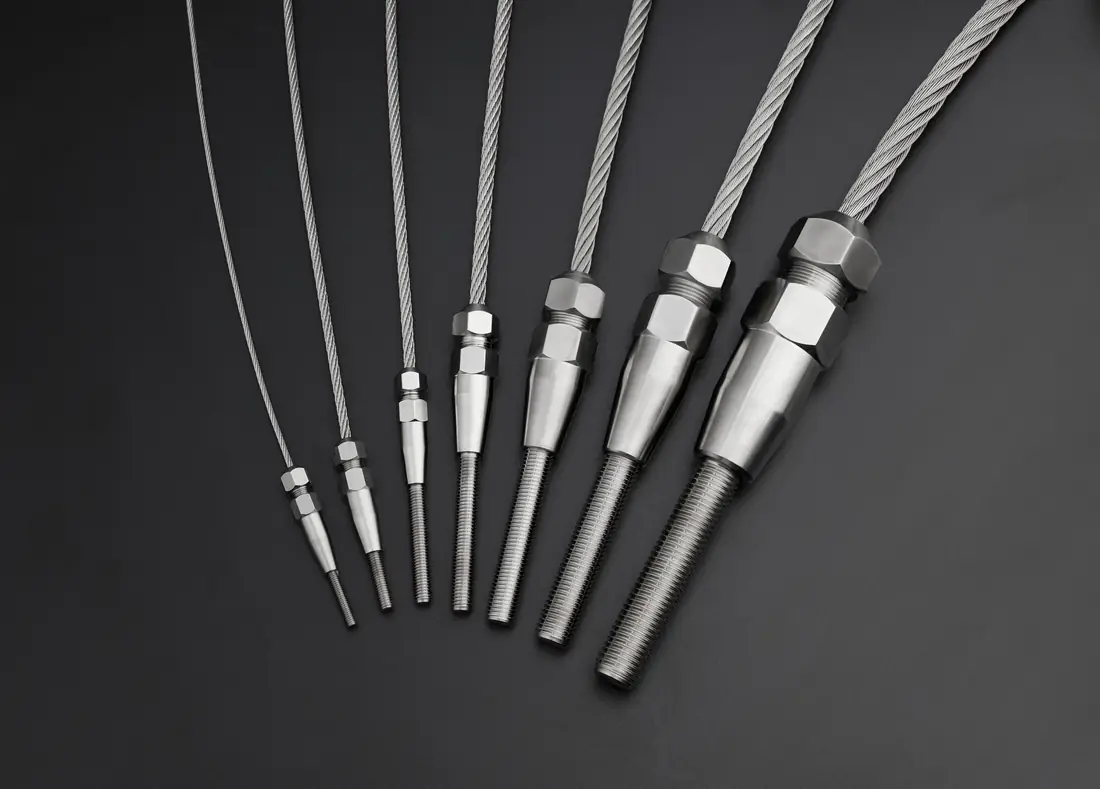
Large aviaries are rope structures. Primary ropes span between masts or arches and the mesh is laced to them, so it can follow curves and domes. Jakob end connectors reach at least 90% of the rope's minimum breaking load, which lets the engineer design the whole load path, not just the mesh.
Weak points are usually at the edges, not in the middle of the mesh. Check every junction on the drawings:
- Ground details that stop digging predators and keep the mesh edge closed
- Double-door entrances, so a bird cannot slip out as visitors pass
- Lacing that leaves no gap larger than the mesh opening
- Safe access for inspection and cleaning at height
Netting that keeps birds out
Where the aim is the opposite, keeping birds away from a building or a courtyard, the same logic applies. Bird netting from the Acier range is typically about 19 mm for small birds such as sparrows, and 50 mm for pigeons and crows.
How Acier can help
Acier works with zoo authorities, government engineers and landscape architects from concept to handover. We design, engineer, draw, quantify, supply and install the whole enclosure: the Jakob Webnet mesh, the primary ropes and masts that carry it, and the viewing windows, with one point of responsibility. Our projects include the leopard enclosure and the walk-through aviary at Mumbai Zoo, and the walk-through aviary at Rajgir Zoo Safari.