Why birds hit glass
Birds do not see clear or reflective glass. They see the sky and trees reflected in it, or the habitat on the other side, and fly straight at it.
The 2 × 4 rule
The proven fix is a visible pattern on the outside face of the glass: dots or lines no more than 50 mm apart across and 100 mm apart down. For very small birds, a stricter 50 × 50 mm spacing is used. Markers work best on the outside face, where the reflection forms.
- Ceramic frit: dots or lines fired into the glass.
- Acid-etched patterns.
- Printed films and tapes, for existing glass.
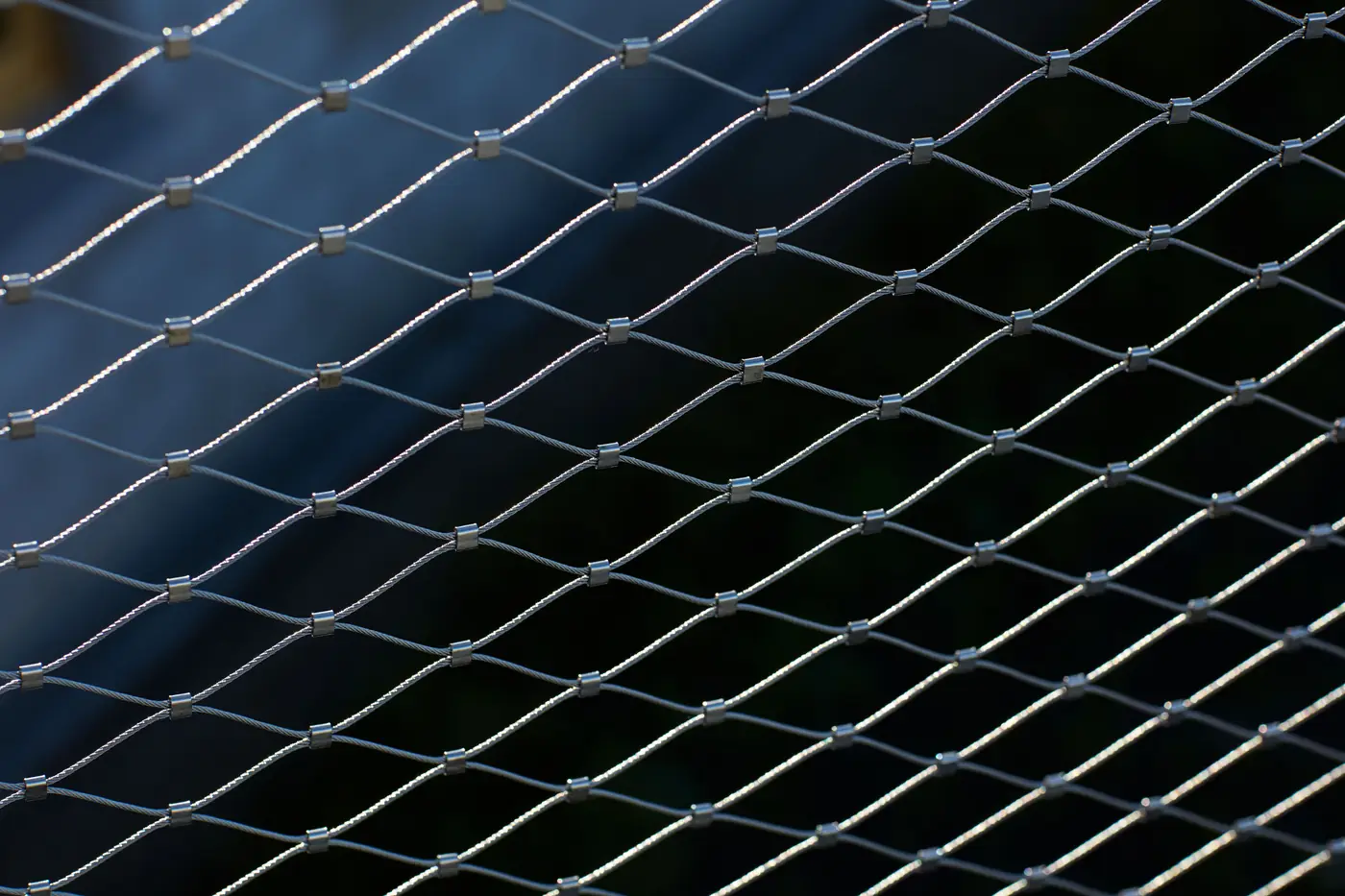
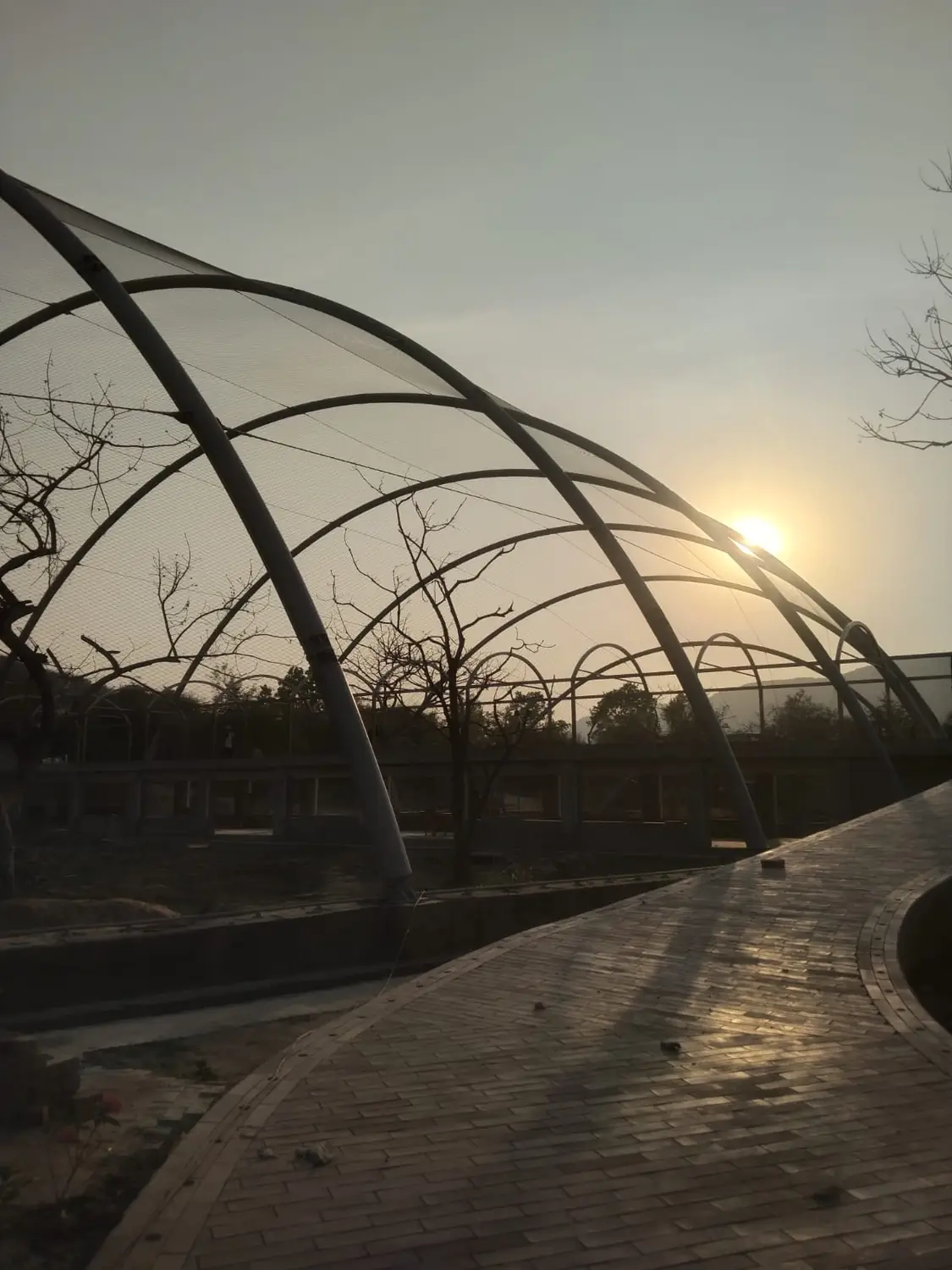
- Stainless rope mesh in front of the glass, which breaks up reflections and gives birds a soft landing.
What about UV glass?
Birds see ultraviolet light and people largely do not, so UV patterns look clear to visitors. But daylight UV is weak in the early morning and on overcast days, and studies find that visible patterns work better. We use UV patterns as a supplement, not as the main defence.
Acrylic or laminated glass?
Typical laminated build-ups: 2 × 6 mm for small monkeys, and 3 × 12 mm for tigers, lions, bears and great apes. Underwater acrylic is engineered for the water depth and the panel span.
| Acrylic | Laminated glass | |
|---|---|---|
| Clarity | About 92%, no green tint when thick | About 90% in low-iron glass |
| Weight | About half of glass | Heavy |
| Scratches | Soft; needs hard coatings | Hard, scratch-resistant |
| Shapes | Curves, domes, tunnels | Mostly flat |
| Best for | Underwater, otters, penguins | Big cats, apes, bears |