What the 100 mm rule is
Many building codes use a 100 mm sphere test for guards on balconies, stairs and terraces: a 100 mm sphere must not pass through any opening. The aim is to stop a small child from slipping through. Limits and test loads vary, so check the code that applies to your project.
With glass or bars, the gap is fixed. With a cable railing, it is not.
Why cables are different
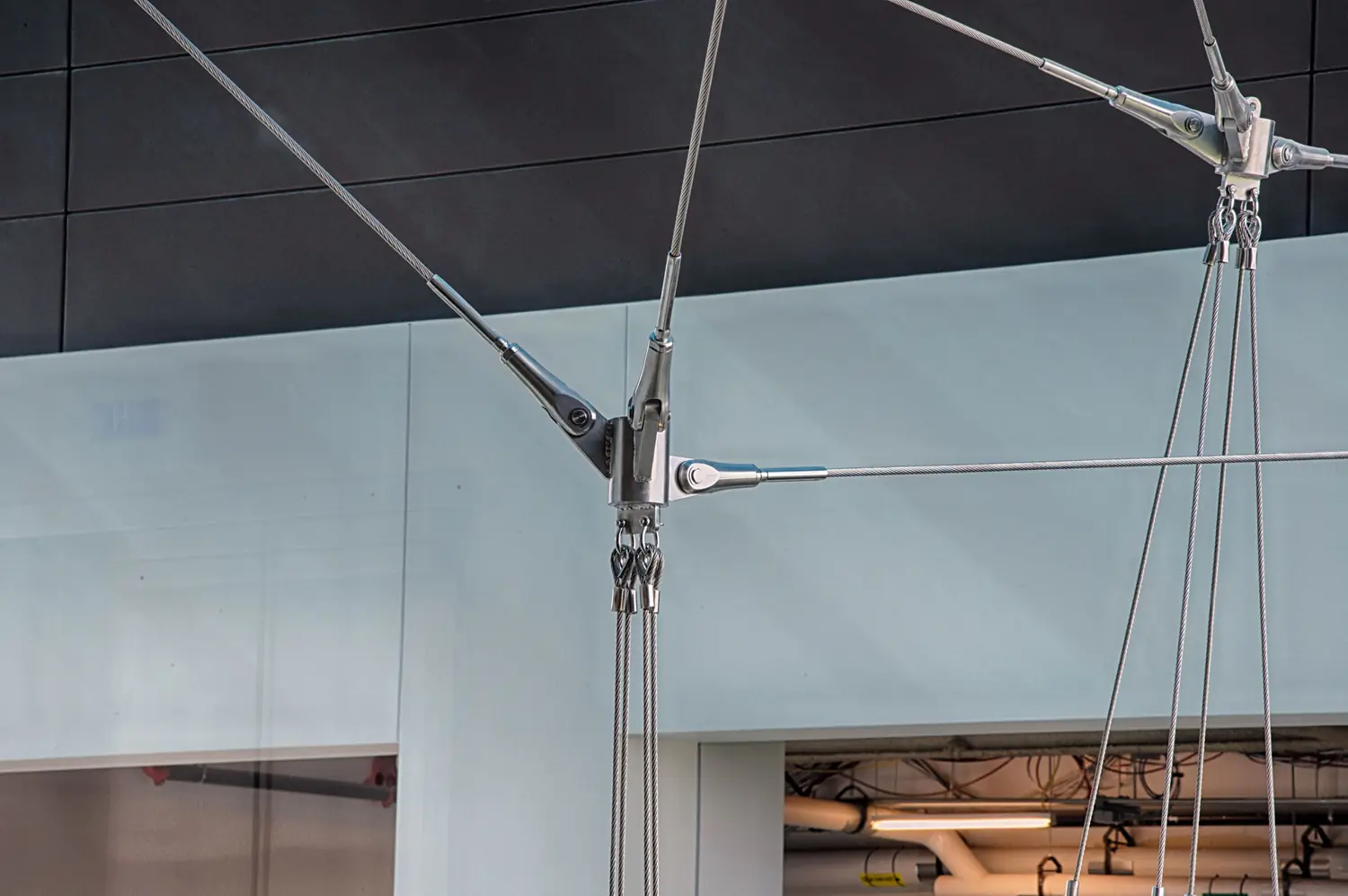
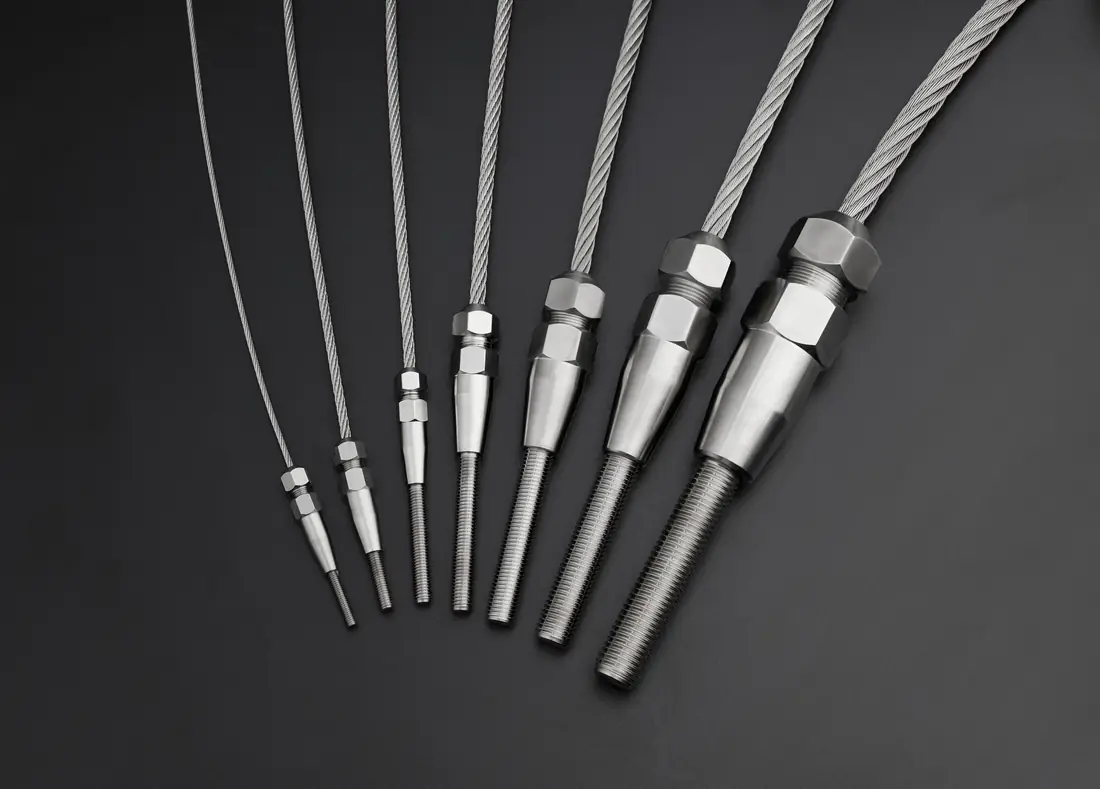
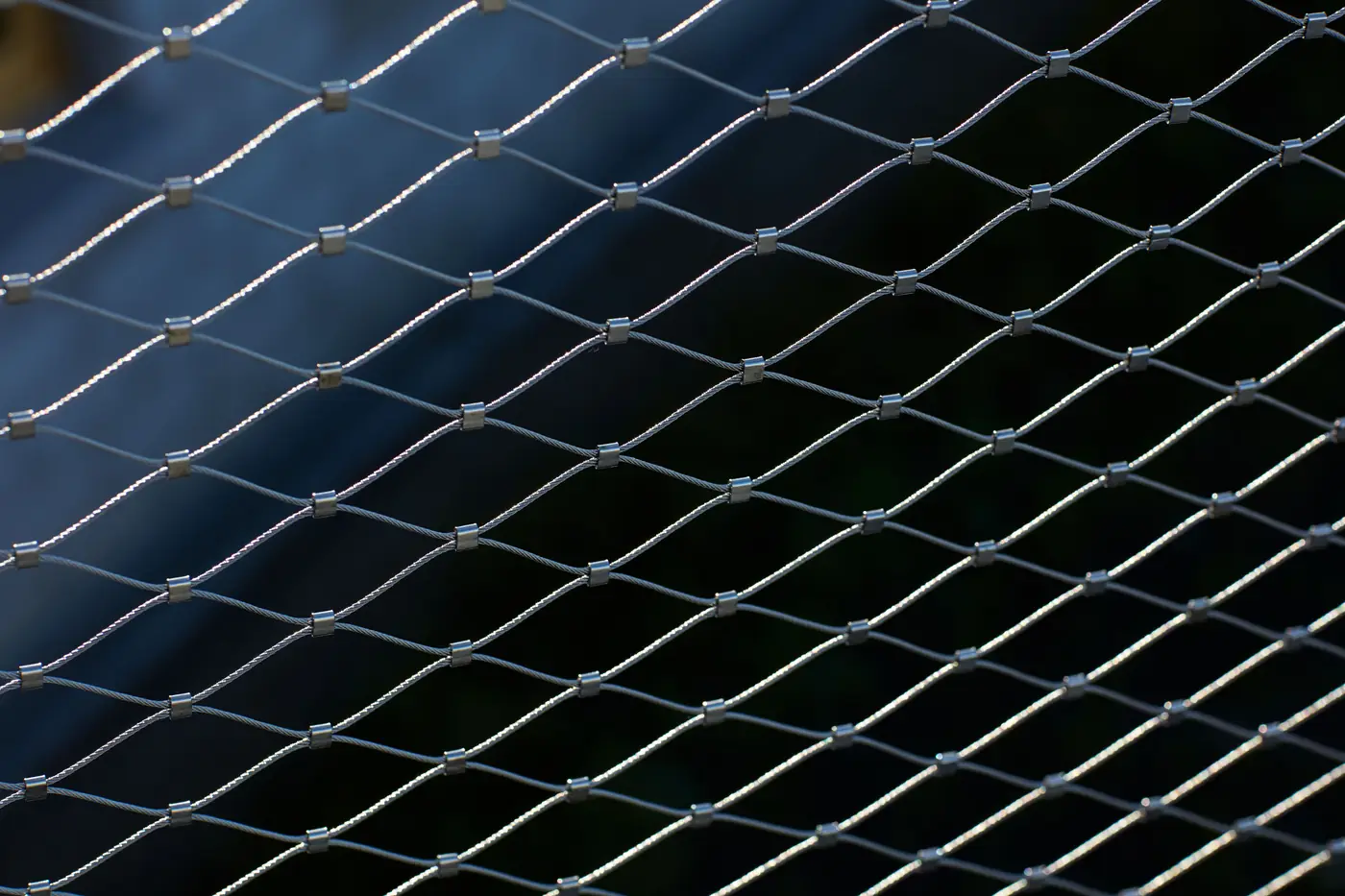
A cable railing uses stainless steel wire rope, typically about Ø4 mm (Ø3 to Ø6 mm), tensioned between posts with threaded terminals, radius heads and turnbuckles. The posts are drilled to the rope spacing.
A rope deflects when pushed. If a child leans on two ropes and one moves up while the other moves down, the gap between them opens. A gap that looks comfortable at rest can open past the limit under a push. So a good design checks the gap under load, not just at rest.
What controls the gap
These factors interact, so the railing is designed as a system: rope, fittings, posts and fixings together.
- Rope spacing. Set it below the limit, not at it, so there is margin for deflection.
- Post spacing. The longer the free span, the more a rope deflects under the same push. Intermediate posts or rope spacers shorten the span.
- Pretension. A tighter rope deflects less. The end posts must be stiff enough to hold that tension without bending.
- Rope. A stiff, low-stretch Jakob rope deflects least between posts.
- Fittings. Terminals and turnbuckles must hold tension over time. Jakob end connectors reach at least 90% of the rope's minimum breaking load.
End posts carry the load
Every rope pulls on its end posts, all the time. With several ropes at full pretension, the combined force is large. End and corner posts, their base plates and the anchors into the slab must be designed for it. If an end post bends, every rope goes slack and every gap opens.
Balconies, stairs and projects
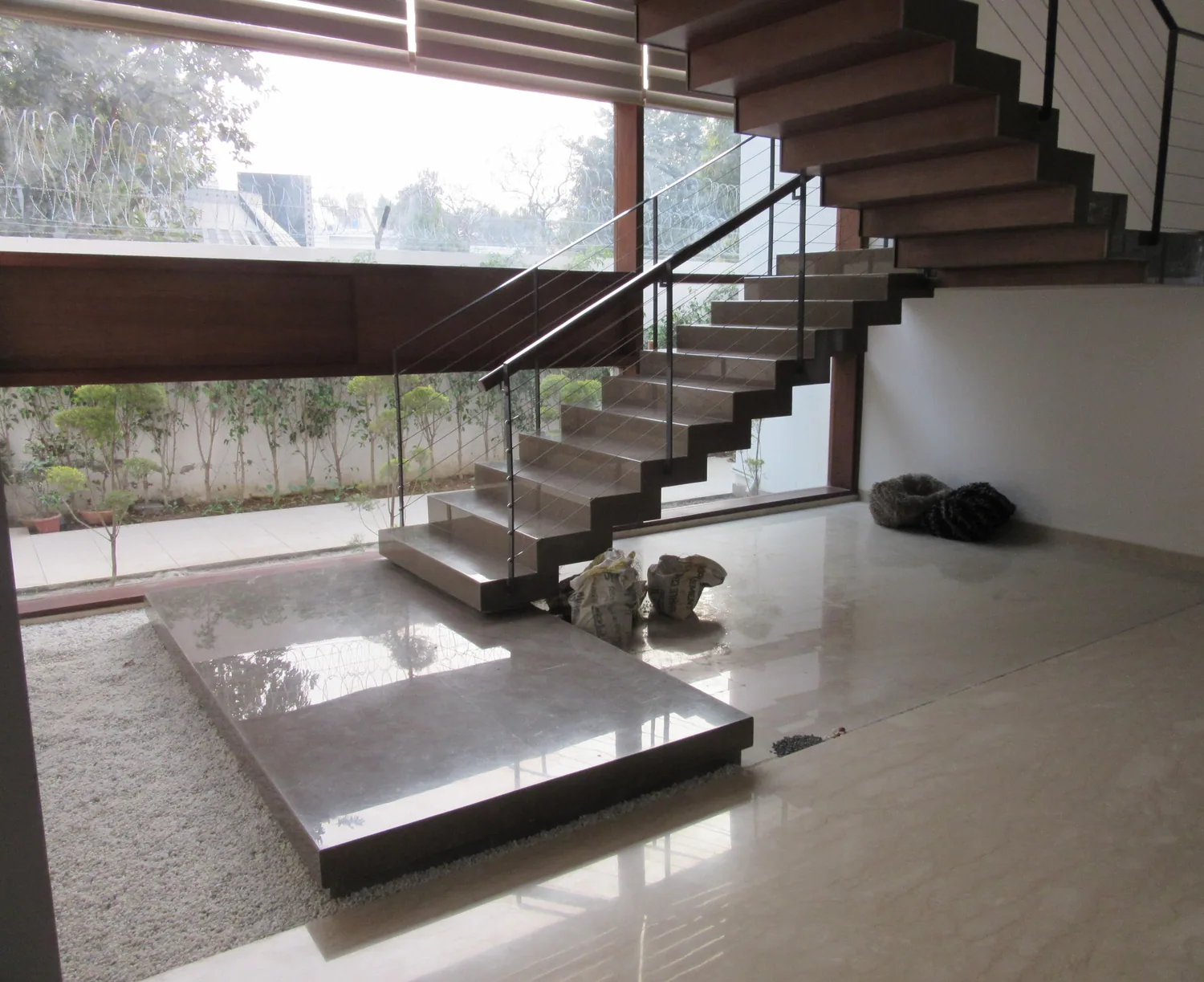
On stairs, the ropes usually run parallel to the pitch, so the terminals and post drilling follow the stair angle. On balconies and terraces, horizontal ropes keep the view open. Some codes also restrict horizontal members that children could climb, so ask whether yours does before you settle on horizontal ropes.
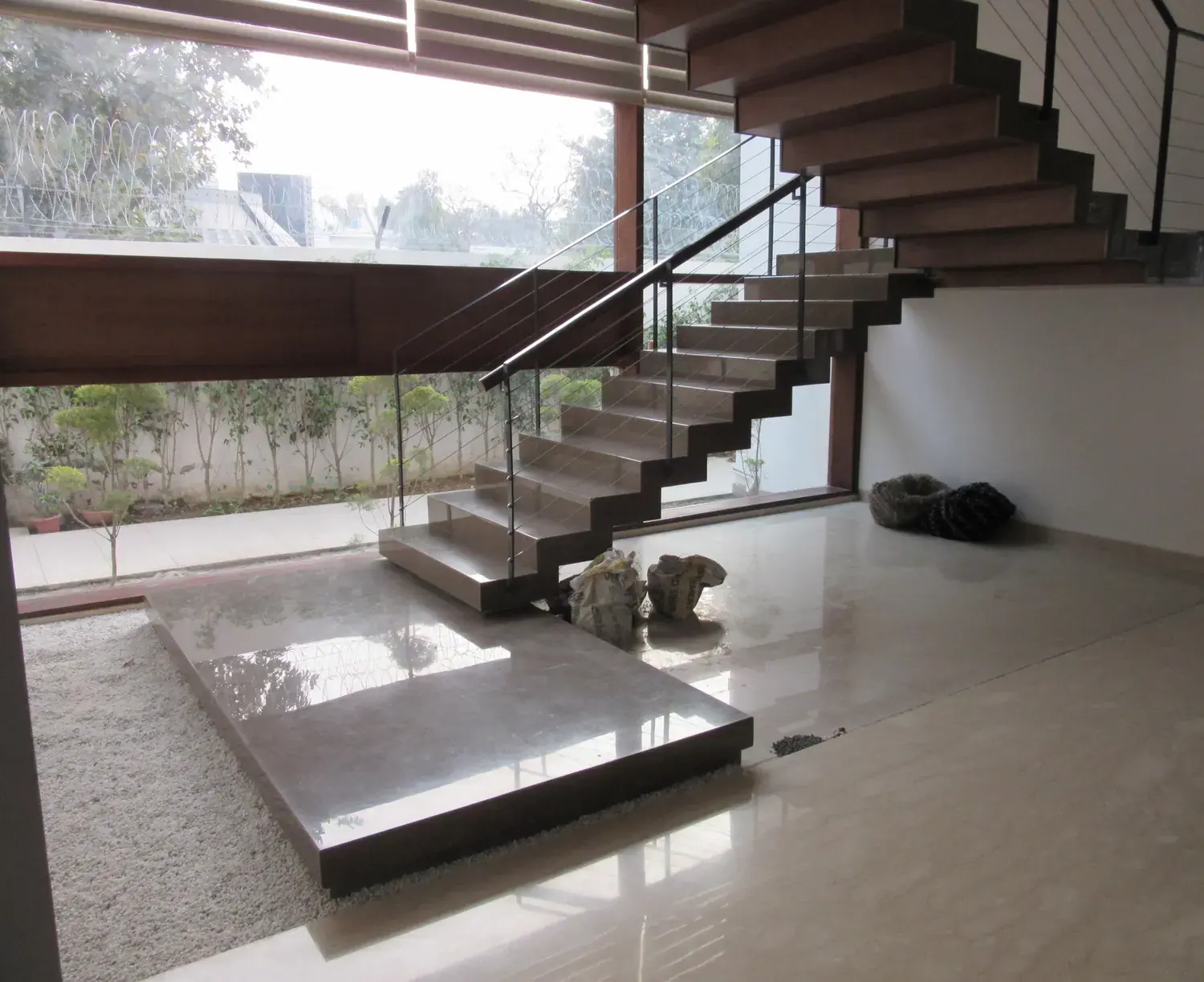
For a villa in Jhansi, Acier installed a cable railing with Jakob Ø4 mm ropes, external threads and radius heads. At Sundial House near Delhi, vertical Ø4 mm ropes run from the stair to the ceiling, and Panchshil's YOO Villas in Pune have cable railings in the villas and on the clubhouse stair.
Coastal sites
Near the sea, around pools and on exposed exteriors, specify SS 316. It contains molybdenum and resists chloride corrosion much better than 304. Jakob's architectural range is in the AISI 316 material group. During construction, keep the ropes clean and away from carbon steel filings to avoid tea staining.
A quick checklist
Acier designs, supplies and installs stainless steel cable railings across India, with Jakob ropes and fittings, and one point of responsibility from drawings to handover.
- Which code applies, and what sphere size and loads does it set?
- Rope spacing with margin for deflection
- Post spacing and intermediate supports
- Pretension, and who checks it at handover
- End post and anchor design
- SS 316 for coastal or exposed sites